
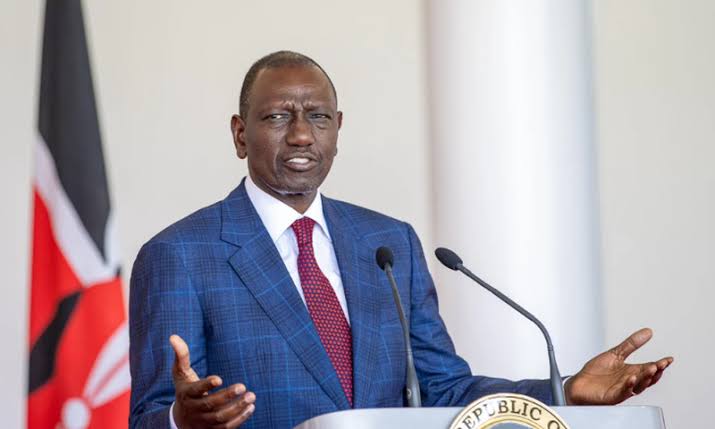
President William Ruto has challenged opposition leaders to stop making their unity plans the centre of political debate, questioning their claims to command millions of votes ahead of the 2027 General Election.
Speaking at Nyan’ori in Nyamira County on Monday, November 9, during his tour of the Gusii region, Ruto said Kenyans were more interested in how politicians intended to improve their lives than in how opposition parties planned to organise themselves.
He singled out the opposition’s repeated promises to settle on one presidential candidate, asking why leaders kept announcing that they were still united.
“For the last one and a half years, you have been telling us stories that you will have one candidate. You keep saying you have not fallen apart and that you are still together. Who asked you?” he posed.
Ruto argued that whether the opposition eventually fields one candidate or several is a decision for its members, not a matter that should dominate public discussion.
“Who cares whether you are together, whether you have one candidate or 10 candidates? That is your own business,” he said.
Ruto turns attention to voters’ everyday concerns
The President urged his political competitors to explain how they would tackle the issues affecting households, including the cost of living, agriculture, education, roads and healthcare.
He said farmers wanted to know how their earnings would improve, while parents needed clear answers on their children’s education. He also pointed to infrastructure and access to medical services as issues that should feature in political campaigns.
Ruto presented his own political camp as focused on development, contrasting it with what he described as the opposition’s preoccupation with coalition negotiations.
“The difference between us and our competitors is like day and night. They talk about how they are organising themselves, while we talk about the people,” he said.
His remarks came as opposition leaders stepped up efforts to present a united front against him in 2027.
On Sunday, Wiper leader Kalonzo Musyoka, former Deputy President Rigathi Gachagua and Jubilee Party leader Fred Matiang’i appeared together after weeks of public disagreements over the opposition’s direction and leadership.
Gachagua also told supporters at a rally in Kitengela that the opposition remained committed to presenting one presidential candidate. Kalonzo backed the position, although the coalition has yet to publicly settle the question of who will carry its ticket.
The meeting and renewed assurances of unity provide context for Ruto’s criticism. The opposition is trying to manage competing presidential ambitions while persuading voters that its leaders can work together.
Ruto questions politicians’ claims to control votes
The President also challenged politicians who speak as though they personally own the votes of their supporters.
He mocked leaders who allegedly meet and boast about the number of votes they could bring into a political arrangement, likening such claims to treating voters as property.
He asked Kenyans whether another person could genuinely carry their votes or decide who they should support.
Ruto insisted that voters, rather than political leaders negotiating alliances, would ultimately determine the country’s leadership.
He urged politicians to respect the electorate and stop presenting supporters as numbers they could trade during coalition discussions.
“These people are intelligent. They are the ones who will decide who becomes a leader and who does not,” he said.
The remarks touch on a central question facing political parties as the 2027 contest approaches: whether leaders can turn claims of regional or political influence into actual votes at the ballot.
Ruto’s challenge also places responsibility on his own political camp to demonstrate that its development record and promises can persuade voters. His call for issue-based campaigns is likely to be judged against the government’s own performance on the cost of living, jobs, public services and the economy.
With the election still months away, the opposition’s unity negotiations and the President’s development pitch are both part of the contest for public support. Ultimately, neither coalition declarations nor claims of owning voting blocs can replace the choice Kenyans make at the ballot.
You may also like
Category: Politics · Related Topic: William Ruto
Related Video: What Dangote’s proposed Lamu oil refinery could mean for East Africa
About the Author
Maureen Onyango is a journalist passionate about storytelling, life coaching and spiritual lessons. She studied at the Kenya Institute of Management and enjoys telling stories that inform, inspire and empower communities.
 Facebook
 Twitter / X
 WhatsApp
 LinkedIn
 Telegram
 Reddit