
Kenyan parents could soon spend less time chasing birth registration documents as the government expands an electronic system that sends newborns’ details directly from hospitals to civil registration authorities.
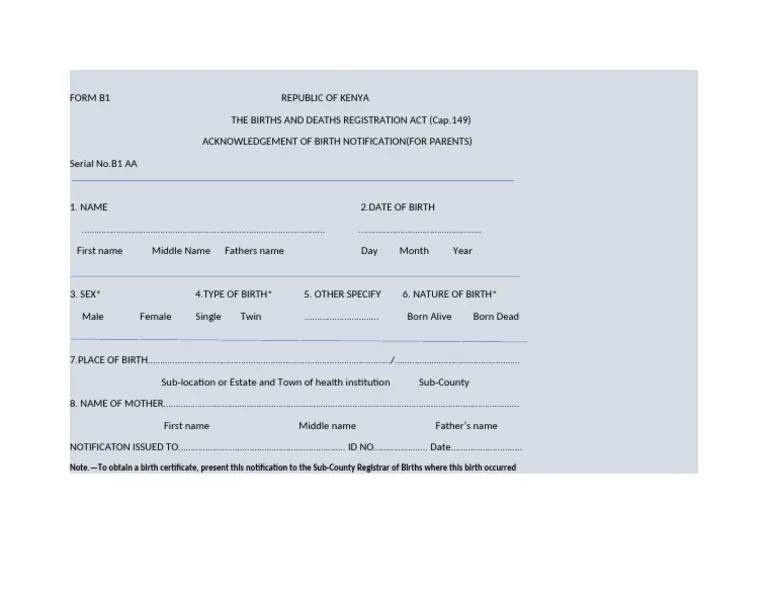
The e-Birth Notification System is designed to replace much of the paperwork involved in reporting a hospital birth. Instead of relying on physical forms being completed and transferred between offices, health facilities can submit a child’s birth details electronically.
The change could make it easier for families to obtain birth certificates, reduce errors and ensure children receive an official identity record from the beginning of their lives.
The reform is also part of a wider government plan to assign every child a Unique Personal Identifier (UPI), commonly known as Maisha Namba.
How the new system works
Under the digital arrangement, authorised hospital staff enter the newborn’s details and the mother’s information into an electronic platform.
The information is then transmitted to the Civil Registration Services (CRS), where the birth record is processed and linked to the child’s unique identifier.
This removes the need for parents to carry physical birth notification forms between the hospital and registration offices.
The system has already been tested in Nairobi and Bomet counties. A report published in September indicated that more than 270,000 newborns had been digitally registered and assigned unique identifiers within two months of the rollout.
At Tenwek Hospital in Bomet, parent Cosmas Langat told Citizen TV that completing the process took him about five minutes. He said he received the birth notification and could proceed with the birth certificate application on the same day.
Reports from facilities using the system have indicated that certificate processing can take between one and three days. However, this should not be taken as a guaranteed turnaround time for every hospital or county as the system expands.
Government targets nationwide hospital coverage
The State Department for Immigration and Citizen Services is working with the Ministry of Health to connect the civil registration platform to the national hospital management system.
Speaking before the National Assembly Committee on Administration and Internal Security on November 9, Principal Secretary Belio Kipsang said the technical teams were working towards completing the integration within 30 days.
The plan is to connect more than 7,500 public hospitals, alongside private health facilities accredited by the Social Health Authority.
If completed as planned, the integration would allow more hospitals to submit birth notifications electronically and help extend the service beyond the initial pilot areas.
Parents would also be able to download and print birth certificates without necessarily travelling to a registration office, according to the PS.
What happens to the Maisha Namba?
The electronic birth registration process is linked to the government’s plan to give each child a lifelong Unique Personal Identifier.
The number is intended to remain with an individual as they grow, with the system designed to link their records across government services.
According to Kipsang, the UPI will form the basis of a person’s identity before transitioning to a national identity card number when they turn 18. The individual would then provide biometric information when applying for an ID card.
The aim is to reduce inconsistencies in personal records and make it harder for people to obtain multiple birth certificates using different names or dates of birth.
The system could also improve the accuracy of population records by connecting birth and death registrations to the national identification database.
Government plans to scrap birth certificate fees
The digital changes come as the government considers removing charges for birth and death certificates.
Kipsang told MPs that the administration was finalising plans to waive the fees through a Gazette notice, which he said would be published in due course.
The current charges include KSh200 for a standard birth certificate, KSh500 for late registration and KSh1,000 for correcting names or other particulars, in addition to applicable eCitizen charges.
The proposed waiver could offer relief to families who struggle with the cost of obtaining essential identity documents.
However, the government has not yet published the Gazette notice confirming the removal of the fees. Parents should therefore check the official Civil Registration Services portal for the charges and requirements currently in force rather than assume the waiver has taken effect.
Why the change matters to families
A birth certificate is more than a record of when and where a child was born. It is an important document for establishing legal identity and accessing services as the child grows.
It is commonly needed for school-related processes and other official applications. Delays in obtaining one can create difficulties for families, particularly when a document is required at short notice.
The existing Civil Registration Services platform allows parents to apply for birth certificates through eCitizen. However, its published instructions still require applicants to print the application form and invoice and submit them to a registrar for processing.
The new system aims to reduce the administrative steps that begin immediately after delivery, rather than simply moving the existing paperwork online.
Questions remain over access and implementation
Despite the promise of faster registration, the success of the system will depend on how quickly hospitals are connected and whether the service works reliably across the country.
Families in remote areas, parents who deliver outside health facilities and those without reliable internet access will also need clear guidance on how to register births.
The government will need to explain how home births and late registrations will be handled, as well as how parents can correct errors in records submitted electronically.
There are also questions about the legal and administrative changes required to support the wider identity reforms. In its November 9 report, the Daily Nation quoted lawyer David Ochami questioning whether the proposed changes could proceed without amendments to the relevant law and regulations.
These concerns make clear public guidance and a transparent implementation plan important as the system expands.
For parents, the real test will be whether the new process means fewer journeys, fewer forms and less waiting before a child receives a birth certificate.
The technology has already shown encouraging results in pilot areas. But its biggest impact will be felt when families across Kenya can access the service consistently, regardless of where their children are born.
You may also like
Category: News · Related Topic: Social Health Authority (SHA)
Related Video: What Dangote’s proposed Lamu oil refinery could mean for East Africa
Related Explainer: Explainer: Why Kenya is moving hospitals to HMIS and what it means for SHA patients
About the Author
Maureen Onyango is a journalist passionate about storytelling, life coaching and spiritual lessons. She studied at the Kenya Institute of Management and enjoys telling stories that inform, inspire and empower communities.
 Facebook
 Twitter / X
 WhatsApp
 LinkedIn
 Telegram
 Reddit