
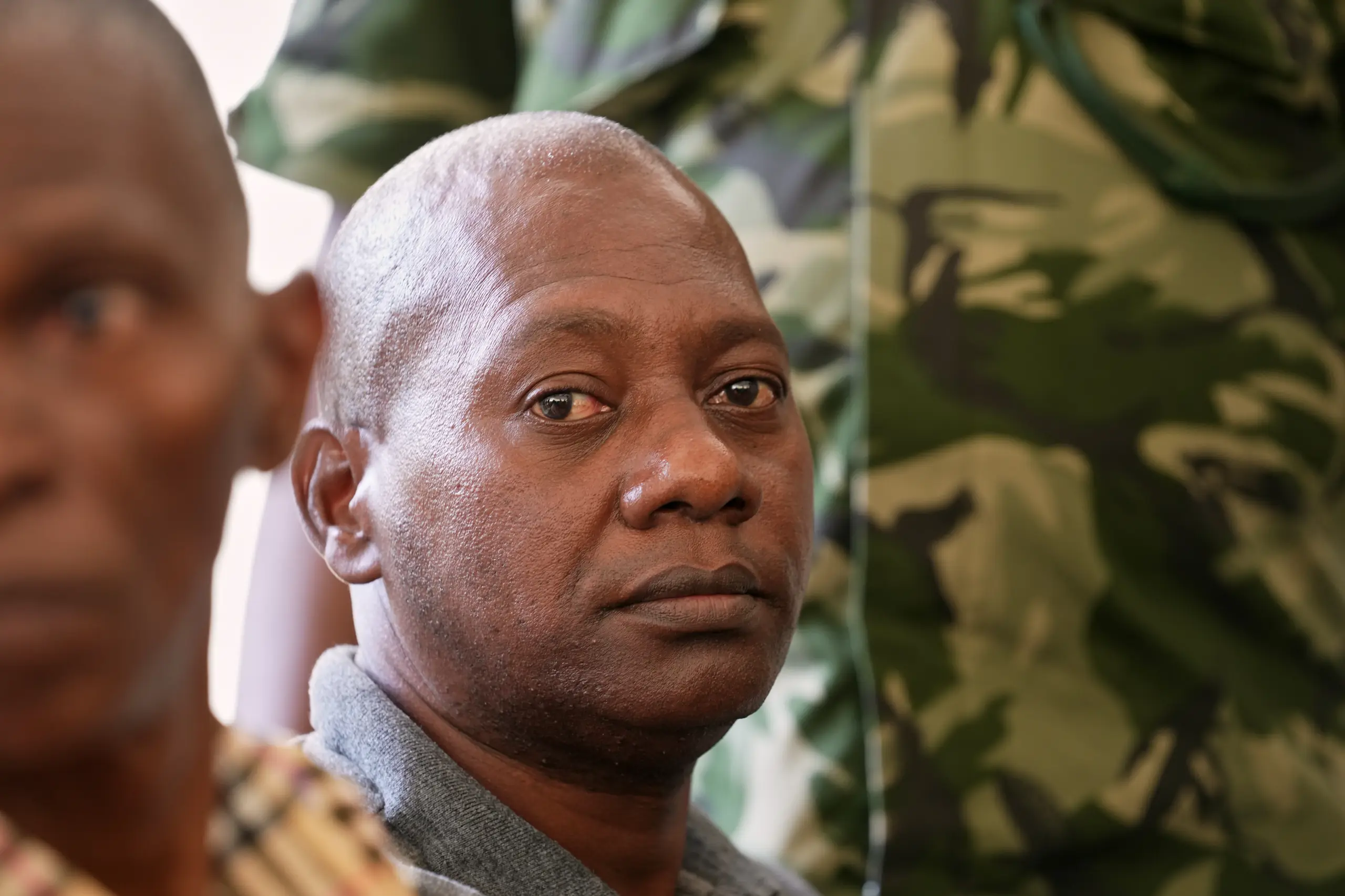
He grew up in a modest family in Kwale, sold flour to make ends meet and later became a taxi driver. Few could have imagined that Paul Mackenzie would one day become the face of Kenya's deadliest cult-related tragedy.
Long before the world knew him as the man behind the Shakahola massacre, Paul Nthenge Mackenzie was an ordinary boy growing up in Lunga Lunga, Kwale County.
He went to school, lived among his siblings and, according to those who knew him, rarely attracted attention.
There was nothing particularly remarkable about his childhood. His younger brother, Robert Mbatha, once described him as quiet, obedient and generous with the little he had.
“He was a quiet and obedient boy when we were young,” Mbatha told the Nation in an earlier interview.
Decades later, that same boy would become one of Kenya's most notorious convicted murderers.
On Friday, November 6, 2026, Mackenzie was sentenced to 200 years in prison by the High Court in Mombasa for his role in the deaths of 191 people, including 190 children, in the Shakahola massacre.
The sentence marked a dramatic end to a journey that began in a coastal village, passed through the streets of Mombasa and the churches of Malindi, and ended in a forest where hundreds of people lost their lives.
The boy from Lunga Lunga
Mackenzie was the fifth-born in a family of ten children.
He attended Mwalewa Primary School in Kwale County, sitting his Kenya Certificate of Primary Education examinations in 1990.
Four years later, he completed secondary school at Lukole Secondary School, obtaining a mean grade of C-minus, according to information presented to a Senate committee investigating the Shakahola tragedy in 2023.
His younger brother recalled a child who did not stand out among his siblings.
After completing school, Mackenzie began searching for opportunities beyond his home village.
Like many young Kenyans struggling to establish themselves, he moved between towns looking for work.
He stayed with an elder brother in Likoni, Mombasa, and at one point earned a living selling flour from a handcart.
His family later helped him enter the transport business.
According to Mbatha, one of their sisters bought Mackenzie a vehicle, enabling him to start working as a taxi driver in Malindi.
It was an ordinary livelihood that would eventually give way to a very different calling.
From taxi driver to pastor
While working in Malindi, Mackenzie attended church services and developed an interest in preaching.
His brother recalled that Mackenzie eventually told the family he had received a divine calling.
By 2003, he was actively preaching and had begun establishing what would become Good News International Ministries.
The church initially operated informally before securing official registration in September 2010.
Mackenzie gradually built a following through sermons centred on Christianity, biblical prophecy and warnings about the end of the world.
His influence extended beyond the pulpit.
Through Times TV, a television channel associated with his ministry, Mackenzie reached audiences outside Malindi with messages about the end times.
But his teachings increasingly attracted controversy.
He opposed formal education, modern healthcare and aspects of government authority, encouraging followers to reject institutions that most families considered essential.
For some believers, he was a spiritual guide. For critics and concerned relatives, his teachings were becoming increasingly dangerous.
The warning signs before Shakahola
Mackenzie's activities began attracting the attention of authorities years before the discovery of the Shakahola graves.
In 2017, he faced legal proceedings involving allegations of radicalisation and encouraging parents to keep children out of school.
Some charges resulted in acquittal, while a separate education-related case ended with a fine.
The encounters did not bring his preaching activities to an immediate end.
In 2019, Mackenzie closed his Malindi church premises and moved his operations towards Shakahola Forest.
Relatives said he had spoken of abandoning preaching and taking up farming.
But the move would become a turning point in a tragedy whose full scale remained hidden for years.
In Shakahola, Mackenzie and his associates established an isolated religious community.
Followers were taught that the world was approaching its end and that fasting would enable them to meet Jesus.
The High Court would later establish that the fasting was not merely a matter of personal religious choice.
It had become an organised system of coercion, intimidation and violence.
Children were targeted first.
The forest that exposed a deadly secret
In April 2023, reports of starving people and shallow graves in Shakahola Forest triggered an investigation that shocked Kenya and the international community.
Police and forensic teams began recovering bodies from the remote area in Kilifi County.
What initially appeared to involve a small number of deaths developed into an investigation uncovering hundreds of victims.
According to figures cited by Reuters from the Kenya National Commission on Human Rights, 448 bodies were eventually recovered from Shakahola.
Many victims were children.
Investigators established that some had died from starvation, while others suffered violent deaths.
The High Court eventually found that Mackenzie and his associates had directed and enforced the deadly practices.
On October 19, 2026, Mackenzie and 28 co-accused were convicted of 191 murders involving 190 children and one adult.
The verdict transformed Mackenzie's legal position from that of a preacher accused of horrific crimes to a man convicted of mass murder.
Even his own family was not spared
Perhaps one of the most disturbing aspects of Mackenzie's story is the suffering experienced within his own family.
His son, Dan Mackenzie, has spoken publicly about growing up under his father's religious teachings.
In interviews with the BBC and Reuters, Dan described being forced to fast as a child and eventually rejecting the beliefs promoted by his father.
He said he lost a younger brother in the tragedy.
Dan's account exposes a painful contradiction.
While Mackenzie presented himself as a religious leader guiding followers towards salvation, his own children were exposed to the beliefs and practices that the court later linked to mass murder.
Other families suffered devastating losses.
Stephen Mwiti, whose six children died after being taken to Shakahola, told Reuters that no punishment could bring them back.
His loss is a reminder that behind the extraordinary prison sentence are families whose lives have been permanently changed.
The 200 years that now define his future
On November 6, 2026, Justice Diana Kavedza Mochache sentenced Mackenzie to an aggregate 200 years in prison.
The sentence comprised 100 years for murders committed through starvation and another 100 years for direct homicide, with the terms running consecutively.
Prosecutors had sought the death penalty, arguing that the scale and brutality of the killings justified capital punishment.
However, Kenya's Supreme Court ruled in 2017 that the death sentence for murder could no longer be imposed automatically. Judges retain the discretion to determine an appropriate punishment.
For Mackenzie, that punishment was 200 years behind bars.
In practical terms, unless successfully challenged or otherwise lawfully altered, the sentence means he is expected to spend the remainder of his life in prison.
The former preacher also faces separate legal proceedings involving other alleged offences, including deaths linked to another site in Kilifi County. He has denied wrongdoing in that case.
How did an ordinary boy become a mass murderer?
Mackenzie's story raises difficult questions about religious influence, personal responsibility and institutional failure.
His childhood, as described by relatives, offers little indication of the path his life would eventually take.
He grew up in a family, attended school, struggled to earn a living and built a religious following.
But the progression from village boy to preacher was followed by an increasingly radical movement in which followers surrendered their independence and, ultimately, their lives.
His conviction establishes his criminal responsibility for the murders covered by the case.
It does not, however, explain every personal or psychological factor behind his transformation. There is no reliable basis for attributing the killings to a single childhood experience or personal event.
The Shakahola tragedy also raises questions beyond Mackenzie's actions.
Authorities had received warnings about his teachings years before the mass graves were discovered.
Yet those warnings did not prevent the loss of hundreds of lives.
For Kenya, the case has become a painful reminder of what can happen when religious authority is used to control vulnerable followers and public institutions fail to respond effectively.
For Mackenzie's family, the story began with a boy they remember as quiet and obedient.
For the families of Shakahola's victims, it will be remembered through the children, parents and relatives who never returned home.
And for Paul Nthenge Mackenzie, the road from Lunga Lunga to Malindi and eventually Shakahola has ended with a 200-year prison sentence.
The village boy who became a preacher will now occupy a dark chapter in Kenya's history as the man convicted of directing one of the country's deadliest mass killings.
You may also like
Category: Crime & Justice · Related Topic: Social Health Authority (SHA)
Related Video: Dolly Parton’s Family Announces Her Passing in Emotional Tribute
 Facebook
 Twitter / X
 WhatsApp
 LinkedIn
 Telegram
 Reddit