
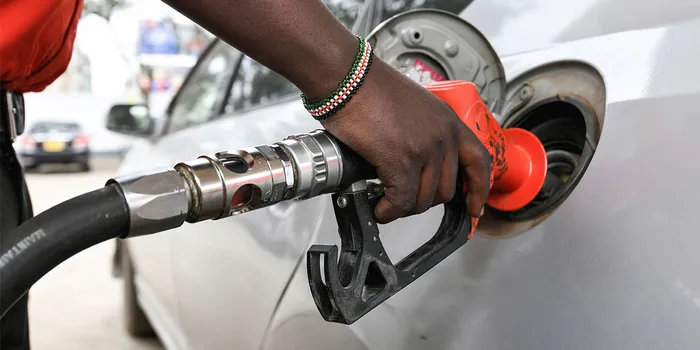
Kenya has extended its temporary relaxation of fuel quality standards for another six months, allowing petrol and diesel with up to five times the sulphur content permitted under the previous limit.
The decision means the maximum sulphur content in both fuels will remain at 50 milligrams per kilogram (50mg/kg) from November 2026 to April 2027.
Trade Cabinet Secretary Lee Kinyanjui announced the extension on Wednesday, November 11, saying the government was responding to continued uncertainty in international petroleum markets and disruptions to supply routes linked to the Middle East.
The move is intended to give oil importers access to a wider range of fuel supplies and reduce the risk of shortages in Kenya.
But it also means the country will continue operating under a less stringent sulphur standard, months after the government initially introduced the temporary adjustment.
Why Kenya is keeping the higher limit
Kinyanjui said the extension followed a request from the Ministry of Energy and Petroleum and a recommendation by the National Standards Council after a technical assessment of global fuel supply conditions.
The government pointed to geopolitical tensions in the Middle East and disruptions affecting international petroleum shipments, particularly around the Strait of Hormuz.
The waterway is a major route for global oil and petroleum shipments. Its disruption can affect the availability and cost of fuel in countries that depend on imports.
Reuters reported on November 12 that Iran's Revolutionary Guard Navy had said two oil tankers were disabled following explosions in the Strait. The report also noted that the United Kingdom Maritime Trade Operations agency had recorded other incidents involving vessels struck by unidentified projectiles.
These developments underline the supply risks facing international oil markets, although the Kenyan government's decision was based on its wider assessment of conditions rather than one incident.
In his statement, Kinyanjui said the extension was meant to protect the country's fuel supply and economic stability.
He added that the measure would be reviewed after six months, or sooner if international supply conditions improve.
What the change means for fuel quality
The adjustment applies to two Kenyan standards: KS EAS 177:2025, which covers automotive gas oil (diesel), and KS EAS 158:2025, which covers automotive gasoline (petrol).
Before the first temporary adjustment in April, the maximum sulphur content was 10mg/kg for both fuels.
The new ceiling of 50mg/kg is five times that previous limit. It does not mean that every shipment will contain 50mg/kg of sulphur. It sets the maximum amount permitted under the temporary arrangement.
Sulphur content is an important fuel-quality and environmental consideration because burning sulphur-containing fuel releases sulphur dioxide, an air pollutant. The previous 10mg/kg limit was therefore a stricter standard, and its continued suspension raises a legitimate question about when Kenya will return to it.
The government has not announced a permanent change to the standards. It has described the higher limit as a temporary response to supply pressures.
The measure does not guarantee cheaper petrol
The extension comes as motorists await EPRA's next monthly fuel price announcement, expected on November 14. The new maximum pump prices will take effect on November 15 and remain in force until December 14.
The current Nairobi prices are KSh226.96 per litre for Super Petrol, KSh227.76 for diesel and KSh219.87 for kerosene.
Those prices followed a sharp increase in the October review, when petrol rose by KSh12.93 per litre, diesel by KSh9.90 and kerosene by KSh28.49.
Treasury Cabinet Secretary John Mbadi has indicated that the government intends to use the fuel price stabilisation mechanism to cushion consumers in the November-December cycle. He had said the government held back the intervention during the previous review so that funds could be available for the next one.
However, he has not announced the amount to be used or how much relief motorists should expect.
EPRA's calculation also depends on the cost of imported petroleum products, the exchange rate and other supply-chain expenses. A fall in international oil prices does not automatically translate into an equivalent reduction at Kenyan petrol stations.
The sulphur-limit extension should therefore not be confused with a pump-price intervention. Its stated purpose is to widen access to fuel supplies, while any reduction in retail prices will depend on the separate monthly pricing process.
A six-month reprieve, but no permanent solution
Kenya first approved the temporary increase in the sulphur ceiling on April 30, 2026, after petroleum-sector stakeholders raised concerns about difficulties sourcing fuel that met the stricter specifications.
The government said the adjustment was necessary to maintain uninterrupted supply during disruptions affecting international petroleum routes.
The latest extension shows that those concerns have not been considered fully resolved.
For motorists, businesses and households, the immediate priority is reliable fuel availability. But the decision also leaves a longer-term question: when will Kenya be able to restore the stricter sulphur standard without putting pressure on its fuel supply?
For now, the 50mg/kg limit remains in place until April 2027, subject to an earlier review if global conditions improve.
You may also like
Category: News
Related Video: What Dangote’s proposed Lamu oil refinery could mean for East Africa
Related Explainer: Inside Kenya’s crude supply puzzle as Dangote prepares to break ground in Lamu
About the Author
Maureen Onyango is a journalist passionate about storytelling, life coaching and spiritual lessons. She studied at the Kenya Institute of Management and enjoys telling stories that inform, inspire and empower communities.
 Facebook
 Twitter / X
 WhatsApp
 LinkedIn
 Telegram
 Reddit