
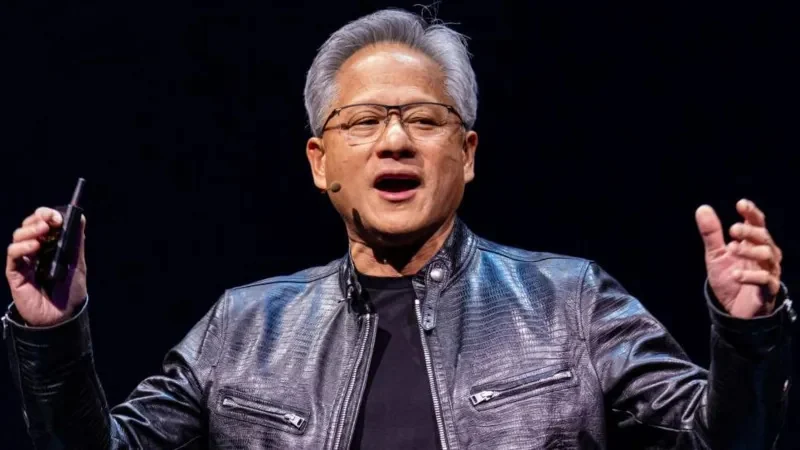
The controversy surrounding Nvidia chief executive Jensen Huang is becoming a national security headache for Washington, with fresh questions emerging over America's relationship with China, access to advanced artificial intelligence chips and the influence of powerful technology executives.
What began as reports of an alleged affair involving Huang and a Chinese businesswoman has developed into a much bigger political and corporate issue.
The 63-year-old billionaire has admitted being unfaithful to his wife and apologised to his family and Nvidia employees. However, the more serious question facing the company is whether his relationship exposed sensitive business information or created opportunities for China to gain access to restricted American technology.
The woman at the centre of the allegations is Alice Huang, a Chinese businesswoman and former executive at Singapore-based technology company Megaspeed. She is not related to Jensen Huang.
US intelligence officials reportedly believe Alice Huang was working for Chinese intelligence and had cultivated a relationship with the Nvidia boss.
These allegations have not been independently established in public. Beijing has rejected the accusations, describing them as unfounded.
The developments have prompted Nvidia's board to launch an independent investigation into whether its chief executive was targeted by a foreign intelligence operation.
In a letter to employees published on November 8, Huang acknowledged his personal conduct and apologised.
"I was unfaithful to my wife. My actions hurt her and our children. There is no excuse for what I did. I am deeply sorry," he wrote.
He also acknowledged that he had fallen short of his responsibilities to the company, its employees and shareholders.
Huang did not publicly confirm the espionage allegations but said he supported the board's investigation and would co-operate fully.
Nvidia has maintained that it has no reason to believe its trade secrets or American national security interests have been compromised. The company has also said Huang will continue leading the business while the investigation proceeds.
Why the controversy matters to Washington
The timing of the allegations is particularly sensitive because Nvidia sits at the centre of America's competition with China in artificial intelligence.
Its graphics processing units (GPUs) power many of the world's most advanced AI systems, from data centres to applications used in research, business and defence.
This gives the company an unusually important position in the US government's efforts to maintain an advantage over Beijing.
Since 2022, Washington has imposed export restrictions designed to prevent China from obtaining the most advanced American semiconductor technology.
The rules have created a difficult balance for Nvidia. Selling chips to China offers access to a major market, but allowing advanced technology to reach Chinese firms could weaken America's strategic advantage.
Huang has repeatedly argued that the US should permit sales of certain less advanced chips to China rather than surrendering the entire market to Chinese manufacturers.
His position has attracted criticism from lawmakers who believe commercial interests should not take precedence over national security.
The controversy involving Alice Huang has now placed those arguments under renewed scrutiny.
The Associated Press reported that US authorities are investigating whether Megaspeed helped Chinese users obtain advanced Nvidia chips in breach of export restrictions.
Megaspeed has previously faced scrutiny over suspected diversion of restricted chips, although the company has denied wrongdoing.
The US Justice Department is examining possible export-control violations, with the investigation also covering Alice Huang, according to people familiar with the matter cited by AP.
The case is therefore no longer just about the private conduct of a prominent technology executive. It touches on how effectively the United States can control the movement of technology that it considers strategically important.
Questions over the influence of Silicon Valley in the White House
Another dimension of the controversy is Huang's close relationship with US President Donald Trump.
The Nvidia chief has become an influential voice in discussions about America's AI ambitions and the future of the semiconductor industry.
Trump has repeatedly praised Huang's contribution to American technology and economic growth. The president also awarded him the National Medal of Science in October 2026.
Their relationship has included direct discussions about the future of the technology sector, with Huang previously describing Trump's focus as centred on American jobs, industrial growth and national security.
The relationship has also raised questions about how much influence major technology executives have over decisions that affect national policy.
Trump has defended Huang publicly, saying he believes the Nvidia chief did not know the woman was allegedly involved in espionage.
Speaking to reporters, Trump said Huang had told him he had "absolutely no idea that the person in question was a spy".
The president also described Huang as an honourable person and indicated that he expected him to remain in charge of Nvidia.
However, the allegations have not gone unanswered in Congress.
Republican lawmakers have called on Huang to brief Congress about the reported relationship and its possible implications for national security.
Democratic Senator Elizabeth Warren has also questioned whether Nvidia's business activities involving China require closer examination.
The debate exposes a difficult question for the Trump administration: how can Washington encourage American technology companies to compete globally while ensuring that sensitive technology does not fall into the hands of strategic rivals?
Allegations of billions of dollars in chip shipments
The financial implications have also become more serious.
A November 10 report by The Information, cited by Reuters, alleged that Alice Huang's business network helped facilitate the movement of at least $7.5 billion worth of Nvidia chips to Chinese companies.
The report claimed that she worked with family members to build a network of businesses across China and Singapore that acquired Nvidia processors.
It also alleged that she used her connections within Nvidia's business network to help secure supplies when orders for restricted chips faced delays.
The reported shipments included H100, H200 and some A100 processors.
These claims remain allegations. Reuters said it could not immediately obtain comments from Nvidia and several of the companies mentioned in the report.
If established, the allegations could significantly intensify scrutiny of Nvidia's sales channels and the effectiveness of American export controls.
They also raise questions about whether existing safeguards are sufficient to prevent advanced chips from reaching customers who are not authorised to receive them.
Could Huang lose his position?
The controversy has also created uncertainty around Nvidia's leadership.
Huang has led the company for more than three decades and is widely regarded as central to its rise into one of the world's most valuable technology businesses.
His influence extends beyond corporate management. He has become one of the most recognisable figures in the global AI industry and an important representative of America's ambitions in the sector.
That makes the board's investigation particularly significant.
Investors will want assurances that the allegations have not exposed the company to legal, regulatory or reputational risks.
Nvidia shares have already faced pressure amid broader concerns about the sustainability of AI investment and uncertainty surrounding the company's leadership.
Technology analysts have warned that any change at the top could unsettle investors because of Huang's central role in Nvidia's strategy and public profile.
However, the company has maintained confidence in its chief executive while the independent review continues.
There is currently no confirmed decision to remove him from his position.
The US Justice Department's investigation and the board's internal review will be important in establishing whether any company information was compromised and whether export-control violations occurred.
Beijing rejects espionage allegations
China has pushed back against the accusations involving Alice Huang.
Its government has described the claims that she was a Chinese intelligence operative as unsubstantiated and an attempt to smear the country.
Alice Huang has not publicly responded to the latest allegations, and the Associated Press reported that it was unable to reach her for comment.
Megaspeed has also denied previous allegations of wrongdoing involving the movement of restricted Nvidia chips.
These denials are important as investigators work to establish what happened and whether any laws were broken.
For now, there is no public finding that Jensen Huang knowingly assisted a foreign intelligence operation or that Nvidia's confidential information was handed to Beijing.
A scandal with consequences beyond Nvidia
The biggest concern for Washington is what the case reveals about the intersection of personal relationships, corporate power and national security.
The United States depends heavily on private technology companies to maintain its position in the global AI race. Yet those same companies operate across international markets where commercial opportunities can conflict with government security priorities.
Huang's case has exposed how difficult it can be to separate those interests.
The allegations have also revived concerns about intelligence operations targeting influential individuals in the technology sector, particularly those with access to sensitive commercial information and decision-makers.
For Nvidia, the immediate challenge is to establish whether its business, leadership and security arrangements remain beyond compromise.
For Washington, the stakes are wider. Any failure to control access to advanced AI chips could affect America's ability to maintain its technological advantage over China.
And for Jensen Huang, the investigation could become one of the biggest tests of his leadership since founding Nvidia.
The affair may have started as a personal controversy, but its consequences could reach far into the future of US-China relations and the global AI industry.
You may also like
Category: International
Related Video: What Dangote’s proposed Lamu oil refinery could mean for East Africa
Related Explainer: Kenya G-to-G Oil Deal Explained: How It Works, Who Supplies the Fuel and Why It Is Controversial
About the Author
Maureen Onyango is a journalist passionate about storytelling, life coaching and spiritual lessons. She studied at the Kenya Institute of Management and enjoys telling stories that inform, inspire and empower communities.
 Facebook
 Twitter / X
 WhatsApp
 LinkedIn
 Telegram
 Reddit