
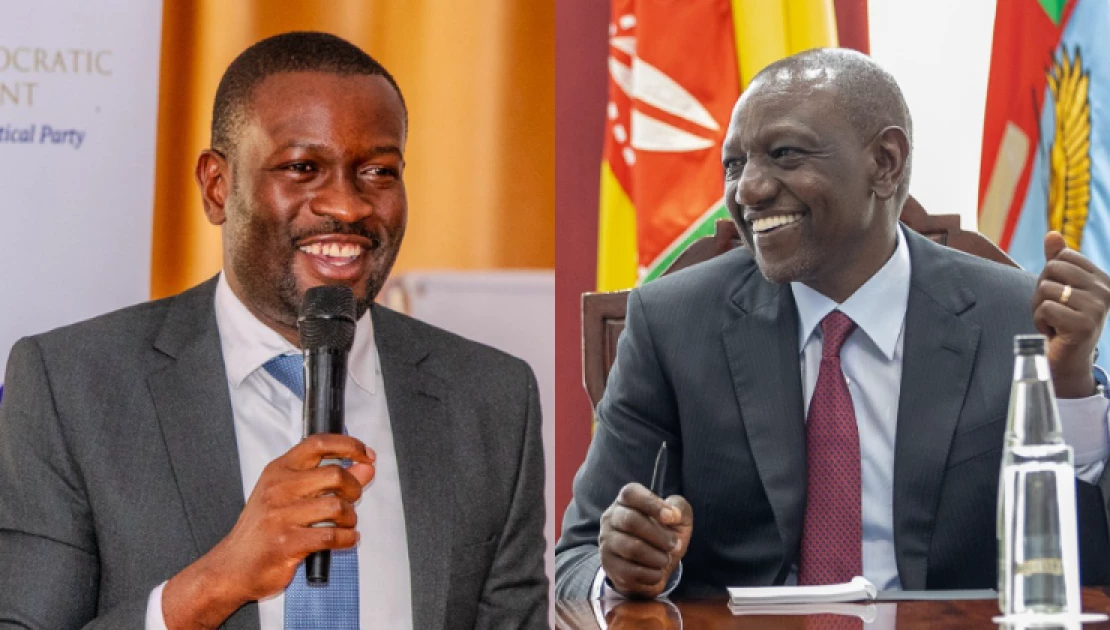
President William Ruto has a new challenger emerging in the latest opinion poll, with Nairobi Senator Edwin Sifuna matching him at 31 per cent in the race for Kenyans’ preferred 2027 presidential candidate.
The findings, released by TIFA Research on Thursday, November 12, point to a changing political landscape less than a year before the next General Election.
But the numbers reveal more than a contest between the President and the senator. They show Sifuna gaining ground as support for several established opposition figures declines, raising fresh questions about who could lead a united opposition campaign.
TIFA asked respondents whom they would like to win the 2027 presidential election, without asking whether they were registered or intended to vote.
“This survey finds President Ruto tied with Nairobi Senator Edwin Sifuna in terms of popularity regarding Kenyans’ preferred winner of next year’s presidential election,” the research firm stated.
The results put both leaders at 31 per cent, followed by Wiper leader Kalonzo Musyoka at nine per cent, former Interior Cabinet Secretary Fred Matiang’i at five per cent and former Deputy President Rigathi Gachagua at four per cent.
Kiharu MP Ndindi Nyoro received one per cent. Another 15 per cent were undecided, while two per cent said none of the candidates and a further two per cent did not respond.
Sifuna's rise reshapes opposition contest
Sifuna’s performance is one of the most striking findings in the survey.
His support stood at 15 per cent in TIFA’s June 2026 poll before rising to 31 per cent in November. The latest figure puts him ahead of other opposition figures who have featured prominently in previous surveys.
Matiang’i, who recorded 19 per cent in TIFA’s November 2025 survey, has fallen to five per cent. Kalonzo’s support has dropped from 25 per cent in November 2025 to nine per cent in the latest findings.
Ruto, meanwhile, has risen from 19 per cent in November 2025 to 31 per cent.
The figures suggest that Sifuna’s gains have come largely at the expense of other opposition hopefuls rather than from a decline in support for the President.
The poll also gives Sifuna a stronger position in discussions about a possible joint opposition presidential candidate.
TIFA noted that support for other opposition and potential presidential candidates adds up to 19 per cent. If those supporters were to rally behind one candidate, the combined figure could bring Sifuna close to the 50 per cent mark.
However, the research firm cautioned against assuming that all those supporters would automatically transfer their backing to him.
The opposition remains divided, and its leaders have yet to agree on a common presidential candidate.
Linda Mwananchi gains ground as ODM loses support
The presidential figures are accompanied by a significant shift in party popularity.
TIFA found that the United Democratic Alliance (UDA) had regained the lead, with 25 per cent support, up from 17 per cent in June.
The Linda Mwananchi Movement, associated with Sifuna, recorded 17 per cent, placing it second. ODM’s support fell from 20 per cent to 10 per cent over the same period.
The findings point to a changing balance within the opposition, particularly following the divisions in ODM over its relationship with Ruto’s broad-based government.
Sifuna’s political standing is therefore not limited to his personal popularity. The new movement associated with him is also attracting support that could influence future coalition negotiations.
TIFA found that 57 per cent of opposition supporters considered it very likely that leaders from the Linda Mwananchi and United Opposition/Ukombozi formations would unite before the 2027 election. Another 22 per cent said such an agreement was somewhat likely.
On the timing of a joint presidential announcement, 45 per cent preferred January to March 2027, while 35 per cent wanted the opposition to settle on its candidate before the end of this year.
The figures suggest that supporters want unity, even though the political leaders still have difficult decisions to make.
Ruto's support varies sharply across regions
The survey also shows that the two leading candidates draw different levels of support across the country.
Ruto recorded his strongest support in Northern Kenya at 62 per cent and Central Rift at 59 per cent.
Sifuna, on the other hand, led in Western Kenya with 55 per cent, Nairobi with 39 per cent and the Coast region with 36 per cent.
He also recorded 33 per cent in Nyanza, compared with Ruto’s 35 per cent in the region.
These differences underline the challenge facing both camps as they seek to build support across Kenya’s diverse political and regional landscape.
Kindiki remains favourite as Ruto's running mate
The survey also examined who Ruto’s supporters would prefer as his running mate in 2027.
Deputy President Kithure Kindiki emerged as the clear favourite, receiving 55 per cent of the responses among those who wanted Ruto to win.
Homa Bay Governor Gladys Wanga came second with 12 per cent, followed by Mining Cabinet Secretary Hassan Joho at nine per cent.
Oburu Odinga, Prime Cabinet Secretary Musalia Mudavadi and National Assembly Speaker Moses Wetang’ula each received four per cent.
Co-operatives Cabinet Secretary Wycliffe Oparanya had two per cent, while Kirinyaga Governor Anne Waiguru received one per cent. Nine per cent were undecided.
The finding suggests strong support among Ruto’s current backers for retaining Kindiki in the Deputy President’s position, although the President has not formally announced his 2027 running mate.
What the poll says — and what it does not
TIFA conducted the survey between October 26 and November 5, interviewing 2,036 adults aged 18 and above across all 47 counties.
The interviews were conducted face to face, mainly in Kiswahili and English. TIFA reported a margin of error of plus or minus 2.16 percentage points, with larger margins applying to smaller sub-groups.
The results offer a snapshot of public preferences at the time of the interviews. They are not a prediction of the final election result.
The distinction matters because respondents were asked who they wanted to win, not who they would necessarily vote for. The survey also found that 15 per cent remained undecided.
For Sifuna, the result strengthens his position in the opposition conversation, but it does not settle the question of who will eventually carry the opposition ticket.
For Ruto, the tie is a reminder that the race is becoming more competitive, even as he retains strong support in several regions.
With alliances still taking shape, the next challenge for both sides will be turning favourable opinion into a credible national campaign and, ultimately, votes.
You may also like
Category: Politics · Related Topic: William Ruto
Related Video: What Dangote’s proposed Lamu oil refinery could mean for East Africa
Related Explainer: Fact Check: Did elephants save people during Nepal’s floods?
About the Author
Maureen Onyango is a journalist passionate about storytelling, life coaching and spiritual lessons. She studied at the Kenya Institute of Management and enjoys telling stories that inform, inspire and empower communities.
 Facebook
 Twitter / X
 WhatsApp
 LinkedIn
 Telegram
 Reddit