
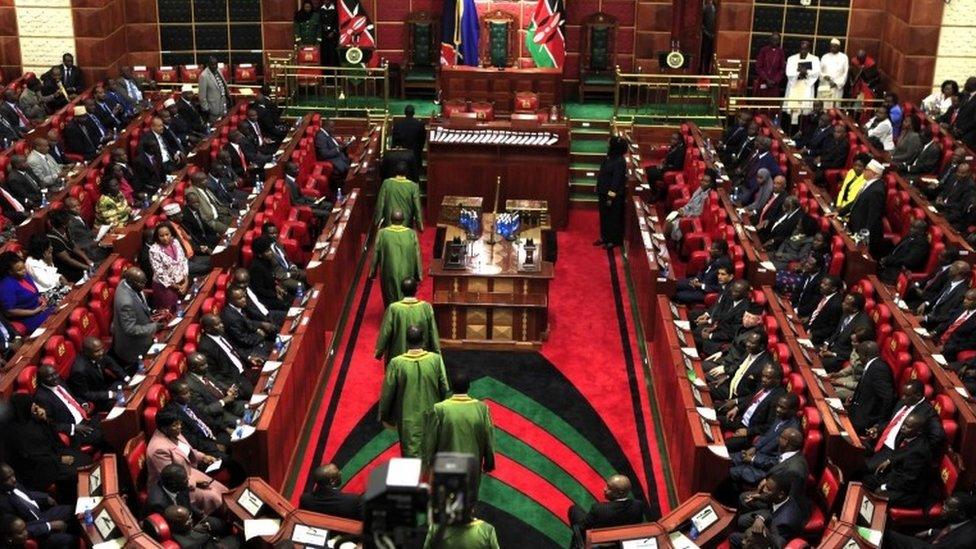
Kenya’s Parliament is set to become an additional repository for the country’s published books and digital works, in a move aimed at protecting the nation’s literary and intellectual heritage.
The National Assembly passed the Books and Newspapers (Amendment) Bill, 2025, on 10 November, paving the way for the Parliament of Kenya Library to join the institutions responsible for preserving locally published material.
The proposed changes would also place new obligations on publishers to submit digital copies of their books to designated public institutions, while giving the Clerk of the Senate a formal role in receiving published works.
But the legislation is not yet in force. Parliament’s announcement says the changes will take effect once the Bill is enacted. It is therefore important for publishers to distinguish between the passage of the Bill by the National Assembly and the start of any new legal obligations.
Why Parliament wants a place in Kenya’s book archives
The Bill, sponsored by Turkana West MP Daniel Nanok, seeks to amend the Books and Newspapers Act (Cap. 111).
Nanok, who chairs the National Assembly’s Committee on Parliamentary Broadcasting and Library, said the proposal would give lawmakers access to a wider collection of Kenyan publications and strengthen the research resources available to Parliament.
He said the Parliament Library’s expanded role would help preserve published knowledge while supporting more informed decisions during lawmaking.
The move would add Parliament to an existing network that includes the Kenya National Library Service and the Kenya National Archives.
These institutions play important roles in collecting and preserving the country’s documentary record. Parliament’s proposed inclusion would give published material another institutional home, with a particular benefit for legislative research.
Nanok pointed to parliamentary libraries in South Africa and South Korea as examples of institutions that also contribute to preserving national publications.
Publishers face new digital deposit requirements
One of the most significant proposed changes concerns digital publishing.
The Bill seeks to require publishers to submit electronic copies of their books to the Registrar of Books and Newspapers, the Kenya National Library Service, the Kenya National Archives and the Clerk of the Senate.
It would also recognise the Clerk of the Senate as an additional recipient of physical copies. The Clerk would be required to acknowledge receipt in writing.
Under the existing legal deposit framework, publishers must provide up to three copies of a book to the Registrar before or within 14 days of publication. They must also submit two copies to the Kenya National Library Service to support the preparation of Kenya’s national bibliography.
The proposed amendments would allow the Registrar or the Clerk of the Senate to request up to three additional copies within one year of publication. Publishers would have one month to deliver the requested material and would meet the delivery costs.
The changes are intended to ensure that books are not lost from the national record simply because they are published in digital form rather than printed.
What it means for readers and authors
The wider ambition is to preserve more of what Kenyans write, publish and research.
That could include academic studies, novels, historical accounts, reference books and other locally produced material. Digital preservation is particularly important as more publishers and authors distribute their work electronically.
However, becoming a legal deposit repository does not automatically mean every publication will be freely available to the public online. The purpose of legal deposit is to ensure that published works are collected and preserved. Questions of public access, copyright and how digital material will be stored and accessed will still matter.
The success of the changes will also depend on how effectively institutions coordinate their collections, protect digital records and ensure publishers understand their obligations.
Colonial-era language also targeted
The Bill also seeks to remove outdated references to “the Colony” in sections of the existing law, replacing them with “Kenya”.
It retains provisions requiring books and newspapers to carry details of their printers and publishers, including their names and addresses and the places where the publications are produced.
It also maintains penalties for breaches of certain publishing requirements. Under the provisions cited in the Bill, printing or publishing a newspaper without complying with the law can attract a fine of up to KSh1 million, imprisonment of up to three years, or both for a first offence.
A subsequent offence carries a possible prison term of up to five years, alongside a prohibition on printing or publishing newspapers.
The next step is enactment
The National Assembly’s passage of the Bill marks an important step, but the proposed changes should not be treated as already operational.
Once the legislative process is complete and the Bill is enacted, publishers and the institutions receiving the material will need clear procedures for handling both printed and digital works.
For Kenya, the larger test will be whether the expanded system can preserve the country’s published record for future generations while making that knowledge useful to researchers, lawmakers and the public.
The move could give Kenyan writing a stronger place in the national memory. But its value will ultimately depend on how well the new responsibilities are put into practice.
You may also like
Category: News · Related Topic: Kenya Politics
Related Video: What Dangote’s proposed Lamu oil refinery could mean for East Africa
Related Explainer: Explainer: Why Kenya is moving hospitals to HMIS and what it means for SHA patients
About the Author
Maureen Onyango is a journalist passionate about storytelling, life coaching and spiritual lessons. She studied at the Kenya Institute of Management and enjoys telling stories that inform, inspire and empower communities.
 Facebook
 Twitter / X
 WhatsApp
 LinkedIn
 Telegram
 Reddit