
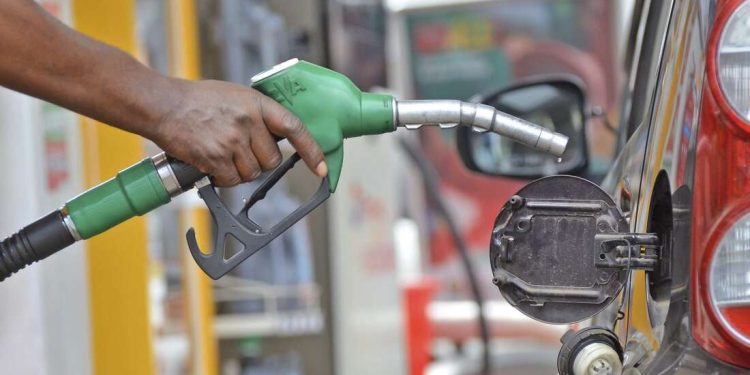
NAIROBI — Kenyan motorists received some relief in the latest fuel review, but the Sh5 cut in diesel prices may offer only temporary breathing room as international oil markets remain highly volatile.
The Energy and Petroleum Regulatory Authority (EPRA) cut the maximum retail price of diesel by Sh5 per litre for the current pricing cycle, while keeping petrol and kerosene prices unchanged. The prices took effect on August 15 and run until September 14, 2026.
In Nairobi, the maximum prices are currently Sh214.03 per litre for Super Petrol, Sh217.86 for diesel and Sh191.38 for kerosene.
But for consumers, the more important question is not what EPRA has already announced.
It is what happens at the next review.
Why the next fuel review could be important
Kenya's fuel prices are reviewed monthly. EPRA's formula takes into account factors including the cost of imported petroleum products, exchange rates, taxes, transportation and other regulated costs.
That means a fall in international oil prices does not automatically translate into an equivalent fall at a Kenyan petrol station.
And the opposite is also true.
If global oil prices rise during the period used to calculate the next review, that pressure can eventually feed into Kenyan pump prices.
This is why the current diesel reduction should not necessarily be interpreted as the beginning of a sustained decline in fuel prices.
The Middle East is the big risk
International energy markets remain sensitive to developments around the Middle East and major shipping routes.
Recent market disruptions have raised concerns about crude oil supplies and the cost of transporting petroleum products.
For Kenya, the risk is particularly important because the country relies on imported refined petroleum products.
Longer shipping routes can increase freight and insurance costs, raising the landed cost of fuel before it even reaches the Kenyan market.
That creates a potential chain reaction:
Global oil shock → higher import cost → higher landed fuel cost → higher pump prices → higher transport costs → higher food and business costs.
And Kenya is entering that risk period with inflation already elevated.
Why Kenyans should care about diesel more than petrol
Petrol gets much of the public attention because millions of motorists use it.
But diesel is particularly important to the wider economy.
It powers trucks, buses, agricultural machinery, generators and other commercial equipment.
That means a change in diesel prices can eventually affect the cost of transporting goods.
For example, when diesel becomes more expensive:
Farm → truck → wholesale market → retailer → consumer
Every additional transport cost can put pressure on the final price.
That is one reason fuel prices matter even to Kenyans who do not own a car.
The inflation connection
Kenya's annual inflation reached 6.5% in July, according to the Kenya National Bureau of Statistics.
Transport inflation was much higher, at 15.6%, while food and non-alcoholic beverages rose by 9.0%.
That makes fuel prices particularly important.
If fuel prices rise significantly, the effect could show up first in transport and logistics and then spread into other household expenses.
If fuel prices fall, however, the benefit may not immediately appear in supermarket prices or matatu fares.
Businesses also have other costs to recover, and retailers may not pass every reduction through to consumers.
The government has been cushioning motorists
The latest EPRA review shows that government intervention remains an important part of the pricing picture.
EPRA said Sh938 million in additional government stabilisation support was used in the latest review to keep petrol and kerosene prices unchanged despite underlying cost pressures.
That intervention matters because without the support, consumers could have faced higher prices for some products.
But stabilisation is not the same thing as permanently reducing the underlying cost of importing fuel.
It essentially buys consumers some protection from an external price shock.
There is another change motorists may not immediately notice
EPRA has also increased the regulated margin for oil marketing companies.
The margin rose by Sh2.16 per litre for petrol, diesel and kerosene in the August-September pricing cycle as part of phased changes linked to the Cost of Service Study in the Supply of Petroleum Products.
That does not mean motorists suddenly paid an extra Sh2.16 per litre.
The overall EPRA formula still resulted in a Sh5 reduction in diesel and no change in petrol and kerosene.
But it is an important development because regulated margins form part of the cost structure behind the pump price.
Why the government-to-government system matters
Kenya's fuel-importation system has also become a political issue.
The government-to-government arrangement was introduced partly to improve the country's access to foreign exchange and reduce pressure created by large petroleum import bills.
Critics have questioned aspects of the arrangement and called for greater competition in fuel procurement.
That debate matters because the way Kenya buys petroleum affects the cost structure ultimately faced by consumers.
For motorists, however, the key question remains simple:
Does the system deliver cheaper and more predictable fuel?
What could push fuel prices higher?
Several factors could work against Kenyan consumers in coming months.
1. Higher global oil prices
A sustained rise in crude prices would eventually increase import costs.
2. Shipping disruption
Longer routes or higher insurance costs can increase the cost of getting fuel to Kenya.
3. A weaker shilling
Because petroleum is purchased internationally, a weaker Kenyan shilling can make imports more expensive in local currency.
4. Higher taxes or levies
Changes in taxation can affect the final pump price even if international oil prices remain stable.
5. Removal of government support
If stabilisation measures are reduced while international prices remain elevated, more of the underlying cost could be passed to consumers.
What could make fuel cheaper?
The picture can also move in the other direction.
A sustained decline in international oil prices would reduce the cost of imported petroleum.
A stable or stronger shilling would also help.
Lower shipping and insurance costs could provide additional relief.
But consumers should watch the combination of these factors, rather than one headline oil price.
That's because Kenya's pump price is determined by several components.
What the next EPRA review could tell us
The next major checkpoint is September 14, when the current pricing cycle ends.
By then, the regulator will have a clearer picture of international petroleum prices and the costs feeding into the next monthly calculation.
The key numbers to watch will be:
- international crude prices;
- the average landed cost of imported fuel;
- the shilling-dollar exchange rate;
- shipping and insurance costs;
- taxes and levies;
- government stabilisation support.
A major increase in the underlying import cost could put upward pressure on petrol and diesel.
Conversely, continued weakness in global oil prices could create room for further relief.
The bigger issue: can cheaper fuel bring down the cost of living?
This is ultimately the question Kenyan households care about.
A Sh5 reduction in diesel is welcome.
But if transport prices remain high and food inflation remains at 9%, consumers may not feel much difference in their monthly budgets.
For fuel to meaningfully ease the cost of living, the reduction would need to persist long enough to work through the wider economy.
That means cheaper fuel for trucks, buses, farms and businesses—and eventually lower pressure on the prices consumers pay.
So the real fuel story is not that diesel has fallen by Sh5.
It is whether Kenya can keep fuel prices stable enough for the reduction to reach the rest of the economy.
And with international energy markets still vulnerable to geopolitical shocks, the September EPRA review could be more important for household budgets than the August cut itself.
You may also like
Category: Business
Related Video: What Dangote’s proposed Lamu oil refinery could mean for East Africa
Related Explainer: Inside Kenya’s crude supply puzzle as Dangote prepares to break ground in Lamu
 Facebook
 Twitter / X
 WhatsApp
 LinkedIn
 Telegram
 Reddit