Thousands of medical products have been pulled from pharmacies across Kenya after investigators uncovered evidence that medicines meant for controlled distribution had entered the commercial market.
The operation, led by the US Agency for International Development Office of Inspector General (USAID OIG), targeted 18 pharmaceutical premises across the country.
Two people were arrested.
Another 11 were ordered to report for further investigations or court proceedings, while at least four pharmacies were closed or sealed over suspected illegal activities and regulatory breaches.

But the most significant finding may not be the arrests.
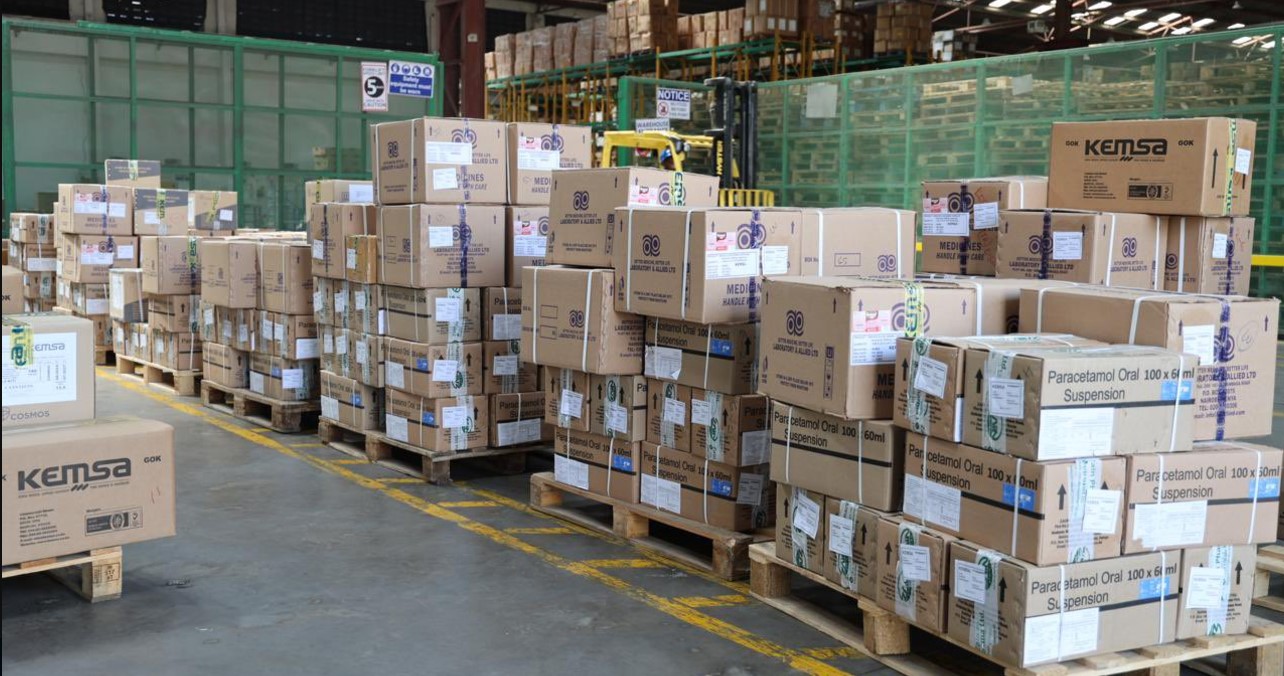
Investigators traced more than 2,000 co-trimoxazole antibiotic tablets that appeared to have originated from the Kenya Medical Supplies Authority (KEMSA) to outlets outside their intended distribution channels.
That discovery points to a problem beyond counterfeit medicines: legitimate medical supplies can also become dangerous when they are diverted from the system designed to get them to patients.
From public supply chains to private shelves
The investigation was carried out over several weeks and involved USAID OIG, Kenya's Pharmacy and Poisons Board (PPB), the Directorate of Criminal Investigations, the National Association of Boards of Pharmacy and the US Embassy in Nairobi.
Investigators did not only seize suspected stolen stock.
They recovered hundreds of other products that were expired, defective, unregistered, improperly distributed or otherwise non-compliant.
These included prescription tablets, capsules and diagnostic test strips.
USAID OIG said some of the commodities were suspected of having been diverted from US-funded foreign assistance and global health programmes, including programmes implemented by UN agencies.
Investigators also found indicators of cross-border diversion involving medical commodities recovered in Kenya that were intended for distribution outside the country.
The agency said investigators were able to trace some products found at retail outlets further back into the supply chain. That led to additional inspections, seizures and the collection of business and supply-chain records.
The investigation is continuing.
USAID OIG has not said that every product seized was stolen, nor has it publicly established the responsibility of every person or business targeted in the operation.
Those distinctions will matter as individual cases proceed.
Why the KEMSA finding matters
The discovery of co-trimoxazole bearing apparent links to KEMSA is particularly significant.
KEMSA is responsible for procuring, warehousing and distributing health products for Kenya's public health system.
Medicines supplied through such channels are intended to reach designated health facilities and programmes.
When stock leaves those channels without authorisation, the problem is not simply financial.
It can affect availability at the facility where the medicine was intended to be used. It can also make it difficult for regulators to establish where a medicine has been stored, who handled it and whether it remained within the required conditions.
In this case, USAID OIG said investigators recovered the tablets outside their intended distribution channels.
The agency has not publicly identified the specific point in the supply chain where the diversion occurred.
That is now part of the wider investigative question.
A wider pharmaceutical problem
The operation comes as Kenya steps up its fight against substandard and falsified medical products.
In July, Health Cabinet Secretary Aden Duale launched an interministerial committee to oversee implementation of Kenya's National Action Plan on Substandard and Falsified Medical Products.
The Ministry said enforcement efforts had already resulted in the closure of more than 200 non-compliant pharmaceutical premises, alongside arrests and prosecutions.
It also said the government was working with the World Health Organisation and other partners to improve surveillance, intelligence sharing, digital traceability and enforcement.
The Pharmacy and Poisons Board has separately been strengthening its regulatory work.
In July, the Board said its priorities included stopping substandard and falsified products, improving pharmacy regulation and strengthening surveillance at points of entry.
The PPB's 2026 rapid-alert system has also recorded warnings over suspected falsified and substandard products, including falsified Postinor-2 and other medicines identified through international alerts.
That means the latest US-led operation is part of a wider regulatory effort rather than an isolated raid.
Counterfeit is not the only threat
The distinction between counterfeit, substandard, expired and diverted medicines is important.
A falsified medicine may deliberately misrepresent its identity or source.
A substandard medicine may fail to meet the required quality specifications.
An expired product may no longer be suitable for use.
A diverted medicine, meanwhile, may be genuine but has been removed from the legitimate supply chain or sent somewhere it was not authorised to go.
The latest operation uncovered evidence across several of these categories.
That makes supply-chain control just as important as checking whether a tablet is genuine.
Kenya has been moving towards greater digital tracking of medicines precisely for this reason.
The Ministry of Health has said digital recording of prescriptions, patient interactions and transactions can help reduce opportunities for theft, manipulation and circulation of counterfeit medicines.
The risk reaches the patient
For a patient standing at a pharmacy counter, the distinction may be invisible.
A medicine can look genuine and still have an uncertain history.
It may have been stored improperly. It may be past its expiry date. It may not have been registered for use in Kenya. Or it may have been diverted from a programme where it was meant for a specific group of patients.
That is why regulators insist that people obtain medicines from authorised outlets.
The PPB says licensed pharmaceutical outlets display licences with QR codes that can be used to verify their authenticity. It also maintains a public register of licensed outlets.
The Board has continued to issue product recalls and quality alerts where specific medicines fail quality checks. One 2026 alert, for example, directed healthcare professionals to quarantine specified batches of Tunaclav after the products failed visual inspection.
For consumers, the safest response is therefore not to assume that every medicine sold outside a hospital is fake.
It is to check whether the outlet is licensed and whether the product is registered and properly packaged.
The bigger question is where the leak begins
The latest investigation raises a harder question for Kenya's pharmaceutical system.
How do medicines leave legitimate supply chains in the first place?
The answer will not necessarily be found at the pharmacy counter.
It may lie much earlier — in procurement, warehousing, transportation, inventory controls, distribution records or the networks connecting legitimate suppliers to retailers.
USAID OIG's decision to trace some seized products upstream suggests investigators are already looking beyond the final point of sale.
That could prove more important than simply closing individual outlets.
A pharmacy can be sealed and an operator arrested.
But if the same supply-chain weaknesses remain, another outlet can eventually take its place.
A test for Kenya's medicine controls
The government has made pharmaceutical safety a bigger part of its health reform agenda.
The PPB has called for stronger cooperation across government and the private sector, while the Ministry says it is expanding surveillance and digital traceability.
The latest US-backed investigation puts those systems under a sharper spotlight.
The immediate results are clear: 18 premises targeted, two arrests, 11 people required to report and at least four pharmacies closed or sealed.
But the more important measure will come later.
If investigators can establish how genuine medical commodities moved out of authorised channels, identify the points where controls failed and prosecute those responsible, the operation could expose weaknesses that affect the entire pharmaceutical supply chain.
For patients, that is ultimately what matters.
The medicine on the shelf should not only be genuine.
It should also be where it is supposed to be, within its valid date, properly stored and legally supplied.
You may also like
Category: Health
Related Video: Human Ladder Reaches Dangerous Heights as Climbers Keep Going
Related Explainer: Kiharu Technical College September Intake 2026: Courses, Skills and New Opportunities
About the Author
Maureen Onyango is a journalist passionate about storytelling, life coaching and spiritual lessons. She studied at the Kenya Institute of Management and enjoys telling stories that inform, inspire and empower communities.
 Facebook
 Twitter / X
 WhatsApp
 LinkedIn
 Telegram
 Reddit