
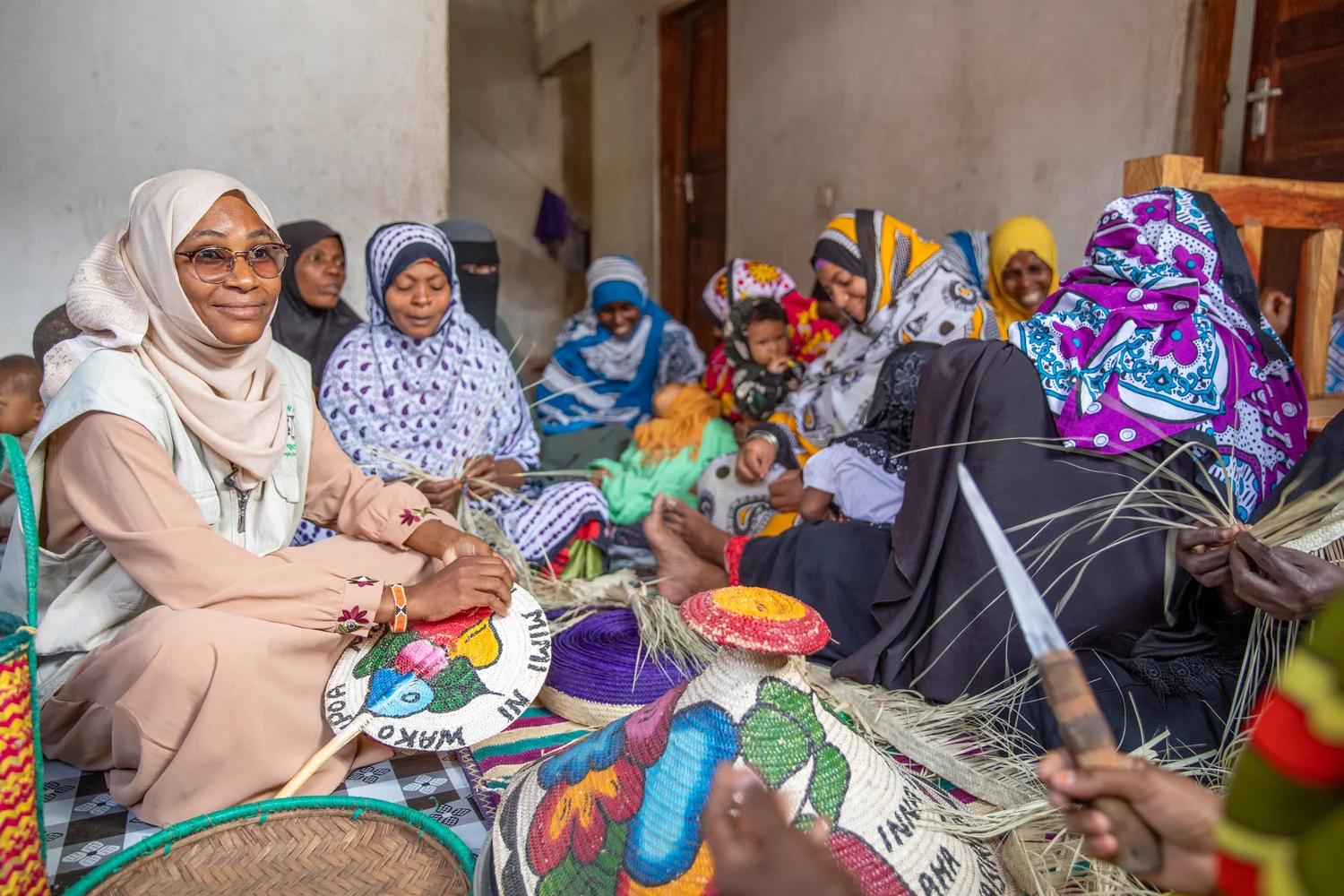
For decades, members of Kenya’s Pemba community could say where home was.
What they could not always prove was that they legally belonged to it.
That changed in 2023.
Three years after Kenya formally recognised about 7,000 Pemba people as citizens, the impact is showing up in places far removed from the ceremony where the decision was announced.

It is showing up at fishing businesses, in property records, in banks, local leadership and, increasingly, at voter registration centres.
For people who spent generations without conclusive proof of nationality, a Kenyan identity card is more than a document.
It is a key that opens doors that were previously closed.
A document that changes everyday life
In Mayungu, Kilifi County, fishing remains central to the local economy.
For Juma Masoud, obtaining Kenyan identification documents has made it easier to run his fish business and obtain the licences needed to operate.
He can also pursue property and vehicle registration in his own name.
Before citizenship recognition, such ordinary transactions could become difficult because he lacked documents proving his nationality.
That experience reflects a much wider problem.
UNHCR says stateless people can face barriers to basic activities such as opening bank accounts, buying property, accessing formal employment and obtaining public services.
For the Pemba, the problem was particularly painful because many families had lived in Kenya for generations.
The community is largely descended from people who came to the Kenyan coast from the Zanzibar archipelago before independence. Many settled along the Coast and built their lives around fishing, farming and trade.
Yet generations could remain without the documents needed to establish their nationality.
The decision that ended a century-long wait
On December 12, 2022, President William Ruto announced that his government would begin the process of recognising the Pemba as Kenyan citizens.
Seven months later, the process reached its formal conclusion.
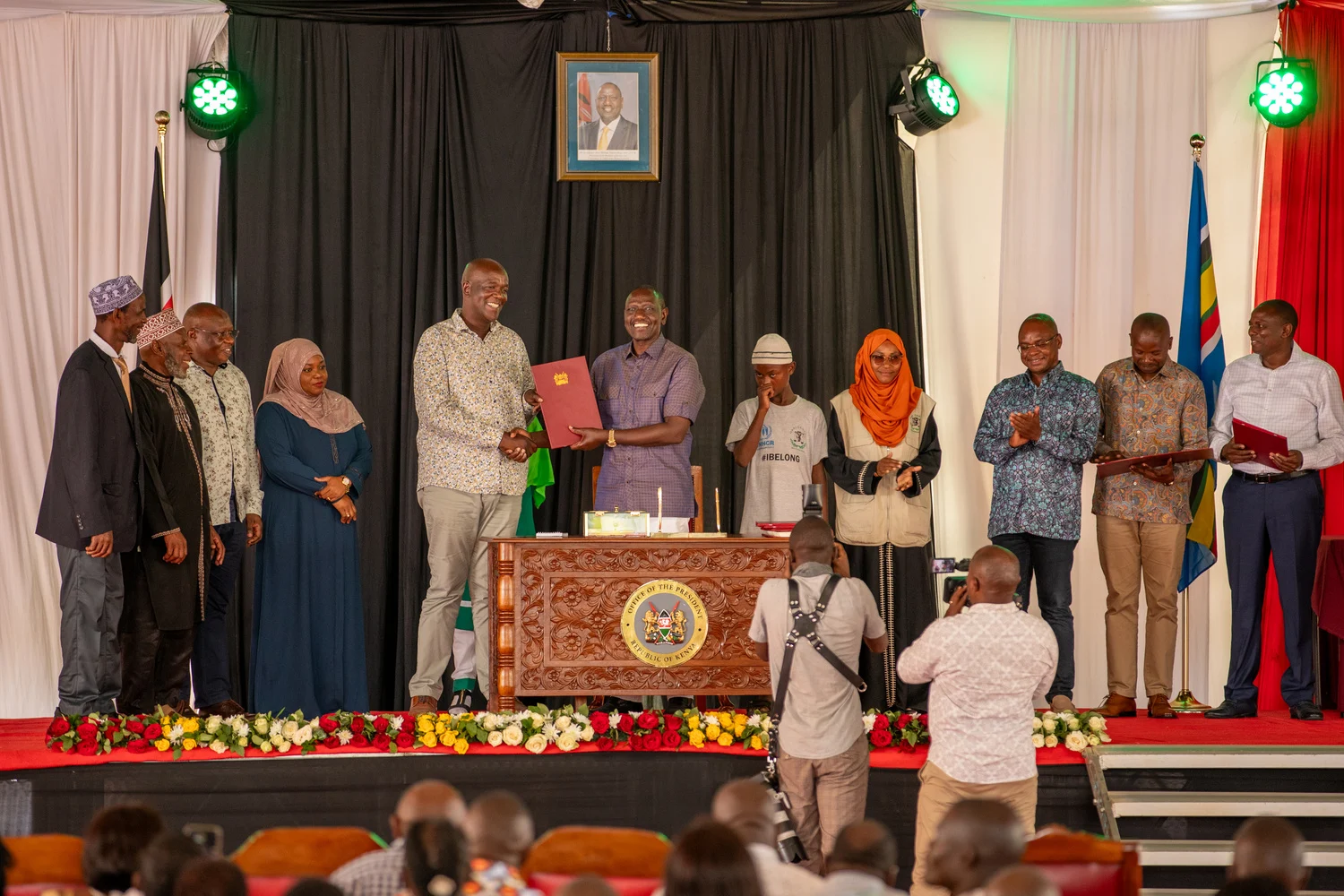
On July 28, 2023, Ruto issued Kenyan identity cards, birth certificates and passports to members of the community during a ceremony in Kilifi.
The government also issued title deeds to members of the community.
Ruto described the decision as ending nearly a century of marginalisation and statelessness.
UNHCR said the registration process had been completed for approximately 7,000 Pemba people. The agency said the new documentation would enable them to access services and opportunities including education, healthcare, social protection, financial services and the formal labour market.
The change was therefore bigger than the issuing of identity cards.
It gave people a recognised legal relationship with the country where their families had lived for generations.
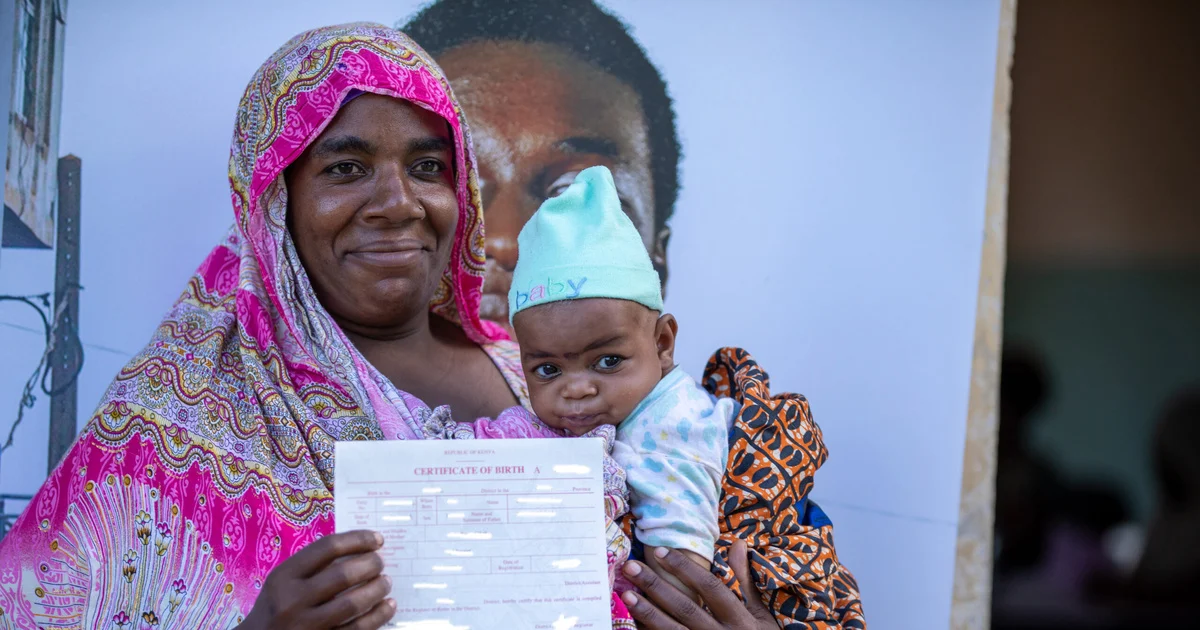
From surviving outside the system to participating in it
Citizenship does not automatically make someone wealthy.
But it can remove one of the barriers standing between a person and an opportunity.
A national ID can make it easier to deal with banks, licensing authorities and government agencies.
It can support access to formal economic activity.
Property documentation can allow families to hold assets in their own names.
And official recognition can make it easier to participate in public institutions.
For the Pemba, that shift is already visible.
Members of the community are not only seeking access to services. Some are taking up positions within their own communities.
Ibrahim Mohamed, a Pemba born in Mombasa, is among those who say citizenship has changed how members of the community participate in public life.
His election as a village elder in Mayungu illustrates another side of the change.
For years, the Pemba question was largely about recognition.
Now it is also about participation.
The next test is the ballot
The biggest public milestone may come in 2027.
Kenya's next General Election is scheduled for August 10, 2027, and the Independent Electoral and Boundaries Commission is already registering voters.
IEBC says its voter-registration programme is designed to build an inclusive register ahead of the election. The commission has set a target of about 28.5 million registered voters.
For members of the Pemba community who have obtained citizenship and registered as voters, the election could carry a meaning that goes beyond choosing a president, governor or MP.
It could be their first opportunity to exercise a right that their parents and grandparents did not have as recognised Kenyan citizens.
Recent reporting from the Coast has highlighted Pemba residents preparing to vote for the first time.
The transition is significant.
The same community that once struggled to prove its nationality is now preparing to take part in deciding who governs the country.
But citizenship is not the end of the story
Recognition has removed a major legal barrier. It has not erased every economic or social challenge.
UNHCR noted in its 2024 operational update that, even after the citizenship exercise, the government continued receiving applications for digital IDs and distributing pending birth certificates, national IDs and passports to members of the Pemba community.
That is an important reminder that a citizenship decision is one step in a longer process.
Documentation has to reach people.
People have to understand how to use it.
And the institutions that provide services must be able to respond to newly recognised citizens.
There is also a wider lesson.
UNHCR currently estimates that Kenya still has about 9,800 stateless people, even after the government granted citizenship to around 7,000 members of the Pemba community in 2023.
Kenya has also previously recognised members of the Makonde and Shona communities as citizens.
The Pemba experience therefore sits within a broader national effort to reduce statelessness.
What citizenship means on the ground
Three years on, the most powerful measure of the Pemba citizenship decision may not be found in a government speech.
It is found in ordinary choices.
A fisherman can seek the licence needed to run his business.
A parent can secure official documents for a child.
A family can pursue property ownership.
A business owner can enter the formal economy.
A community member can take up a leadership role.
And, soon, a new Kenyan voter can walk into a polling station and mark a ballot.
For a community that spent generations being told it could not fully prove where it belonged, that is a profound change.
The Pemba story is therefore no longer only about ending statelessness.
It is about what happens after belonging is formally recognised.
The real test now is whether that recognition continues to translate into equal access to opportunity, public services, economic participation and political voice.
For thousands of Pemba Kenyans, the journey from having no document to holding an ID is already complete.
The next chapter may begin with a ballot paper.
You may also like
Category: Features · Related Topic: 2027 Elections
Related Video: Dolly Parton’s Family Announces Her Passing in Emotional Tribute
About the Author
Maureen Onyango is a journalist passionate about storytelling, life coaching and spiritual lessons. She studied at the Kenya Institute of Management and enjoys telling stories that inform, inspire and empower communities.
 Facebook
 Twitter / X
 WhatsApp
 LinkedIn
 Telegram
 Reddit