
Candidates Profile | Kenya Election 2027
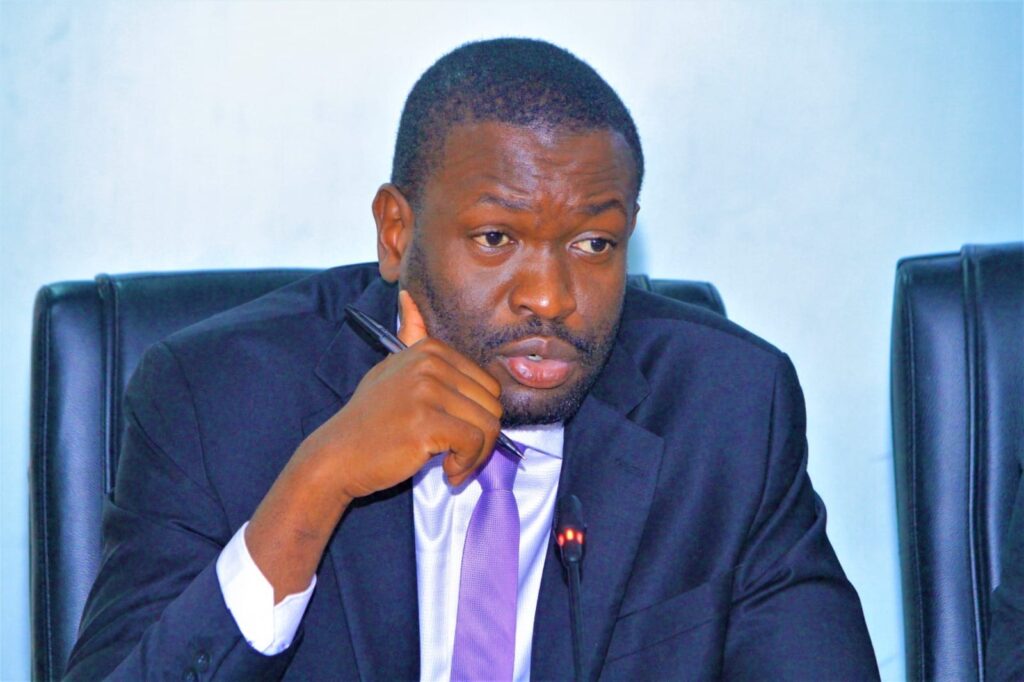
At 44, Edwin Watenya Sifuna is attempting something few Kenyan politicians have seriously contemplated after holding only one elective office: moving directly from the Senate to State House.
The Nairobi senator has spent much of his political career as a party strategist, lawyer, political communicator and opposition operative rather than as a holder of executive office. Yet in 2026, barely four years into his first elected position, Sifuna has placed himself at the centre of Kenya's emerging 2027 presidential contest.
His challenge is ambitious: build a national coalition around a relatively young politician, break away from the political machinery that made him nationally prominent, persuade voters beyond his Western Kenya base and Nairobi constituency, and ultimately deny President William Ruto a second term.

The journey from a lawyer in private practice to a presidential challenger has been unusually fast.
But the same qualities that have made Sifuna one of Kenya's most recognisable opposition voices — his courtroom-style arguments, combative political rhetoric, media presence and willingness to confront powerful figures — could either become the foundation of a national campaign or expose the limitations of a politician who has never before run a nationwide race.
The man behind the political voice
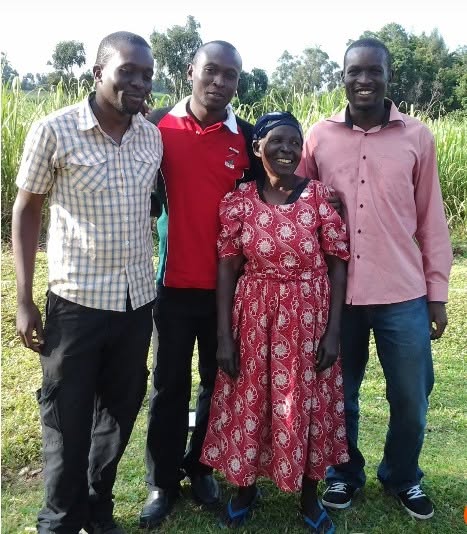
Edwin Sifuna was born on May 22, 1982, in Kakamega County to what he describes as working-class parents.
His father was a civil servant who worked for the former municipal council, while his mother is a retired teacher. Sifuna grew up with two brothers and two sisters.
His official biography portrays his childhood as an important influence on his politics, particularly his exposure to inequality, limited economic opportunities and the difficulties faced by ordinary Kenyans. He says these experiences helped create what he describes as a desire to become a voice for people who felt unable to speak for themselves.
His educational journey took him from Kakamega Township Primary School to Musingu High School before he joined the University of Nairobi, where he studied law.
He graduated with an LL.B degree in 2006 and subsequently obtained a postgraduate diploma from the Kenya School of Law in 2007. He was admitted to the Roll of Advocates in 2008. Parliament lists him as the elected senator for Nairobi.
That legal training would later become one of the defining features of his political identity.
Sifuna's political speeches frequently resemble legal submissions: he builds an argument, cites constitutional principles, challenges the opposing side and finishes with a memorable political punchline.
It is a style that has made him a popular presence on Kenyan television, radio and social media.
Before politics: The lawyer
Sifuna did not enter national politics directly from university.
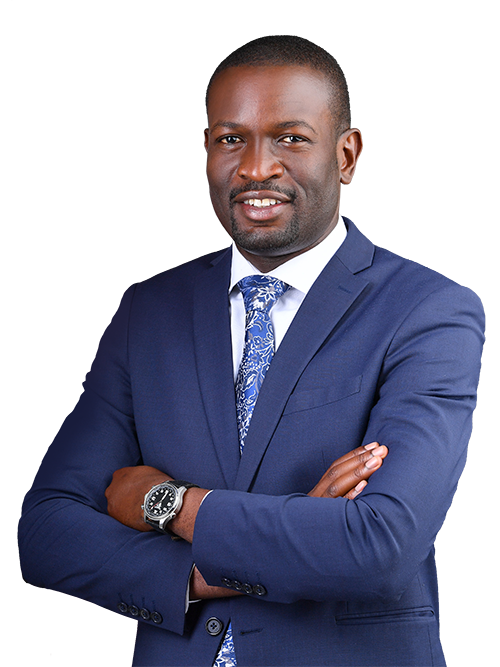
After his admission to the Roll of Advocates, he worked in legal and administrative positions before establishing his own practice, E. Sifuna & Associates Advocates, in Nairobi. His official biography says he also worked as Legal Affairs Manager at Magnate Ventures and as Legal and Administration Officer at Mini Group of Companies.
His involvement in the Law Society of Kenya also helped expose him to institutional politics and public-interest litigation.
He was involved in the OkoaLSK initiative and served in the LSK Public Interest, Legal Aid and Human Rights Committee. His biography also identifies him as part of the legal team involved in negotiations surrounding the doctors' dispute in 2017.
That combination — law, public advocacy and politics — would eventually become the foundation of his public persona.
The political strategist before the elected politician
Sifuna's political career predates his first election victory.
He became involved in opposition politics through the Coalition for Reforms and Democracy (CORD), serving on its Technical and Advisory Committee from 2013 to 2016. He subsequently continued in a similar advisory role within the National Super Alliance (NASA).
This period was important because it placed Sifuna close to some of the most consequential political figures in Kenya's opposition politics.
He was not initially the politician seeking the microphone.
He was the strategist behind the microphone.
That distinction matters in understanding his rapid rise.
In 2017, Sifuna sought the ODM nomination for Kanduyi parliamentary seat but lost the party primaries to John Makali. He then moved into the Nairobi Senate race, where ODM backed him for the seat.
He lost to Johnson Sakaja.
According to published election figures, Sifuna obtained 674,056 votes against Sakaja's 811,826. Rather than ending his political ambitions, the defeat dramatically raised his national profile.
Only months later, Sifuna received a political breakthrough that would change his trajectory.
From losing candidate to ODM's powerful Secretary-General
In February 2018, ODM appointed Sifuna as its Secretary-General, succeeding Ababu Namwamba.
He was only 35.
The position placed him at the operational centre of one of Kenya's most important political parties and gave him a national platform far larger than the constituency he had unsuccessfully contested.
For years, Sifuna became one of ODM's most visible defenders.
He appeared on television and radio almost daily during periods of intense political confrontation, defended Raila Odinga and ODM positions, attacked government policies and increasingly became one of the opposition's most recognisable communicators.
His political strength was not necessarily a constituency machine.
It was communication.
Sifuna could take complicated political or constitutional questions and turn them into language that ordinary voters could understand.
That skill became particularly valuable during the Kenya Kwanza administration.
The senator who arrived after a defeat
Sifuna's second attempt at the Nairobi Senate seat produced a different result.
In the 2022 General Election, he defeated UDA's Margaret Wanjiru and won the Nairobi Senate seat, making him an elected politician for the first time. He began serving in the Senate in September 2022.
This is one of the most interesting aspects of his presidential story.
Sifuna is a first-time elected lawmaker in the sense that the Senate is his first successful elective office. He has never served as an MP, governor or Cabinet Secretary.
Yet he entered elective politics carrying years of experience inside Kenya's political establishment.
His route is therefore different from the traditional Kenyan presidential ladder.
He did not move from MP to governor, from governor to Cabinet, or from Cabinet to Deputy President.
He went from lawyer and party strategist to senator — and now wants to go directly to State House.
The Senate test
As Nairobi senator, Sifuna has combined legislative work with aggressive political opposition.
He has been associated with legislative proposals touching areas including energy-sector transparency, while his public interventions have frequently focused on devolution, accountability and the protection of constitutional institutions.
His Senate career also brought him into opposition leadership.
In February 2023, he became Deputy Minority Whip, giving him a formal leadership role in the Senate.
That position lasted until July 2026, when he was removed and replaced by Migori Senator Eddy Oketch. Senate Speaker Amason Kingi announced the change after receiving communication from Minority Leader Stewart Madzayo and documentation of the minority leadership's decision.
The timing was politically significant.
By then, Sifuna's relationship with the ODM establishment had deteriorated dramatically.
The ODM rupture
The most important chapter in Sifuna's presidential story may not have been his declaration to run for president.
It may have been his break with the political establishment that had given him his national platform.
In February 2026, ODM's National Executive Committee announced Sifuna's removal as Secretary-General.
Sifuna rejected the decision, arguing that he had not been given an opportunity to defend himself and challenging the process. The Political Parties Disputes Tribunal subsequently issued orders temporarily blocking implementation of the removal pending determination of the dispute.
The dispute became part of a much larger struggle over ODM's political direction.
At the centre was the party's changing relationship with President William Ruto and the Kenya Kwanza administration.
Sifuna emerged as one of the strongest voices against the ODM-Ruto cooperation arrangement, arguing for a more confrontational opposition posture.
His opponents, meanwhile, portrayed the internal rebellion as a challenge to the party's leadership and discipline. ODM argued that Sifuna had violated party processes and positions.
Whatever the competing interpretations, the political consequence was clear:
Sifuna was no longer comfortably inside the political structure that had made him famous.
From ODM rebel to presidential contender
The rupture opened the door to a different political project.
Sifuna and his allies increasingly operated under the Linda Mwananchi banner, a political movement that began as a faction opposed to ODM's cooperation with the Ruto administration but subsequently developed ambitions beyond the internal ODM struggle.
By July 2026, the movement was holding rallies in different parts of Kenya and positioning Sifuna as a possible presidential contender.
The Western Kenya tour became particularly important.
Sifuna returned to Trans Nzoia and Bungoma in July, culminating in a major homecoming rally in Bungoma on July 26.
The event was presented as more than a homecoming.
It was a demonstration of political strength.
The following day, the Kenya News Agency reported that Sifuna had signalled his intention to leave ODM and was looking for a new political vehicle for his presidential campaign.
The statement effectively transformed months of speculation into an emerging presidential campaign.
Why Western Kenya matters
Sifuna's roots are both an asset and a potential political trap.
He comes from Western Kenya, a region with a large and politically significant voting population. His homecoming in Bungoma was therefore about more than personal symbolism.
It was an attempt to establish a political base.
But the presidential election is not won in one region.
Kenya's Constitution requires a presidential candidate to obtain more than half of all votes cast nationally and at least 25 per cent of votes in more than half of the 47 counties.
That means Sifuna cannot win by simply consolidating Western Kenya.
He would need a national coalition.
This is perhaps the biggest strategic question surrounding his campaign.
Can a politician whose public identity has been strongly associated with ODM and Western Kenya transform himself into a national candidate?
The Nairobi advantage
Sifuna's tenure as Nairobi senator gives him an important counterweight to his Western roots.
Nairobi is Kenya's political, commercial and media capital.
It is also one of the country's most diverse political constituencies.
Winning the Nairobi Senate seat in 2022 gave Sifuna a mandate in a county whose voters are drawn from virtually every major community in Kenya.
That experience could help him build a political narrative that is less dependent on ethnic or regional identity.
His supporters are already attempting to frame his politics around the citizen rather than the community.
The name Linda Mwananchi — literally, "protect the citizen" — reflects that attempt to build a broader political identity.
Whether the message can translate into votes across the country is a different question.
The Gen Z question
Sifuna's presidential ambitions are also emerging in a political environment fundamentally altered by the 2024 Gen Z-led protests.
The Finance Bill protests marked a major rupture between younger Kenyans and the political establishment.
The demonstrations brought questions of taxation, government accountability, public debt, police conduct, unemployment and political representation to the centre of national debate.
Two years later, those issues remain politically important.
Reuters reported that the June 2026 anniversary demonstrations were again met by heavy police deployment, with hundreds arrested and continuing demands for accountability over the 2024 deaths.
For Sifuna, this presents both an opportunity and a challenge.
His age and communication style make him more naturally positioned to speak to younger voters than many of the established political figures entering the 2027 contest.
But young Kenyans have also shown deep scepticism towards traditional politicians.
Being younger than the political establishment will not automatically make him an outsider.
He will have to convince voters that his politics represent something structurally different.
The "new face" advantage
Sifuna's strongest political asset may be that he is not yet burdened by a long record of executive decisions.
He has never been president.
He has never been governor.
He has never been a Cabinet Secretary.
He has never run a national government.
For voters dissatisfied with established political leaders, this can become a powerful argument.
But it cuts both ways.
A president is not simply the country's chief political communicator.
The office requires executive management, economic decision-making, diplomacy, security leadership and the ability to manage a complex bureaucracy.
Sifuna has extensive experience in political organisation and law, but his presidential campaign will inevitably face questions about his executive experience.
Can a skilled opposition politician become an effective head of government?
That is one of the central questions voters will have to answer.
The Ruto factor
Sifuna's presidential project is ultimately defined by the person he wants to replace.
President William Ruto will be seeking re-election in 2027, making the contest a referendum not only on individual challengers but also on the performance of his administration.
Sifuna has positioned himself as a sharp critic of the Kenya Kwanza government.
His criticism has touched governance, accountability, taxation, public participation and government policy.
That gives him a clear political target.
But opposing Ruto is easier than defeating Ruto.
The incumbent has the advantages of national visibility, the machinery of government, established political networks and a broad political coalition.
Sifuna therefore needs to transform anti-Ruto sentiment into a positive electoral proposition.
A campaign built entirely around removing Ruto could struggle if voters want to know what comes next.
His eventual manifesto will therefore be critical.
What would a Sifuna presidency mean?
So far, Sifuna's political identity has been clearer on what he opposes than on the complete blueprint for how he would govern.
His public political language has emphasised constitutionalism, accountability, citizen participation, economic fairness and opposition to what he considers government overreach.
Those themes provide the beginnings of a presidential platform.
But a serious State House campaign will need to answer harder questions:
- How would he address Kenya's debt burden?
- What would his taxation policy look like?
- Would he retain, reform or abandon the Affordable Housing Programme?
- How would he reform the health sector and SHA?
- What would he do about unemployment among young people?
- How would his government reduce corruption?
- What would his relationship with counties look like?
- How would he handle Kenya's security and foreign-policy interests?
- Who would serve in his administration?
- And perhaps most importantly, who would finance his campaign?
The answers will determine whether Sifuna's candidacy moves beyond political excitement into a credible governing proposition.
The political vehicle problem
The question of the party is particularly important.
Sifuna has said he is looking for a new political vehicle to carry his presidential bid.
That means the campaign's institutional structure is not yet settled.
Reports have indicated discussions around forming a new party, while allies have also floated the possibility of using an existing registered party if a new vehicle cannot be established in time.
This is more than a technical matter.
In Kenya, a presidential campaign needs a national organisation capable of recruiting candidates, mobilising voters, raising resources, coordinating agents and building structures across all 47 counties.
The party question will therefore reveal whether Sifuna's movement is genuinely national or primarily a protest movement built around one politician.
The coalition question
No serious analysis of Sifuna's presidential prospects can ignore coalition politics.
Kenyan presidential elections are rarely won by individual personalities operating alone.
The successful candidate needs regional alliances, political parties, governors, MPs, local organisers, financial networks and influential political figures.
Sifuna's current project has already brought him into contact with figures such as Trans Nzoia Governor George Natembeya, Vihiga Senator Godfrey Osotsi, Bumula MP Jack Wamboka and other politicians associated with Linda Mwananchi.
His allies have also been exploring relationships with politicians outside Western Kenya.
That is strategically important.
The question is whether he can build alliances without becoming another coalition candidate whose political identity is eventually submerged by bigger political personalities.
His greatest strength: Communication
Sifuna's ability to communicate is difficult to ignore.
He is comfortable before television cameras, on radio interviews and at political rallies.
He can argue.
He can attack.
He can explain.
He can generate headlines.
And he has developed a political vocabulary that is highly suited to Kenya's social-media-driven political environment.
For a candidate trying to build a movement without the machinery of a traditional presidential party, this is a significant advantage.
His legal background also gives him an ability to frame political arguments around the Constitution, rights and institutions.
His greatest weakness: National machinery
The presidential race will expose a different side of politics.
A national election requires an organisation that operates thousands of kilometres away from Nairobi.
It requires money, agents, transport, campaign coordinators, polling-station networks and county-level political relationships.
It requires candidates at every level.
And it requires a message that can resonate with farmers in Trans Nzoia, traders in Nairobi, pastoralists in northern Kenya, fishermen around Lake Victoria, workers on the Coast and voters in Central Kenya and the Rift Valley.
Sifuna has the beginnings of a movement.
He does not yet have the established national political machine of an incumbent president.
That gap will be one of the defining tests of his campaign.
The ethnicity question
Sifuna's candidacy also confronts an old reality of Kenyan presidential politics: the importance of ethnic and regional voting blocs.
His Luhya identity gives him potential access to Western Kenya, but it also creates a strategic dilemma.
If he is seen primarily as a Western Kenya candidate, his national ambitions could be constrained.
If he successfully builds a cross-ethnic movement, however, his Western base could become the foundation rather than the ceiling of his campaign.
His challenge is therefore to persuade voters that his candidacy is not about replacing one ethnic coalition with another.
The language of "wananchi" is central to that effort.
The money question
Presidential campaigns in Kenya are expensive.
Sifuna's personal image as a relatively modest, working-class politician could become an important part of his political brand.
Recent attention around his Bungoma home, for example, prompted a public discussion about his personal wealth and lifestyle. Sifuna defended the house and said he was proud of it, portraying his circumstances as evidence that he had not used public office for personal enrichment.
That narrative could resonate with voters suspicious of wealthy political elites.
But presidential campaigns require enormous resources.
The challenge for Sifuna will be to finance a national campaign while maintaining the credibility of a politician campaigning on accountability and citizen power.
How he raises money — and from whom — will be closely scrutinised.
Can he actually beat Ruto?
At this stage, it would be premature to describe Sifuna as the leading challenger to Ruto.
His candidacy is still being assembled.
His political vehicle is unresolved.
His national organisation is developing.
And Kenya's opposition field remains crowded.
But dismissing him would also be a mistake.
Sifuna possesses several ingredients that can make a presidential campaign competitive: political experience inside one of Kenya's largest parties, a national media profile, a strong Western Kenya base, an elected Nairobi mandate, legal expertise, strong public-speaking skills and an ability to connect with younger audiences.
Most importantly, he is entering the race at a time when Kenya's political landscape is unusually fluid.
The traditional opposition structures are being reorganised.
ODM is internally divided.
New political movements are emerging.
Young voters remain deeply engaged in questions of governance.
And the 2027 election is increasingly shaping up as a contest not simply between parties, but between competing ideas about what Kenya's political future should look like.
The real Sifuna test
Sifuna's first presidential campaign will ultimately answer a much bigger question than whether he can defeat William Ruto.
It will test whether Kenya's political ladder is changing.
For decades, the presidency has generally been approached through a familiar sequence: parliamentary politics, ministerial or executive experience, regional political mobilisation and eventually a presidential coalition.
Sifuna is attempting to shorten that journey.
Lawyer.
Political strategist.
ODM Secretary-General.
Nairobi Senator.
Presidential candidate.
It is an unusually compressed political ascent.
His success will depend on whether voters see that journey as evidence of a new generation of leadership — or as simply another politician navigating Kenya's familiar political machinery.
For now, the race remains wide open.
Sifuna has declared that he wants the job.
He has begun searching for the vehicle to carry him there.
He has begun assembling a movement.
He has begun testing his support outside Nairobi.
And he has made Western Kenya his first major political theatre.
But State House is not won at a homecoming rally.
To defeat an incumbent, Sifuna will need to turn applause into votes, votes into a national coalition, and a national coalition into the constitutional threshold required to become President.
The question for 2027 is no longer whether Edwin Sifuna wants to run.
It is whether Kenya is ready to take a first-time senator from the opposition benches and put him in State House.
Candidate Snapshot
Name: Edwin Watenya Sifuna
Date of birth: May 22, 1982
Profession: Lawyer and politician
Current position: Senator, Nairobi County
First elected office: Nairobi Senator, 2022
Political party: ODM, although he is signalling an exit and searching for a new political vehicle
Former major role: ODM Secretary-General
Former parliamentary role: Senate Deputy Minority Whip
Presidential ambition: 2027
Political movement: Linda Mwananchi
Education: LL.B, University of Nairobi; Postgraduate Diploma, Kenya School of Law
Advocate: Admitted to the Roll of Advocates in 2008
Key political question: Can he transform a strong opposition profile and emerging movement into a truly national presidential coalition?
Editorial note
Sifuna's 2027 candidacy is still developing. At the time of publication, he has publicly indicated that he intends to pursue the presidency and is seeking a political vehicle, but his final party nomination, running mate and national coalition have not been settled. His removal from ODM leadership positions has also been contested politically and legally. This profile therefore assesses his trajectory and prospects as of August 2026, rather than presenting the eventual 2027 ballot as settled.
You may also like
Category: Politics · Related Topic: William Ruto
Related Video: Dolly Parton’s Family Announces Her Passing in Emotional Tribute
About the Author
Maureen Onyango is a journalist passionate about storytelling, life coaching and spiritual lessons. She studied at the Kenya Institute of Management and enjoys telling stories that inform, inspire and empower communities.
 Facebook
 Twitter / X
 WhatsApp
 LinkedIn
 Telegram
 Reddit