
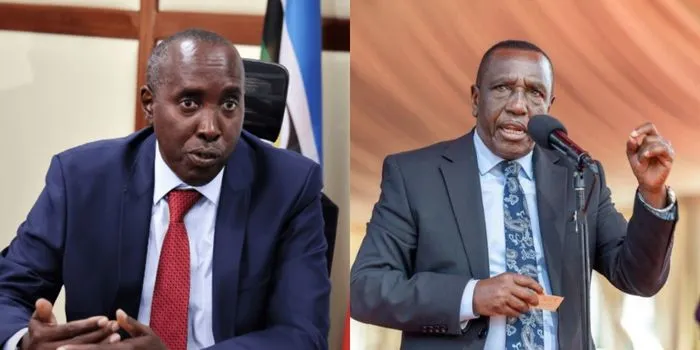
The National Cohesion and Integration Commission (NCIC) has summoned Kajiado Governor Joseph Ole Lenku and nominated MP Joseph Wainaina Iraya over separate political remarks it says may amount to ethnic incitement or hate speech.
The summonses are the latest sign that Kenya’s campaign against divisive political speech is moving into a more active phase, with the country less than a year from the 2027 General Election.
Lenku is required to appear before the commission on September 17 at 2pm, while Iraya is expected at 10am on the same day.
Neither leader has been found guilty of an offence. The appearances are part of ongoing investigations into remarks attributed to them.
The commission’s action comes as political mobilisation increasingly draws on questions of community identity, representation and loyalty — themes that have historically carried a high risk of inflaming tensions during Kenyan election campaigns.
Why Lenku is under investigation
Lenku’s summons relates to remarks he allegedly made while addressing residents at Ewuaso Oonkidongi in Kajiado West Constituency on August 22.
According to the NCIC, the governor spoke in favour of Maasai communities taking the lead in political representation in Kajiado and Narok.
The commission is also examining comments in which Lenku allegedly criticised political parties for fielding candidates from outside the Maasai community in areas where Maasai voters form a significant constituency.
The NCIC is investigating whether the remarks crossed the line from political advocacy into language capable of promoting ethnic exclusion or hostility.
That distinction will be important.
Politicians are free to campaign for particular candidates, parties and political interests. But Kenyan law also places limits on speech that deliberately incites hatred, hostility, violence or discrimination against people because of their ethnicity or race.
The National Cohesion and Integration Act gives the NCIC power to investigate issues affecting ethnic relations and to summon witnesses and parties during its inquiries.
Iraya faces a separate probe
Iraya’s case comes from remarks he allegedly made while addressing residents in Ngeria, Kapseret, Uasin Gishu County, on August 29.
The NCIC says the nominated MP urged members of the Kikuyu community to support President William Ruto and his United Democratic Alliance (UDA) party.
The commission is also examining remarks directed at people from the community who did not support the President.
According to the summons, Iraya made a reference to death while discussing what could prevent Ruto from securing another term, although he reportedly said he was praying that such an event would not occur.
The NCIC is now seeking to establish the context and meaning of the remarks and whether they amounted to conduct prohibited under the law.
Citizen Digital reported that the summons reproduces part of Iraya’s remarks concerning people who did not want to support Ruto and allegedly told them to leave the area.
As with Lenku, the allegations remain under investigation.
NCIC threatens arrest if they fail to appear
The commission has made it clear that the summonses are not optional.
Both leaders have been directed to appear in person.
The NCIC warned that failure to attend could result in warrants being issued for their arrest and production before the commission, as well as possible criminal or contempt proceedings.
The warning is backed by the commission’s statutory powers.
Under Section 27 of the National Cohesion and Integration Act, NCIC can summon witnesses, require documents to be produced and examine witnesses and parties on oath. Section 29 further provides that a person summoned to appear is required to comply with the summons.
The latest action therefore represents more than a political warning from the commission. It is a formal investigative step.
A wider NCIC crackdown is taking shape
The summonses against Lenku and Iraya do not stand alone.
In July, NCIC announced investigations into a group of prominent political figures over remarks it said could amount to hate speech or ethnic incitement.
Those named included former Deputy President Rigathi Gachagua, Health Cabinet Secretary Aden Duale, Public Service Cabinet Secretary Geoffrey Ruku and several MPs and other political figures.
Gachagua was subsequently summoned over remarks made at different public forums, including speeches in Meru, Kisii and Vihiga.
The commission has repeatedly insisted that the investigations are being conducted independently and that being investigated does not mean a person has been found guilty.
That position is important as NCIC seeks to demonstrate that its enforcement is based on conduct rather than political affiliation.
The timing matters
The latest summonses come as political parties and potential candidates begin positioning themselves for the 2027 contest.
Kenya’s elections have repeatedly shown how quickly political competition can acquire an ethnic dimension.
That is why statements that appear to draw a line between communities and political loyalty can carry consequences beyond the rally or meeting where they are made.
The NCIC recently launched the second edition of its Uchaguzi Bila Noma roadmap, aimed at preventing electoral violence, hate speech and political intolerance ahead of the 2027 polls.
The initiative includes early-warning and response measures and calls for greater cooperation between security agencies, electoral institutions, political actors, civil society and communities.
Prime Cabinet Secretary Musalia Mudavadi, speaking during the launch, warned that election-related violence would not only threaten lives but could also damage businesses, investment and livelihoods.
Where does political mobilisation end and incitement begin?
That is likely to be one of the central questions facing the NCIC as the 2027 campaign gathers pace.
Political leaders routinely mobilise voters along regional, ideological and community lines. Community interests are also a legitimate part of political debate.
The legal problem arises when political speech moves beyond persuasion and begins encouraging hatred, hostility, discrimination or violence against another ethnic group.
The National Cohesion and Integration Act makes it an offence to utter words intended to incite contempt, hatred, hostility, violence or discrimination against a person, group or community on ethnic or racial grounds.
The NCIC will therefore have to establish more than whether Lenku or Iraya made the remarks attributed to them.
It will need to examine the exact words, their context, the intended meaning and whether they meet the legal threshold for an offence.
That process will be closely watched.
NCIC faces its own credibility test
The commission's tougher stance has also placed greater pressure on it to demonstrate consistency.
Its investigations now touch figures associated with different political camps.
That gives the NCIC an opportunity to show that its warning that “no one is above the law” applies equally to government and opposition politicians.
But enforcement alone will not be enough.
The commission will also need to explain outcomes clearly. If a case is closed, Kenyans need to understand why. If a prosecution is recommended, the evidence and legal basis should be clear.
That transparency will matter because allegations of selective enforcement can themselves deepen political mistrust.
For now, Lenku and Iraya have been summoned, not convicted.
Their September 17 appearances could provide the commission with an opportunity to establish the facts behind the disputed remarks and decide whether further action is justified.
With the 2027 election approaching, the bigger test will be whether Kenya can keep political competition fierce without allowing community identity to become a weapon.
You may also like
Category: News · Related Topic: 2027 Elections
Related Video: Murkomen Says Kenya Is Safe: “Stop Creating a Crisis” | Political Goons & Security Under Scrutiny
About the Author
Maureen Onyango is a journalist passionate about storytelling, life coaching and spiritual lessons. She studied at the Kenya Institute of Management and enjoys telling stories that inform, inspire and empower communities.
 Facebook
 Twitter / X
 WhatsApp
 LinkedIn
 Telegram
 Reddit