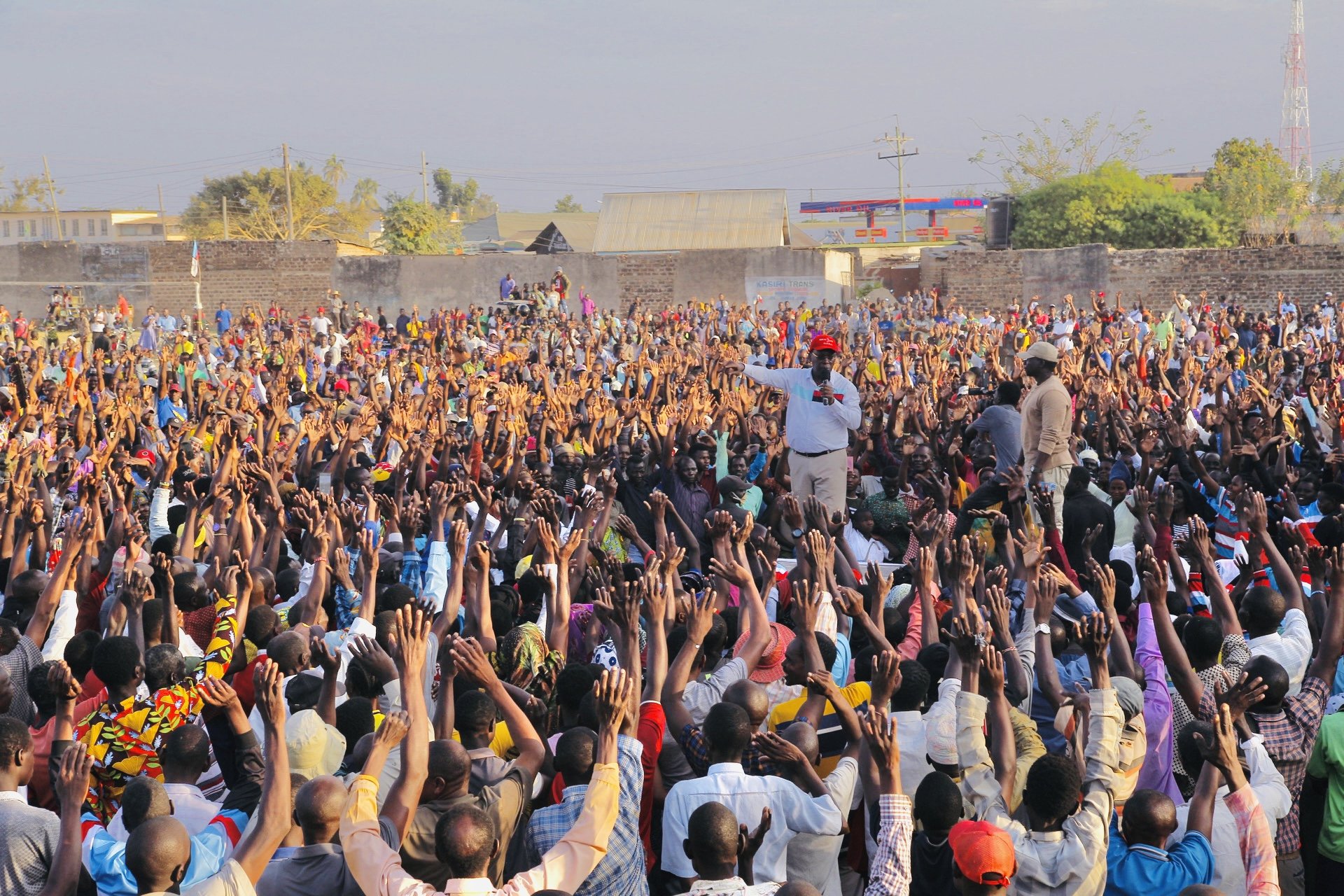
Kenya’s 2027 election has entered a new phase — not with the announcement of candidates, but with the setting of rules on how much money they can spend to win votes.
The Independent Electoral and Boundaries Commission (IEBC) has capped presidential campaign expenditure at KSh6.11 billion, placing the country’s top political contest under a defined financial ceiling for the first time as preparations for the 2027 General Election gather pace.
The limits were published in a special Kenya Gazette notice dated August 7, 2026, covering presidential, gubernatorial, National Assembly and County Assembly contests, as well as spending by political parties.
The development matters beyond the headline figure.
For voters, it could provide a clearer basis for asking where campaign money comes from, how it is spent and whether candidates are playing by the same rules. For politicians, donors, campaign managers, media organisations and businesses providing campaign services, it signals that the 2027 race will increasingly be fought not only at rallies and on social media, but also through financial records and compliance.
Under the framework, political parties collectively face a spending ceiling of KSh24.45 billion.
But the biggest surprise is where much of that money is expected to go.
Transport becomes the biggest campaign expense
Of the party spending ceiling, KSh16.13 billion is allocated to transportation, making it by far the largest authorised expenditure category.
Advertising and media have a ceiling of KSh2.52 billion, while election agents account for another KSh2.08 billion.
The remaining authorised expenses include campaign venues, publicity materials, personnel, communication, security, accommodation and administrative costs.
The figures offer a glimpse into the economics of Kenyan election campaigns.
They suggest that the traditional machinery of politics — moving supporters, candidates and campaign teams around the country — remains considerably more expensive than advertising and media combined.
That could become particularly significant as parties plan nationwide campaigns for 2027.
The money behind the campaign will matter too
The new framework is not only about how much candidates can spend. It also places restrictions on campaign contributions.
IEBC has provided that, subject to the applicable schedules, a single source cannot contribute more than 20 per cent of the total contributions allowed to a candidate or political party.
The rule is designed to prevent campaign financing from becoming excessively dependent on one donor.
Kenya’s Election Campaign Financing Act also requires candidates and political parties to disclose campaign contributions and expenditure, maintain financial records and operate campaign financing accounts. The law gives IEBC responsibility for setting and enforcing spending limits and monitoring campaign expenditure.
This means the real test of the new limits will not simply be whether politicians announce that they will comply.
It will be whether the financial trail can actually be followed.
What happens if campaigns spend more?
IEBC has warned candidates and political party committees that exceeding prescribed spending limits without reporting the breach constitutes an offence.
Under the Election Campaign Financing Act, exceeding prescribed limits without reasonable explanation can attract a fine of up to KSh2 million, imprisonment for up to five years, or both. In addition, the law provides for possible disqualification from contesting where the relevant offence is established.
The law also gives IEBC powers to investigate complaints and breaches and, depending on the circumstances, issue warnings, impose penalties, restrict campaigning or media coverage, and disqualify a candidate or political party.
That makes financial compliance potentially more consequential than simply keeping within a budget.
Not every county will have the same campaign budget
The spending framework also recognises the different costs of campaigning across Kenya.
Nairobi has the highest county-level ceiling at approximately KSh181.31 million, followed by Turkana at KSh142.07 million and Marsabit at KSh127.02 million.
Lamu has the lowest county-level ceiling at approximately KSh28.69 million.
IEBC says its formula considers population and geographical area, with population carrying a 70 per cent weighting and land area 30 per cent.
The underlying law requires the commission to consider factors including population, geographical features, urban centres, the type of election and communication infrastructure when prescribing spending limits.
Why this matters before 2027
The significance of the August 2026 notice is that campaign finance is moving from a largely political talking point into an operational compliance issue.
IEBC's own 2025–2027 Election Operations Plan identifies the publication of spending limits for campaign contributions and expenditure as part of its regulatory preparations for the August 10, 2027 General Election.
That gives political parties and candidates roughly a year to build systems capable of tracking money coming in and going out.
It also means donors, campaign consultants, transport providers, media houses, event organisers and other suppliers operating around political campaigns have a financial compliance environment to consider.
For voters, perhaps the biggest question is no longer simply who has the biggest campaign budget?
It is whether Kenyans will be able to see enough of the money trail to judge whether the rules are being followed.
The 2027 election will ultimately be decided by voters.
But long before voters enter polling stations, another contest will be underway — over who can raise campaign money, where that money comes from, how it is spent and whether Kenya's electoral watchdog can enforce the limits it has now put on paper.
That is why the KSh6.11 billion figure is only the beginning of the story.
You may also like
Category: Politics · Related Topic: 2027 Elections
Related Video: Murkomen Says Kenya Is Safe: “Stop Creating a Crisis” | Political Goons & Security Under Scrutiny
 Facebook
 Twitter / X
 WhatsApp
 LinkedIn
 Telegram
 Reddit