
Good morning. This morning’s agenda is dominated by a fresh threat to public universities, a potentially disruptive lawyers’ boycott, turmoil inside Kenya’s state oil company just as Turkana production is being revived, a shooting in Nandi following an attempt to arrest a KDF soldier, and a major setback in US-Iran diplomacy that could again affect global oil prices.
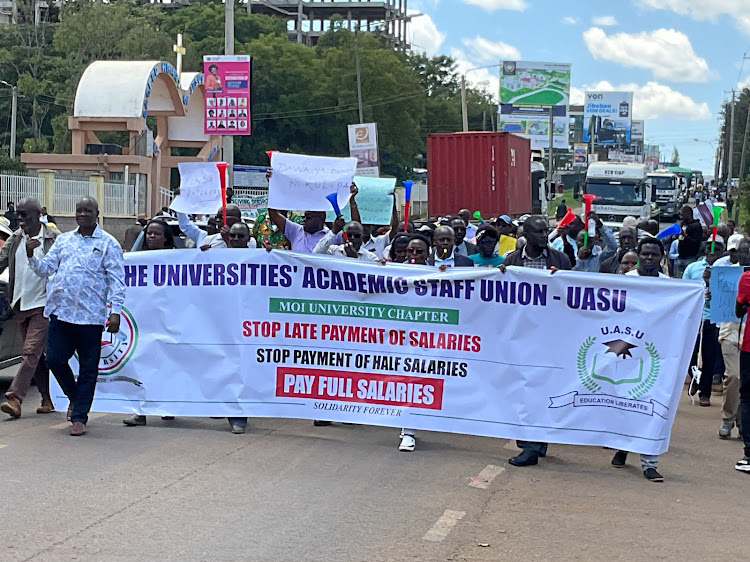
1. University crisis deepens as KUSU joins October 2 strike threat
The threat of a shutdown across Kenya’s public universities has widened after the Kenya Universities Staff Union issued its own seven-day strike notice over the stalled 2025–2029 Collective Bargaining Agreement.
KUSU says its members in public universities and constituent colleges will down tools from October 2 unless outstanding labour issues are resolved.

Universities Academic Staff Union has separately set October 2 as its strike date. UASU says the government has failed to provide a firm funding commitment for the new CBA.
The convergence of the two unions significantly raises the risk of widespread disruption to teaching, examinations, research and graduation programmes.
2. LSK maintains boycott against about 15 judges and judicial officers
The Law Society of Kenya says lawyers should continue boycotting proceedings before approximately 15 judges and judicial officers targeted in its protest over alleged problems within the Judiciary.
LSK President Charles Kanjama says the boycott, announced before the courts went on their recess, remains in force following the resumption of normal court operations.
The dispute could become consequential if cases are repeatedly delayed because advocates refuse to appear before the affected judicial officers.
The story also raises a larger institutional issue: how complaints against judges should be addressed without compromising litigants’ access to justice or judicial independence.
3. Leadership battle rocks National Oil as Kenya races towards Turkana oil production
A leadership dispute has erupted at the National Oil Corporation of Kenya at a particularly sensitive moment: the government is attempting to accelerate commercial oil production in Turkana.
The dispute reportedly pits competing positions within government over NOCK’s leadership and direction while the state-owned company prepares for a much larger role in Kenya’s upstream petroleum sector.
This matters because Kenya is simultaneously trying to revive the long-delayed South Lokichar oil project. Any institutional instability at the state oil company risks complicating an already difficult project involving financing, infrastructure, production arrangements and eventual export.
For LiveNow, this should be treated as the next chapter of the Turkana oil story rather than another generic report saying Kenya is about to become an oil producer.
4. Civilian shot as attempt to arrest KDF soldier triggers chaos in Nandi
Residents of Kilibwoni in Nandi County are demanding answers after a 52-year-old man was shot during chaotic scenes surrounding an attempt by police to arrest a Kenya Defence Forces soldier.
Police say officers went to an entertainment establishment to arrest KDF soldier Emmanuel Kipkirui, who was wanted over the alleged assault of a police officer.
According to the police account, Kipkirui resisted arrest and patrons attacked officers with stones and bottles after plunging the establishment into darkness. Police used tear gas and fired live ammunition into the air as the situation escalated.
During the confrontation, resident Julius Malel was shot in the right thigh and hand. Residents have accused police of excessive force, while police say officers were attacked and a police vehicle damaged.
The competing accounts make an independent investigation important, particularly to establish who fired the round that injured Malel and whether the use of live ammunition complied with policing rules.
5. Trump rejects Iran’s Hormuz peace proposal, putting oil fears back on the table
The biggest international development for Kenya’s economy this morning is the apparent breakdown of the latest US-Iran diplomatic initiative.
Iran proposed reopening the Strait of Hormuz within seven days as part of a broader arrangement to reduce hostilities. The proposal was transmitted to Washington through Qatari mediators.
US President Donald Trump rejected it. Iran is now insisting that diplomacy remains the only viable route to resolving the conflict.
Hormuz carried roughly one-fifth of global oil and LNG flows before the current conflict, and visible shipping traffic has fallen dramatically.
For Kenya, renewed tension means continued risk to petroleum import costs, transport expenses and eventually consumer prices if high global energy prices persist.
You may also like
Category: News
Related Video: What Dangote’s proposed Lamu oil refinery could mean for East Africa
Related Explainer: EXPLAINER: Why Kenya’s aviation workers are striking — and what travellers need to know
 Facebook
 Twitter / X
 WhatsApp
 LinkedIn
 Telegram
 Reddit