
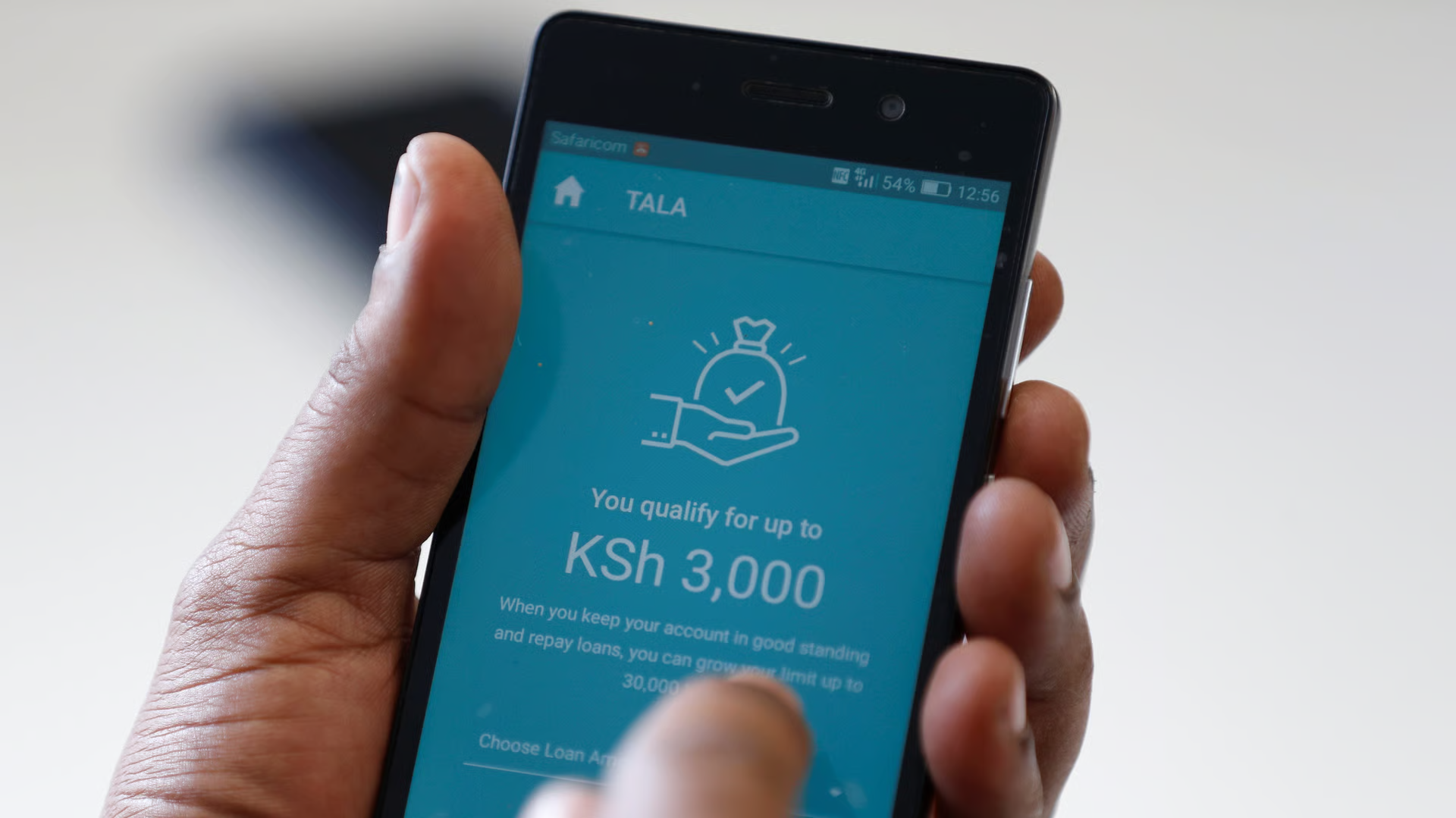
Kenyans are taking larger digital loans as mobile credit becomes an increasingly important source of money for school fees, everyday expenses, emergencies and small businesses, new Central Bank of Kenya data shows.
The average loan issued by regulated digital credit providers rose to about Sh16,341 in December 2025, as the industry's outstanding loan book almost doubled to Sh110.1 billion.
The figures underline the extraordinary expansion of digital lending in Kenya — but also raise a more difficult question about why millions of households increasingly need instant mobile loans to meet everyday financial obligations.
CBK data shows outstanding credit held by licensed digital credit providers rose 99.6 per cent from Sh55.2 billion at the end of 2024 to Sh110.1 billion a year later.

The number of digital-loan accounts increased even faster in absolute terms, rising from about 3.9 million to 6.74 million during the same period.
The average loan was approximately Sh16,341 by December 2025, compared with about Sh14,000 a year earlier.
More lenders, more borrowing
One factor behind the explosion is the rapid increase in licensed digital lenders.
The number of regulated digital credit providers rose from 85 at the end of 2024 to 195 at the end of 2025 after CBK licensed another 110 companies during the year.
The market has continued expanding.
By May 2026, licensed providers had issued about 8.4 million loans worth Sh150.56 billion, while the number of licensed digital credit providers has since risen to more than 250.
Digital lenders have become popular partly because of their speed.
A borrower can apply using a mobile phone and, depending on the provider, receive money within minutes.
Traditional requirements such as physical collateral are frequently absent.
Instead, lenders can use information including mobile-money activity and repayment history to assess customers and determine credit limits.
For someone facing an urgent hospital bill, school-fee deadline or temporary business cash shortage, that convenience can be valuable.
But what people use the money for is equally important.
School fees, food and businesses
A survey cited alongside the latest lending data found that 45 per cent of borrowers used digital credit to stock businesses, while 37 per cent borrowed for school fees and 23 per cent used loans to meet daily needs.
That presents two very different pictures of Kenya's digital-credit boom.
The first is financial inclusion.
A small trader who cannot obtain a conventional bank loan may use digital credit to purchase stock, make sales, repay the loan and grow the business.
The second is financial vulnerability.
A household borrowing simply to buy food or meet another recurring expense is not necessarily creating an income stream from which the loan will be repaid.
That creates the possibility of debt cycling — taking another loan to repay an earlier one or repeatedly borrowing because income is insufficient to meet regular expenses.
The wider FinAccess evidence also indicates that Kenyans increasingly use credit for consumption and emergencies rather than exclusively for investment.
Convenience comes with risks
Digital lending has transformed access to credit in Kenya.
But its convenience can make borrowing feel fundamentally different from walking into a bank and applying for a loan.
The money may arrive almost instantly.
Repayment does not.
Borrowers still need to consider interest, fees, repayment periods and the consequences of default.
The rapid growth of the sector explains why CBK has increased its focus on licensing, customer-data protection, transparent pricing and responsible lending.
The current regulatory regime followed years of complaints about some unregulated digital lenders, including concerns over abusive debt collection and misuse of customers' personal information.
CBK began licensing digital credit providers under regulations that became operational in 2022.
Bringing providers under formal supervision has helped establish rules around consumer protection, but regulation does not eliminate the underlying financial pressure that causes people to borrow.
A cost-of-living indicator?
The most significant number may therefore not be Sh110.1 billion.
It may be the millions of loan accounts behind it.
Mobile credit has become deeply embedded in Kenya's financial system because it solves a genuine problem: people frequently need money before they have it.
But when borrowing is increasingly used for school fees, food and everyday emergencies, digital-credit growth can also become an indicator of household financial stress.
A family that occasionally borrows to meet an unexpected expense is different from one that must borrow every month to survive until the next salary or business payment.
The technology can bridge a temporary cash-flow gap.
It cannot permanently close the gap between household income and household expenses.
Kenya's digital-credit revolution has therefore succeeded spectacularly at making loans easier to obtain.
The harder question is whether the people taking those loans are becoming financially stronger — or simply becoming better connected to debt.
You may also like
Category: Business
Related Video: Gachagua’s explosive Ruto scorecard: Debt, taxes, State capture and a government ‘that has failed’
Related Explainer: Kenya’s short rains: What the 2026 forecast means for you
 Facebook
 Twitter / X
 WhatsApp
 LinkedIn
 Telegram
 Reddit