
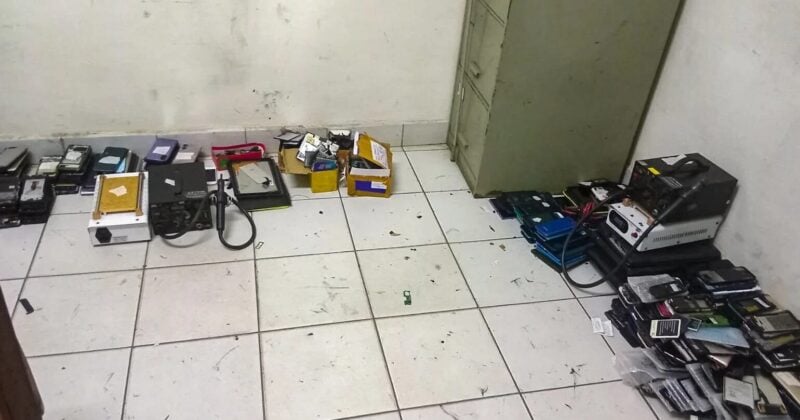
Detectives in Kisumu have arrested two men over a suspected mobile-phone hacking operation, putting renewed attention on the growing risks facing Kenyans whose smartphones provide direct access to mobile money, banking applications, email and personal information.
The suspects were arrested at Tivoli Centre in Kisumu following investigations into alleged phone manipulation and hacking activities.
Police are investigating equipment and devices linked to the operation and the extent of the alleged activity.
The arrests remain allegations at this stage. The suspects are entitled to due process and should not be described as guilty unless convicted by a court.

The case is particularly significant because a modern smartphone is no longer simply a communications device.
For millions of Kenyans, it is effectively a wallet, bank branch, identity store, workplace and archive.
Why compromised phones are dangerous

A criminal who gains effective control of a phone may potentially obtain much more than photographs and contacts.
Depending on the security measures protecting the device and individual applications, access could expose M-Pesa services, banking applications, email accounts, social-media profiles and one-time verification messages.
Email access can be particularly damaging because many online services allow users to reset passwords through email.
A compromised email account can therefore become a gateway to other services.
The same applies to a compromised SIM card or phone number when services rely on SMS verification.
That is why phone theft has increasingly evolved beyond the resale value of the physical handset.
The information and financial services inside the device can be worth considerably more.
Previous crackdowns
Kenyan authorities have previously targeted operations suspected of altering identifying information on stolen or financed mobile phones.
In a 2025 operation in Eldoret, police and M-Kopa personnel arrested suspects and recovered dozens of phones alongside laptops, hard drives and specialised tools allegedly capable of altering device identifiers and bypassing security restrictions.
Authorities said such tools could be used to make stolen devices more difficult to trace.
The Kisumu investigation will need to establish exactly what technology was allegedly being used and whether investigators can connect individual devices to reported offences.
Protecting your phone
Users can reduce their exposure by protecting both the physical device and the accounts inside it.
A strong screen lock is the first barrier.
Financial applications should have separate PINs or biometric authentication where available.
People should also avoid using easily guessed PINs based on birthdays or repeating the same password across multiple accounts.
SIM PIN protection provides another layer against unauthorised use.
Users should enable remote device-location and wiping services where supported.
Most importantly, a stolen phone should be treated as a financial-security incident, not merely the loss of hardware.
The owner should contact the mobile operator and relevant financial institutions quickly, particularly if the phone contains active mobile-money or banking services.
Passwords for important email and financial accounts should also be changed from another trusted device.
Investigation continues
Police will now need to establish whether the alleged Kisumu operation was primarily modifying phones, compromising accounts, handling stolen devices or involved in some combination of activities.
Digital evidence can also help investigators trace networks beyond the individuals initially arrested.
Computers, phones and storage devices may contain transaction records, communications and information about other devices.
But those findings must be established through forensic investigation and ultimately tested through the legal process.
The case is another reminder of how cybercrime and ordinary street crime are converging.
A stolen smartphone was once valuable mainly because it could be resold.
Today, the device may provide a route to the owner's money and digital identity.
You may also like
Category: News
Related Video: What Dangote’s proposed Lamu oil refinery could mean for East Africa
 Facebook
 Twitter / X
 WhatsApp
 LinkedIn
 Telegram
 Reddit