
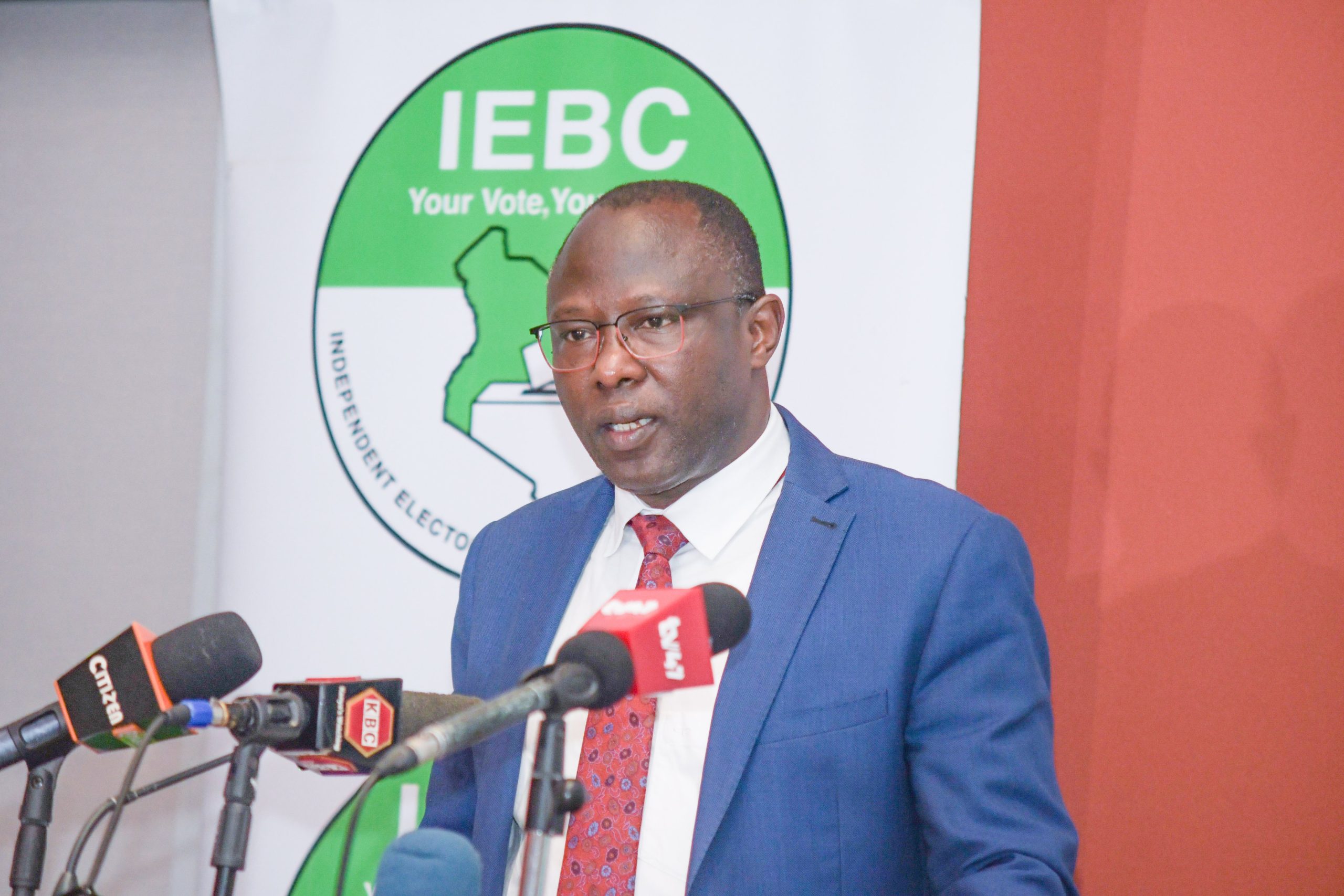
NAIROBI, Kenya — With ten months to Kenya’s next General Election, the Independent Electoral and Boundaries Commission (IEBC) faces a difficult balancing act: preparing to register millions of additional voters, expanding polling facilities and securing election technology while convincing a sceptical political class that the process will be fair.
The challenges are no longer just about planning. A funding deficit of nearly KSh23 billion, resistance in Parliament to proposed changes in polling-station capacity and allegations over a planned election technology contract have put the commission’s readiness under scrutiny.
The election is scheduled for 10 August 2027. The IEBC, led by chairperson Erastus Edung Ethekon, says it is preparing to deliver a peaceful, free, fair and credible vote.
But the real test will be whether its plans are fully funded, its systems are independently tested and its decisions can withstand scrutiny from rival political camps.
The money question: Can IEBC deliver with less?
Funding is among the commission’s most pressing challenges.
An IEBC budget document submitted to Parliament puts the resources required for the 2027 General Election at approximately KSh63.95 billion. The allocation from the National Treasury stands at about KSh41.01 billion, leaving a shortfall of nearly KSh22.94 billion.
The commission has warned that the gap could affect essential preparations, including voter education, staff training, election logistics, technology procurement, stakeholder engagement and efforts to prevent electoral disputes.
These activities are closely connected. Delays in procuring equipment, for example, could leave less time for testing and training. Inadequate voter education could also leave citizens struggling to understand registration requirements, polling procedures and how to verify results.
The funding figures have varied across IEBC briefings and media reports, with some earlier accounts citing a higher overall request. The commission’s published budget table provides a more specific breakdown of the requirement and allocation.
The question is whether the remaining funds will be provided in time for the commission to complete its preparations without compromising essential safeguards.
Polling stations become a parliamentary battleground
Another challenge is how to accommodate a larger electorate without creating long queues or making voting more difficult.
IEBC is targeting about 28.5 million registered voters ahead of the 2027 election, compared with approximately 22.1 million in 2022. That would mean registering millions of additional voters, many of them young Kenyans entering the electoral process for the first time.
To accommodate the expected growth, the commission plans to increase the number of polling stations from 46,229 in 2022 to 55,393 in 2027.
However, its proposal to raise the maximum number of voters assigned to each polling station from 700 to 1,000 has encountered resistance in the National Assembly.
The Senate had approved the proposed amendment, but MPs have raised concerns about the risk of congestion, electoral malpractice and voters being unable to cast their ballots efficiently.
The existing legal limit is 700 voters per polling station. Changing it requires the relevant legislative process to be completed.
The disagreement matters because it affects more than the number of people allowed to vote at a particular station. It influences how many stations IEBC must establish, how equipment and staff are distributed, and how far voters may have to travel.
IEBC chairperson Ethekon has indicated that the locations of additional polling stations will be determined after the registration exercise, taking account of voter numbers and accessibility.
The commission must therefore plan for two possibilities: an increase in the permitted number of voters per station, or retention of the current limit and the need to accommodate more voters through additional facilities.
The technology question: Who will manage election systems?
Election technology has emerged as another source of political tension.
On 26 August 2026, Democracy for the Citizens Party leader Rigathi Gachagua accused the IEBC of favouring South Korean technology company Miru Systems in the procurement of an Integrated Elections Management System for the 2027 polls.
Gachagua alleged that the tender process had been predetermined and questioned the company's suitability for the assignment.
The allegations remain contested. They should not be treated as proof that the procurement was manipulated or that the company would compromise the election.
In a statement issued on 27 August, Ethekon rejected the claims, saying the procurement process was open and that no company, including Miru Systems, had been awarded the tender at that point.
The commission also disputed allegations that the tender specifications had been designed to favour a particular bidder.
The dispute highlights a wider challenge facing the electoral body: it must not only procure a system that meets its technical needs but also demonstrate that the process is lawful, competitive and open to scrutiny.
The system will play a central role in managing election information. Its reliability, security and ability to support transparent results processing will be critical to public confidence.
IEBC has said its election technology will undergo testing and simulations, with technical experts invited to examine its performance.
That commitment will need to translate into clear public information about the procurement, testing arrangements and safeguards against interference.
Voter registration and the integrity of the register
The commission also has to ensure that the voters’ register is accurate, secure and accessible to eligible citizens.
Its target of approximately 28.5 million voters represents a substantial increase from the 2022 register. Reaching that figure will require sustained registration efforts, particularly among young people who have recently attained voting age.
At the same time, the commission must address concerns about duplicate records, deceased voters and the reliability of voter identification.
IEBC has outlined plans to strengthen biometric verification and improve the register’s integrity. Proposed measures include additional biometric data and an independent forensic audit.
Such safeguards are important, but their credibility will depend on how they are implemented, how errors are corrected and whether eligible voters can challenge problems affecting their registration.
The commission has also proposed expanding diaspora voting from 18 to 54 countries. If implemented, the expansion would widen access for Kenyans living abroad, but it would require adequate staffing, equipment and logistical planning.
Registration targets alone will not demonstrate success. The commission will also need to show that eligible voters can register without unnecessary barriers and that the final register accurately reflects those entitled to vote.
Security and misinformation add to the pressure
Beyond funding, registration and technology, IEBC must prepare for the security risks that can accompany a fiercely contested election.
The commission has been working with security agencies, the Judiciary and the Office of the Director of Public Prosecutions through electoral security arrangements intended to improve coordination, identify potential hotspots and respond to offences.
Plans outlined by the commission include training police officers in election security and establishing early-warning systems to help identify potential unrest.
The scale and implementation of these measures will be important as the election approaches. Security preparations must protect voters and election officials without interfering with lawful political activity or the right to assemble.
Digital misinformation presents another challenge. Fabricated images, manipulated videos and AI-generated deepfakes can spread quickly, particularly during periods of heightened political tension.
False claims about voter registration, polling arrangements or election results could undermine public confidence even when they are not supported by evidence.
The response will require timely, verifiable communication from IEBC, alongside cooperation with media organisations, technology platforms and security agencies. Equally important will be the commission's willingness to correct mistakes and explain decisions openly.
Opposition questions, IEBC defends its independence
The debate over preparedness has also become a political contest over trust.
Gachagua's allegations have added to concerns expressed by sections of the opposition about the commission's independence and the management of election technology.
National Assembly Speaker Moses Wetang’ula has defended the IEBC, urging politicians to allow the institution to carry out its constitutional responsibilities without undue interference.
The commission, for its part, has rejected allegations of political interference and procurement manipulation.
These competing positions underline a central problem: confidence in an election depends not only on the rules and technology but also on whether political parties believe the referee is acting impartially.
However, criticism should be distinguished from evidence of wrongdoing. Allegations about procurement or political influence require documentary evidence and independent examination rather than being accepted as established facts.
Likewise, assurances from the commission cannot substitute for verifiable proof that procurement, voter registration and results management are proceeding as planned.
What must happen before August 2027?
Political analysts have argued that transparency will be central to building confidence in the election.
Prof Macharia Munene has called for greater openness in the commission's preparations, particularly given concerns about its public image and perceived independence.
Prof David Monda, a Kenyan political analyst based in the United States, has also argued that the remaining preparation period gives IEBC an opportunity to address outstanding concerns and demonstrate its readiness.
Their arguments point to a practical test for the commission: publish clear timelines, explain procurement decisions, disclose the results of independent technical assessments and communicate progress on voter registration and polling arrangements.
Parliament, meanwhile, must resolve outstanding legislative questions in good time. The Treasury must address the funding gap, while political leaders should raise legitimate concerns through evidence and lawful processes rather than claims that cannot be substantiated.
For voters, the most meaningful signs of preparedness will be straightforward: accessible registration, accurate voter records, enough polling facilities, functioning technology, trained staff and results that can be independently checked.
IEBC still has time to address its challenges. But the next ten months will be decisive.
The credibility of the 2027 election will depend less on declarations of readiness than on what the commission can demonstrate before Kenyans arrive at the polling stations.
You may also like
Category: News · Related Topic: 2027 Elections
Related Video: Murkomen Says Kenya Is Safe: “Stop Creating a Crisis” | Political Goons & Security Under Scrutiny
Related Explainer: Kenya’s inflation holds near 30-month high as transport and food costs squeeze households
About the Author
Maureen Onyango is a journalist passionate about storytelling, life coaching and spiritual lessons. She studied at the Kenya Institute of Management and enjoys telling stories that inform, inspire and empower communities.
 Facebook
 Twitter / X
 WhatsApp
 LinkedIn
 Telegram
 Reddit