
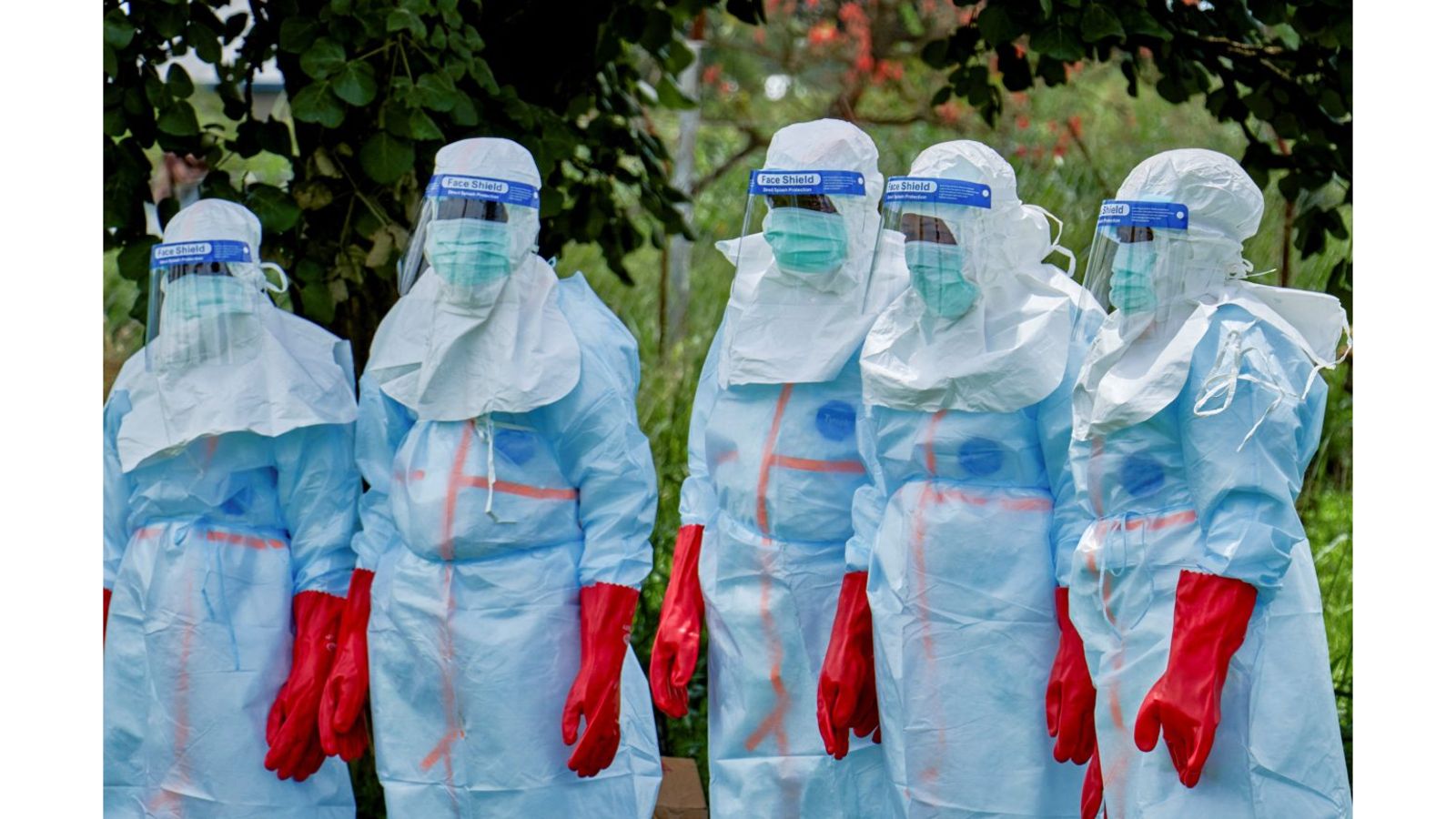
Uganda has officially ended its 2026 Ebola outbreak after going 42 consecutive days without a new confirmed infection. But the milestone comes with a warning: the same Ebola strain is still spreading rapidly in neighbouring Democratic Republic of Congo (DRC).
The World Health Organisation (WHO) and Africa Centres for Disease Control and Prevention (Africa CDC) confirmed Uganda's outbreak was over on Thursday, August 27, following the completion of the internationally recognised 42-day monitoring period.
Uganda recorded 20 confirmed cases and two deaths during the outbreak. Eighteen patients recovered.
Fifteen of the confirmed infections were imported from the DRC, while five were acquired locally among contacts and health workers linked to imported cases. More than 800 contacts were identified and monitored.
The development is a significant public health success for Uganda. It also underlines how difficult it will be to declare the wider regional threat over while transmission continues across the border.
Uganda clears the 42-day test
The final countdown began after Uganda's last Ebola patient, an imported case, was discharged on July 16 after recovering.
The 42-day period is twice the upper limit of Ebola's incubation period. Completing it without another confirmed infection gives health authorities greater confidence that no transmission chain linked to the last case has gone undetected.
WHO Director-General Dr Tedros Adhanom Ghebreyesus praised Uganda's response.
“Uganda has demonstrated that with decisive action, Ebola outbreaks can be brought under control quickly,” he said, pointing to early detection, surveillance and careful management of points of entry as key elements of the response.
Uganda had already announced the interruption of local transmission on July 28. Surveillance continued because of the imported case and the continuing risk of infections crossing the border from the DRC.
DRC faces a very different picture
Across the border, the situation remains serious.
The DRC's outbreak has become the country's fastest-growing Ebola outbreak, according to WHO. More than 5,200 cases have been recorded, with transmission spreading into a sixth province.
WHO says an average of about 90 confirmed cases a day was recorded during the first three months of the outbreak. That pace is substantially faster than during the comparable early periods of the 2014–2016 West Africa outbreak and the DRC's 2018–2020 outbreak.
Ituri remains the epicentre, accounting for roughly 85 per cent of cases and 79 per cent of deaths.
The response is also confronting a worrying pattern of deaths occurring outside treatment centres. WHO says community deaths accounted for about 60 per cent of the 260 weekly fatalities recorded over the six weeks preceding its August 24 update.
That points to one of the biggest challenges facing responders: getting sick people diagnosed and into care early enough.
Why the DRC outbreak is so difficult to contain
This is an outbreak of Bundibugyo virus, a species of Ebola for which there is currently no licensed vaccine or specific approved treatment.
That makes early diagnosis, supportive medical care and infection prevention particularly important. WHO says clinical trials of potential treatments and evaluations of candidate vaccines are under way.
The response is also taking place in communities affected by insecurity, displacement and limited access to healthcare.
Attacks on health facilities and difficulties reaching remote communities have made surveillance and treatment harder. WHO says community engagement is therefore central to the response, alongside stronger case detection and contact tracing.
There has, however, been progress.
WHO says the number of laboratories capable of processing Ebola tests has increased from one to 19, with a combined capacity of more than 3,000 samples a day.
Treatment capacity has also expanded from fewer than 10 beds at the beginning of the outbreak to more than 1,300. More than 900 health facilities have received infection prevention and control support.
Contact follow-up has improved sharply, rising from 9 per cent in the first week of the outbreak to 84 per cent by August 18.
Uganda's victory does not end the regional risk
For Uganda, the end of the outbreak does not mean the risk has disappeared.
The country's close links with the DRC, including cross-border movement and trade, leave the possibility of imported infections.
Africa CDC Director-General Dr Jean Kaseya said Uganda's success should now be matched by stronger efforts in the DRC.
“We must now protect this achievement while accelerating the response in the DRC,” Kaseya said. “We will only be secure when transmission is stopped everywhere.”
WHO is not recommending blanket travel or trade restrictions because of the outbreak. Instead, it is calling for proportionate measures such as surveillance, testing, rapid investigation of alerts and preparedness at borders.
For East Africa, that distinction matters. Cross-border movement is a fact of everyday life, particularly for communities whose livelihoods depend on trade and travel.
The challenge is to detect infections quickly without disrupting legitimate movement.
A regional test of preparedness
Uganda's experience offers a measure of what is possible when cases are detected quickly, contacts are followed and communities cooperate with health authorities.
But the DRC outbreak is testing those same systems on a much larger scale.
WHO says more than 260 experts have been deployed to support the response, while more than 330 tonnes of medical and operational supplies have been delivered.
The next phase will depend heavily on whether response teams can reach communities before transmission moves further.
For Uganda, Thursday's declaration is a moment to celebrate. For its neighbours, it is also a reminder that an outbreak does not respect borders.
The immediate regional priority is now clear: keep Uganda Ebola-free while stopping transmission in the DRC before the virus finds another route across the region.
What has been verified and corrected
The original version of the story contained several figures and claims that are now outdated. The latest WHO information confirms that:
- Uganda recorded 20 confirmed cases and two deaths, with 18 recoveries.
- Uganda's outbreak was officially declared over on August 27, 2026, after 42 days without a new confirmed case.
- The DRC outbreak has surpassed 5,200 reported cases and is described by WHO as the country's fastest-growing Ebola outbreak.
- The DRC outbreak has expanded to six provinces, with Ituri remaining the epicentre.
- The claim that there is “no treatment” for Ebola needs qualification. There are licensed treatments for Zaire ebolavirus, but the current DRC outbreak involves Bundibugyo virus, for which WHO says there is currently no licensed vaccine or specific treatment.
- The current evidence does not support describing the DRC outbreak as simply “uncontrolled”. WHO reports important gains in testing, treatment capacity and contact tracing, while warning that transmission is still outpacing the response in important areas.
You may also like
Category: Health
Related Video: What Dangote’s proposed Lamu oil refinery could mean for East Africa
Related Explainer: Ebola contact tracing: Why the 21-day window matters in Kenya’s response
About the Author
Maureen Onyango is a journalist passionate about storytelling, life coaching and spiritual lessons. She studied at the Kenya Institute of Management and enjoys telling stories that inform, inspire and empower communities.
 Facebook
 Twitter / X
 WhatsApp
 LinkedIn
 Telegram
 Reddit