
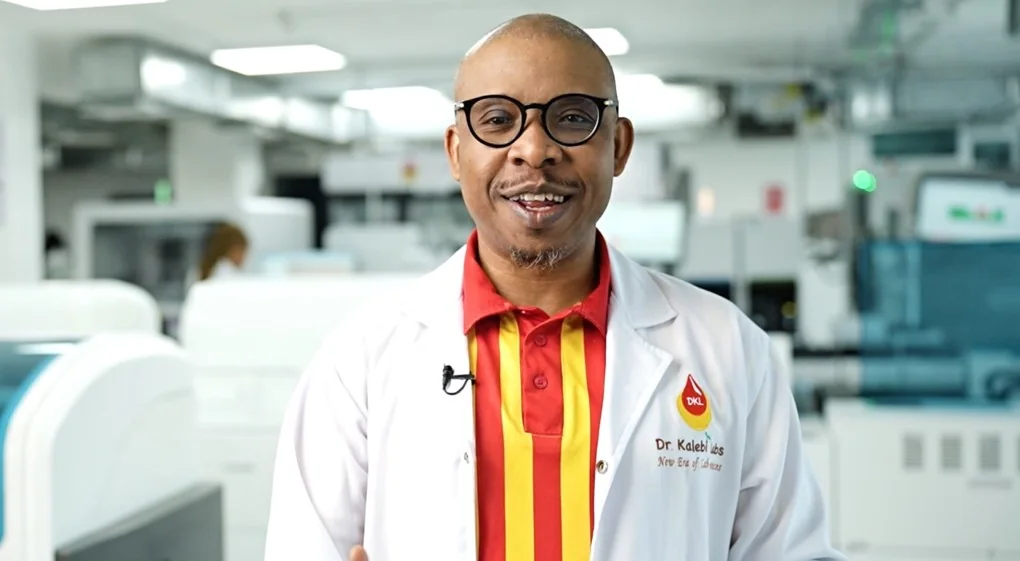
NAIROBI, Kenya — Kenyan pathologist Dr Ahmed Kalebi has earned a place among 15 professionals recognised in the inaugural Hall of Fame of The Pathologist, becoming the only African named in the founding group.
The recognition puts a spotlight on a part of healthcare that patients may rarely think about but which plays a crucial role in diagnosis: laboratory medicine.
Kalebi’s work has focused on advancing diagnostic technology in Kenya and showing how sophisticated laboratory services can operate in settings where resources are more limited. His induction also highlights the contribution African specialists can make to global medical science.
The Hall of Fame was introduced by The Pathologist, an international publication covering pathology and laboratory medicine. It recognises professionals whose influence has extended beyond individual achievements, including through diagnostic innovation, teaching, mentorship and advocacy.
Kalebi joins a group that includes the late Professor Christopher D.M. Fletcher, known for his contributions to tumour pathology and diagnostic education, and Professor Richard Scolyer, whose work helped advance understanding and treatment of melanoma.
“I am deeply honoured and humbled to be inducted into the inaugural Hall of Fame,” Kalebi said, describing the recognition as an extraordinary honour.
Six appearances on global Power List
The induction follows six appearances on The Pathologist Power List, in 2019, 2020, 2021, 2024, 2025 and 2026. The annual list recognises people influencing the direction of pathology and laboratory medicine around the world.
His latest selection highlighted his work to advance diagnostic technology in Kenya and encourage its responsible use in settings with limited resources.
Kalebi said being the only African and the only representative from a low- or middle-income country among the 15 inaugural inductees made the honour particularly significant.
He said he hoped the recognition would draw attention to the talent and potential of pathology professionals across Africa, rather than being viewed only as a personal milestone.
The distinction comes at a time when access to reliable diagnostic services remains an important issue for health systems. Doctors rely on laboratory findings to identify diseases, assess their severity and guide treatment decisions. Better diagnostic capacity can help clinicians make more informed decisions, although the benefits depend on factors such as trained staff, equipment, quality control and access to care.
Building advanced laboratory services in Nairobi
Kalebi founded Dr Kalebi Labs (DKL), a specialist referral diagnostic laboratory in Nairobi that marked its second anniversary on October 16, 2026.
Established in October 2024, the facility operates a digital-first model and offers services supported by technologies including laboratory automation, digital pathology, molecular diagnostics, flow cytometry and next-generation sequencing. The laboratory also uses systems incorporating artificial intelligence, according to information published about the facility.
These technologies support different types of investigation. Molecular diagnostics can identify genetic material associated with diseases, while digital pathology allows tissue images to be reviewed electronically. Next-generation sequencing can examine genetic information in much greater detail than conventional methods.
Such systems can expand the range of tests available locally. Their wider value, however, depends on affordability, skilled personnel, dependable infrastructure and the ability of patients and clinicians to access the services.
Kalebi said he established DKL to demonstrate that advanced diagnostic services could be developed and delivered in Kenya, rather than being associated only with better-resourced countries.
He also credited colleagues who have supported his career and helped build the laboratory.
“Our remarkable team at DKL continues to demonstrate that world-class, cutting-edge laboratory medicine can be developed and delivered right here in Kenya,” he said. “This recognition belongs to them as much as it does to me.”
Why pathology matters to patients
Pathology is central to modern healthcare, even when patients do not meet the specialist responsible for analysing their samples.
A pathologist may examine tissue, cells, blood or other specimens to help establish what is causing an illness. The findings can guide decisions ranging from confirming an infection to identifying cancer and determining the next stage of treatment.
Delays or gaps in diagnostic services can complicate clinical decisions. Expanding local expertise and laboratory capacity can help strengthen healthcare, provided services are accessible and results meet appropriate quality standards.
Kalebi, who has more than two decades of experience in diagnostic pathology, medical education and professional leadership, has called for greater recognition of the field and more investment in African scientific capacity.
“Africa has exceptional talent in pathology, science and laboratory medicine,” he said, urging the creation of more opportunities for that expertise to be recognised internationally while diagnostic institutions and professional skills are strengthened at home.
His induction is a significant professional milestone. It also brings renewed attention to a wider challenge: ensuring that scientific advances translate into better access to diagnosis and care for patients across Kenya and the continent.
You may also like
Category: Health
Related Video: What Dangote’s proposed Lamu oil refinery could mean for East Africa
Related Explainer: Kenya’s inflation holds near 30-month high as transport and food costs squeeze households
About the Author
Maureen Onyango is a journalist passionate about storytelling, life coaching and spiritual lessons. She studied at the Kenya Institute of Management and enjoys telling stories that inform, inspire and empower communities.
 Facebook
 Twitter / X
 WhatsApp
 LinkedIn
 Telegram
 Reddit