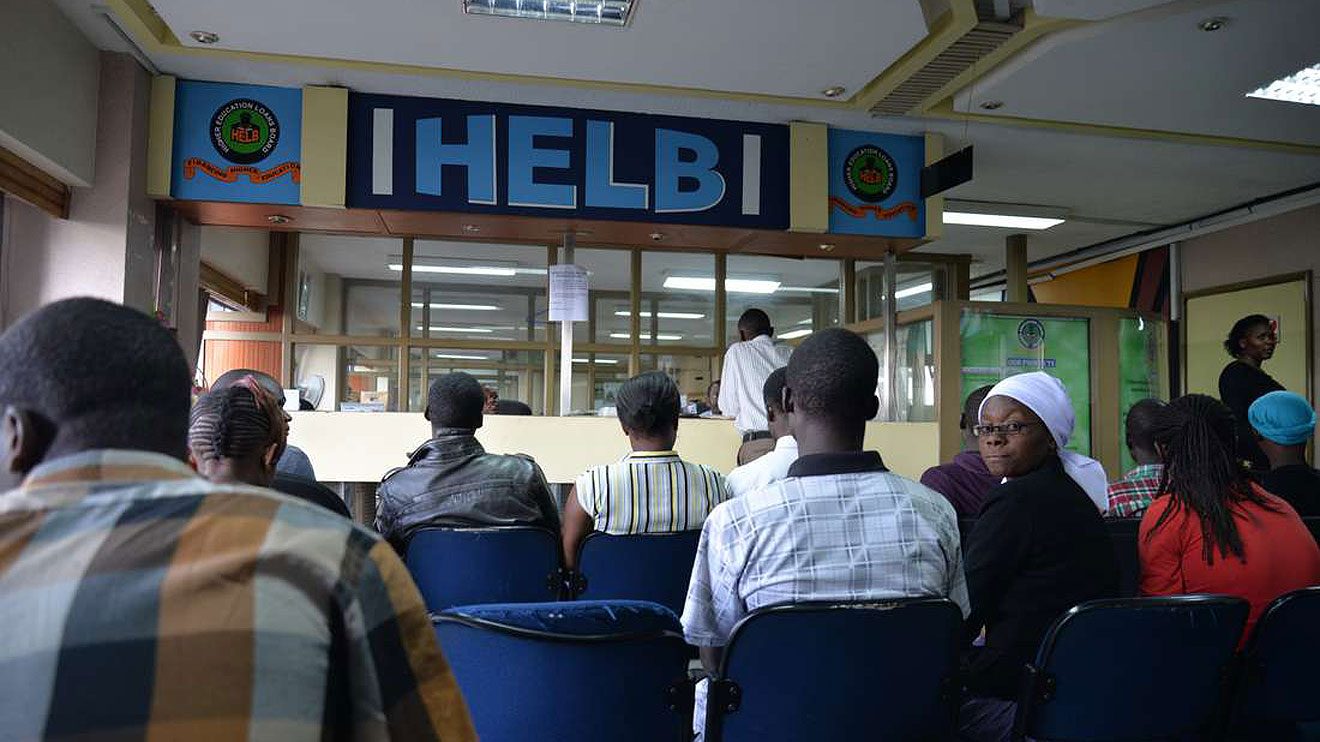
More than 380,000 university and college students are still waiting for government financial support after the Higher Education Loans Board (HELB) revealed a cumulative funding deficit of Sh86.7 billion.
The shortfall has left the board struggling to meet demand for student loans, raising fresh concerns about how learners will pay tuition fees and cover their living expenses during the 2026/2027 academic year.
HELB Chief Executive Officer Geoffrey Monari disclosed the figures on Thursday, November 26, when he appeared before the National Assembly Education Committee during hearings on the 2027 Budget Policy Statement.
Monari told MPs that the board had funded about 820,000 students against a target of 1.2 million, leaving more than 380,000 without the expected support.
“We have a huge funding deficit amounting to Sh86.7 billion. We are unable to send money to students,” Monari told the committee, according to People Daily.
He said the board had formally asked the National Treasury, through the Ministry of Education, to release outstanding funds so it could continue supporting students.
How HELB accumulated the Sh86.7 billion deficit
The funding crisis has developed over several financial years rather than emerging in the current academic cycle alone.
The figures presented by HELB indicate that the board was underfunded by approximately Sh10.6 billion in the 2024/2025 financial year and Sh18.5 billion in 2025/2026.
The largest gap is in the current financial year, with a projected shortfall of Sh57.65 billion.
This brings the cumulative deficit to approximately Sh86.7 billion.
For 2026/2027, HELB estimates that it needs Sh114.36 billion to support about 1.2 million university and TVET students. However, its approved allocation is approximately Sh56.71 billion, covering only about half of the projected requirement.
The figures show that the challenge goes beyond processing delays. The board is facing a substantial gap between the money available and the amount required to support the growing number of learners.
Government allocation falls short of demand
The funding crisis comes despite an increase in HELB's allocation in the 2026/2027 national budget.
The board received approximately Sh56.7 billion, up from Sh41.55 billion in the previous financial year.
The wider education sector received Sh784.5 billion, according to the National Treasury's 2027 Budget Policy Statement.
Other allocations included Sh30.9 billion for university scholarships and Sh9.2 billion for TVET scholarships.
However, the increased allocation has not matched the financing needs presented by HELB.
The pressure is also visible in university scholarships. Separate figures presented during the budget review show that the Universities Fund requires about Sh47.36 billion against an allocation of Sh30.8 billion, leaving a projected gap of Sh16.56 billion.
This means the financing challenge extends beyond student loans to other forms of government support for higher education.
Students face uncertainty as funding model comes under review
The shortfall puts renewed focus on Kenya's student-centred higher education funding model, which combines government scholarships, loans and household contributions.
Under the current arrangement, HELB sends tuition payments directly to institutions, while upkeep support is transferred to students' personal bank accounts.
The amount awarded depends on the student's assessed financial need and the applicable funding criteria.
For learners who rely on this support, delayed disbursements can make it harder to meet basic academic and living costs. Students may have to seek help from their families or other sources while waiting for the money.
The government is also pursuing changes to the way higher education is financed.
The proposed Tertiary Education Placement and Funding Bill, 2026, seeks to bring HELB, the Universities Fund and the TVET funding structure under a consolidated authority.
The Bill is still before Parliament. It was listed for Second Reading in the National Assembly's supplementary Order Paper for November 26, meaning the proposed changes should not be treated as an already implemented system.
The exact implications for students will depend on the final legislation and any regulations adopted after its passage.
Treasury promises timely student funding
In its November 2026 Budget Policy Statement, the National Treasury identified improving the higher education means-testing system and ensuring timely disbursement of scholarships and loans as priorities for the 2027/2028 financial year and the medium term.
The policy document also commits the government to strengthening the student-centred funding model.
However, the immediate question for students is whether additional money will be released in time to address the current shortfall.
HELB's appeal now places pressure on the Treasury and the Ministry of Education to explain how the outstanding funding will be addressed.
As MPs scrutinise the government's spending priorities, the board's funding request is likely to be an important test of the government's commitment to keeping higher education accessible.
For the more than 380,000 students still awaiting support, the debate is not just about budget figures. It is about whether they can continue with their studies without the financial assistance they were counting on.
You may also like
Category: Education
Related Video: Murkomen Says Kenya Is Safe: “Stop Creating a Crisis” | Political Goons & Security Under Scrutiny
Related Explainer: Why the BCG Vaccine Leaves That Small Scar on Your Arm
About the Author
Maureen Onyango is a journalist passionate about storytelling, life coaching and spiritual lessons. She studied at the Kenya Institute of Management and enjoys telling stories that inform, inspire and empower communities.
 Facebook
 Twitter / X
 WhatsApp
 LinkedIn
 Telegram
 Reddit