
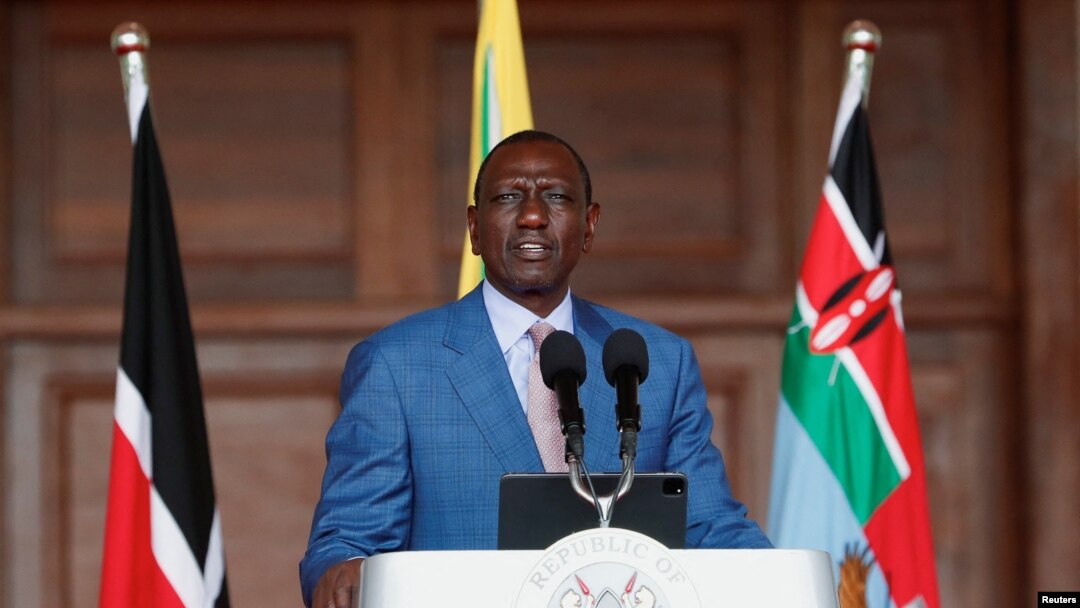
President William Ruto’s government has six months to regularise the creation of seven State Departments after the High Court found that their establishment breached constitutional and legal requirements.
In a judgment delivered on Thursday, November 26, 2026, Justice Roselyne Aburili ruled that the Executive had failed to demonstrate that it followed the required procedures, including consultation with the Public Service Commission (PSC) and meaningful public participation.
The judge quashed the decision contained in Executive Order No. 1 of 2025 that established the departments. However, she suspended the implementation of the order for six months to give the government an opportunity to correct the process.
This means the departments are not required to shut down immediately. The government now has until late May 2027 to bring their establishment into line with the Constitution and the Public Service Commission Act.
If it fails, the court order will take effect automatically when the six-month period expires, without requiring another court order.
The decision is a significant reminder that the President’s authority to organise government does not give the Executive freedom to bypass constitutional safeguards.
Why the court overturned the decision
The case was filed by Francis Njoroge Wanjiku, who challenged the legality of the seven departments created under the 2025 government restructuring.
At the centre of the dispute was whether the President followed the correct procedure when creating new public offices.
Justice Aburili acknowledged that the President has constitutional powers to organise government and establish public offices. However, she found that the government had not provided sufficient evidence to show that the process complied with the Constitution and the Public Service Commission Act, 2017.
The court referred to Articles 10, 129 and 132 of the Constitution, alongside Sections 27 and 30 of the Public Service Commission Act.
Article 234 also gives the PSC responsibility for establishing and abolishing offices in the public service, subject to the Constitution and relevant legislation.
In her ruling, the judge made clear that the President's authority to organise government must be exercised within these legal boundaries.
She also rejected the argument that parliamentary approval of the Principal Secretaries appointed to head the departments could remedy the shortcomings.
The judge explained that approving individuals to occupy public offices is a different process from establishing the offices themselves.
In her words, the two exercises cannot be treated as interchangeable.
Public participation was another major issue
The court also found that the government had not demonstrated meaningful public participation before creating the departments.
The government had shown that Parliament invited public memoranda and held hearings during the vetting of nominees for Principal Secretary positions.
However, Justice Aburili said those hearings dealt with the suitability of the individuals proposed for appointment. They did not give Kenyans an opportunity to examine whether the new departments were necessary in the first place.
The judge noted that members of the public should have been given information about why the departments were being created, what responsibilities they would undertake, how they would relate to existing government structures and what their financial implications would be.
The court's position was that public participation must take place before a decision is made, rather than being treated as a formality after the government has settled on its preferred structure.
This is particularly important because creating new government departments can affect public spending, staffing, service delivery and the distribution of responsibilities across ministries.
The seven departments affected
The ruling concerns seven State Departments introduced through Executive Order No. 1 of 2025.
They are:
-
State Department for Public Investments and Assets Management.
-
State Department for National Government Coordination.
-
State Department for Justice, Human Rights and Constitutional Affairs.
-
State Department for Science, Research and Innovation.
-
State Department for Aviation and Aerospace Development.
-
State Department for Special Programmes.
-
State Department for Children's Welfare Services.
The departments were part of a wider restructuring of government functions and ministerial responsibilities.
Their creation affected several areas of government administration, including public investment management, coordination of national government activities, aviation development, research, special programmes and children's welfare.
How the departments came into existence
The changes were announced in June 2025 through Executive Order No. 1 of 2025.
A circular dated June 9, 2025, issued by then Chief of Staff and Head of Public Service Felix Koskei, communicated the restructuring to Cabinet Secretaries, Principal Secretaries and heads of State corporations.
The order replaced the previous government structure under Executive Order No. 2 of 2023 and introduced new administrative arrangements across the Executive.
It also transferred the functions of the State Department for Performance and Delivery Management to the Executive Office of the President.
The Treasury was directed to align ministerial budgets for the 2025/2026 financial year with the revised government structure.
The court's decision now puts the legal foundation of the seven new departments under scrutiny, even as the government continues to operate within the current administrative arrangement during the suspension period.
What happens to the Principal Secretaries?
The ruling also raises questions about the future of the Principal Secretaries appointed to head the affected departments.
Under Article 155 of the Constitution, each State Department is administered by a Principal Secretary. The President nominates candidates from among those recommended by the PSC, with the National Assembly required to approve the appointments.
However, the court found that parliamentary approval of the individuals did not cure the legal defects in the creation of the departments.
That does not mean the Principal Secretaries have been ordered to leave office immediately.
The six-month suspension gives the government time to regularise the departments and address the procedural shortcomings identified by the court.
Their longer-term positions will depend on how the Executive responds and whether the departments are lawfully established within the period provided.
The ruling therefore creates an administrative challenge for the government, which must address the court's findings without disrupting services and programmes currently handled by the affected departments.
A wider test of constitutional accountability
The judgment comes as the Ruto administration faces other legal challenges over the organisation and composition of the national Executive.
In June 2026, a three-judge High Court bench declared the Cabinet's composition unconstitutional for failing to meet the two-thirds gender principle under Article 27(8).
The government missed the 120-day deadline set by the court to correct the imbalance. Attorney-General Dorcas Oduor subsequently filed an application at the Court of Appeal seeking to suspend the judgment pending an appeal.
That dispute is separate from the case involving the seven State Departments. However, both matters have brought constitutional questions about the exercise of presidential powers and the organisation of government into sharp focus.
For the seven departments, the immediate question is whether the government will undertake the required consultations, demonstrate the need for the offices and address their financial and administrative implications before the six-month window closes.
The court has given the Executive time to do so. What it cannot do is ignore the constitutional process and assume that an executive order alone is enough to settle the matter.
You may also like
Category: News · Related Topic: William Ruto
Related Video: Human Ladder Reaches Dangerous Heights as Climbers Keep Going
Related Explainer: Explainer: What happened to milk in Kenya?
About the Author
Maureen Onyango is a journalist passionate about storytelling, life coaching and spiritual lessons. She studied at the Kenya Institute of Management and enjoys telling stories that inform, inspire and empower communities.
 Facebook
 Twitter / X
 WhatsApp
 LinkedIn
 Telegram
 Reddit