
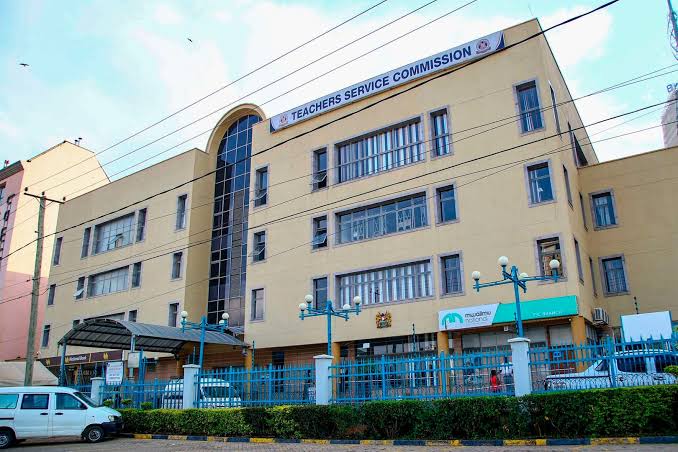
Teachers seeking registration in Kenya could face a revised qualification framework as the Teachers Service Commission (TSC) pushes ahead with changes aimed at aligning entry into the profession with the Competency-Based Education (CBE) system.
The commission held discussions with the Parliamentary Committee on Delegated Legislation on Thursday, November 26, as it sought to advance amendments to the Code of Regulations for Teachers.
The proposed changes focus on Regulation 20, which sets out the academic and professional qualifications required for teacher registration.
The discussions mark another stage in a wider review of how Kenya trains, registers and regulates educators. They also come as separate legislative proposals seek to introduce practising certificates linked to continuous professional development.
However, the changes should not be confused with rules that have already taken effect. The regulatory and legislative proposals are still subject to the relevant parliamentary and approval processes.
What TSC wants to change
TSC says the review is intended to bring teacher registration requirements into line with the demands of the new education curriculum.
The commission also wants to strengthen its oversight of teacher training institutions and ensure that people entering the profession meet the required academic and professional standards.
Regulation 20 currently provides the general conditions for registration. Applicants must demonstrate good moral character, hold relevant academic and professional qualifications from recognised training institutions and meet the requirements set by the commission.
The proposed revision seeks to make the qualification framework more responsive to changes in teacher education and the different learning pathways introduced under CBE.
One proposal that has attracted attention is a possible adjustment of academic entry requirements for some diploma teacher-training programmes.
Earlier proposals included allowing applicants with a KCSE mean grade of C plain to qualify for certain diploma pathways, subject to additional subject-specific and professional requirements.
This could widen access to teacher training for some candidates who would not have qualified under the previous entry thresholds.
However, the proposed adjustment should not be interpreted as a blanket reduction of qualifications for every category of teacher. Different teaching levels and specialisations have their own academic and professional requirements.
Parliament's role in reviewing the changes
The November 26 engagement follows public consultations conducted by TSC in April and May 2026.
The commission had invited teachers, education stakeholders and members of the public to submit their views on the proposed changes to Regulation 20.
A notice published in April gave interested parties until May 13 to submit written memoranda.
The proposals subsequently entered the parliamentary scrutiny process.
On November 3, the National Assembly recorded the tabling of Legal Notice No. 218 of 2026, relating to the Teachers Service Commission Code of Regulations for Teachers (Amendment) Regulations, alongside its explanatory memorandum and regulatory impact assessment.
The latest engagement with the Committee on Delegated Legislation is therefore part of a process that requires lawmakers to examine the regulations and consider whether they meet the requirements governing delegated legislation.
The committee's scrutiny is important because regulatory changes can affect thousands of current and prospective teachers. It provides an opportunity to examine the legal basis, practical implications and public concerns surrounding the proposed framework.
Five-year teaching licence renewal also on the table
The review of teacher qualifications is happening alongside a separate proposal to introduce renewable practising licences for teachers.
In June 2026, TSC acting Chief Executive Evaleen Mitei announced plans for teachers to renew their practising licences every five years.
She said the proposed system would be tied to the Teacher Professional Development (TPD) programme, which requires teachers to keep updating their knowledge and classroom skills.
Mitei said the revised programme was expected to be offered free of charge, with most training delivered online and selected sessions conducted face to face.
Speaking at the Kenya Secondary Schools Heads Association annual conference in Mombasa, she explained that completion of the five-year professional development cycle would be linked to licence renewal.
The proposal is intended to encourage teachers to keep pace with changes in curriculum delivery and classroom practice.
However, the five-year renewal plan should not be treated as an already operational requirement for every registered teacher. Its implementation depends on the completion of the relevant policy and legal processes.
A separate Bill could give professional development more legal weight
The licensing debate is also reflected in the Teachers Service Commission (Amendment) Bill, 2026, which was introduced in the National Assembly as Bill No. 64 of 2026.
The Bill proposes changes to the TSC Act, including provisions on teacher registration, professional development, performance management and disciplinary procedures.
Among its proposals is a requirement for registered teachers to undertake continuous professional development, with practising certificates linked to compliance with the prescribed training requirements.
It also proposes the establishment of an Institute of Teacher Support and Professional Development within TSC.
The proposed institute would support teacher training, induction and professional development.
The Bill is separate from the amendments to Regulation 20. It is important to distinguish the two because one concerns changes to the regulations governing teacher registration qualifications, while the other seeks wider changes to the law governing the commission and the teaching service.
Neither proposal should be presented as a fully implemented reform before the required legislative and regulatory processes are completed.
What the changes could mean for teachers
If approved, the reforms could affect people planning to enrol in teacher-training programmes, graduates seeking registration and teachers already in the profession.
For prospective teachers, revised entry requirements could open or change routes into the profession, depending on the training programme and the final qualification criteria.
For serving teachers, the proposed licensing framework could make regular professional development an important condition for maintaining the right to practise.
The changes could also place greater responsibility on training institutions to ensure their programmes meet the standards set by TSC.
But questions remain about how the proposed system would work in practice, including the cost of training, the recognition of previous professional development, the arrangements for teachers in remote areas and how existing teachers would be treated during any transition.
Teachers' unions and professional associations will also have a stake in the final framework, particularly where changes could affect career progression, access to training and continued eligibility to teach.
What happens next?
The immediate focus is on the outcome of parliamentary scrutiny of the proposed amendments to the Code of Regulations for Teachers.
The final requirements will depend on the approved text and the applicable legal procedures. Any changes to entry qualifications should therefore be checked against the final regulations rather than circulated as settled rules.
For teachers and those planning to join the profession, the message is to follow official TSC and parliamentary announcements before making decisions about training or registration.
The reforms could mark a significant change in how Kenya regulates teaching. But their success will depend not only on setting higher professional expectations, but also on making the requirements clear, fair and practical for educators across the country.
You may also like
Category: Education
Related Video: What Dangote’s proposed Lamu oil refinery could mean for East Africa
About the Author
Maureen Onyango is a journalist passionate about storytelling, life coaching and spiritual lessons. She studied at the Kenya Institute of Management and enjoys telling stories that inform, inspire and empower communities.
 Facebook
 Twitter / X
 WhatsApp
 LinkedIn
 Telegram
 Reddit