
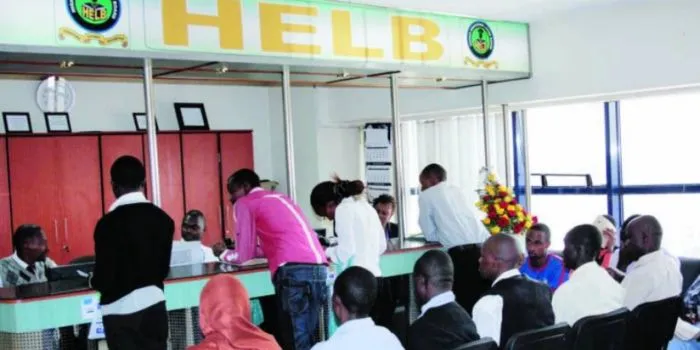
The Higher Education Loans Board (HELB) has released tuition funds for five more batches of students, offering some relief to university and college learners who have been waiting for their funding.
HELB said on Thursday, October 8, that batches 007139, 007145, 007147, 007146 and 007132 had been processed and the money sent directly to the respective institutions.
“Good news students! Batches HELB-007139, 007145, 007147, 007146 and 007132 have been processed and disbursed to institutions,” HELB said in an update.
The announcement is likely to ease pressure on students whose applications had remained in the funding pipeline as universities continued with admissions and registration for the 2026/27 academic year.
But the latest payment does not mean all students waiting for funding have now been covered.
Students told to check their portals
HELB has advised students in the affected batches to check their individual portals and confirm the status of their applications.
They can also contact their universities or colleges to establish whether the money has been received and reflected against their fee accounts.
The tuition component is paid to the institution rather than directly to the student.
This is different from the upkeep component, which is intended to provide students with money for expenses such as accommodation, food and transport.
Students still waiting for upkeep payments may therefore have to wait for separate disbursements.
HELB has also continued responding to students seeking clarity on pending allocations, telling some applicants that the disbursement process is ongoing and that further communication will be made once payments are completed.
Why the delays matter
The latest release comes as universities admit first-year students under the 2026/27 academic year.
The Ministry of Education had earlier directed institutions to proceed with admissions even as the government worked through the funding delays.
That has left some students facing an uncomfortable situation: they have a place at university, but uncertainty over when government funding will actually reach their fee accounts.
The issue is particularly important under Kenya's student-centred funding system, where government support is divided between loans and scholarships depending on a student's assessed level of need.
In September, Education Cabinet Secretary Julius Ogamba extended the application deadline for first-time university and TVET applicants to September 21 after concerns that some eligible students had missed the initial window.
At the time, the ministry said 789,422 applications had been received and that KSh22.12 billion had already been disbursed for continuing university students and TVET trainees for the first semester and term.
Funding has increased — but so has demand
The government has increased funding for higher education in the 2026/27 financial year.
The approved national budget provides about KSh56.7 billion for HELB, up from about KSh41.5 billion in the previous financial year.
The National Treasury's Budget Statement puts the HELB allocation at KSh56.3 billion, reflecting slightly different figures across the budget documents. Parliament's final allocation lists KSh56.7 billion.
That increase, however, comes as the number of students seeking government support continues to grow.
Budget data shows the government is targeting more than 1.2 million university and TVET students on loans in 2026, with the number expected to rise further in subsequent years.
The pressure is therefore not only about whether money has been allocated.
It is also about how quickly that money moves from the Treasury to the agencies, institutions and students who need it.
A bigger funding overhaul is also underway
The delays come as Kenya considers another major change to the way higher education is financed.
The proposed Tertiary Education, Placement and Funding Bill, 2026 seeks to reorganise the country's higher education financing and placement system.
The proposed changes have raised questions about how HELB, the Universities Fund and TVET financing would operate under a new framework.
For students, however, the immediate concern is much simpler.
They need to know whether their tuition has been paid and whether they will have money for basic living expenses while at university.
That is why each new HELB batch announcement matters.
What students should do now
Students whose batch numbers are among the five released should log into their HELB portals and confirm their status.
They should also check with their institutions because a payment being released by HELB does not necessarily mean the amount will appear on a student's fee statement immediately.
Those whose batches have not been listed should continue monitoring their portals and official HELB communication rather than assuming their applications have been rejected.
The latest announcement is therefore a step forward, but it is not the end of the funding problem.
For students already in lecture halls, the real measure will be whether the remaining allocations arrive soon enough to prevent fee balances, registration restrictions and the added pressure of meeting day-to-day costs from disrupting their studies.
You may also like
Category: Education
Related Video: Gachagua’s explosive Ruto scorecard: Debt, taxes, State capture and a government ‘that has failed’
Related Explainer: EXPLAINER: How can one mother give birth to five babies? The science behind Kenya’s rare quintuplets
About the Author
Maureen Onyango is a journalist passionate about storytelling, life coaching and spiritual lessons. She studied at the Kenya Institute of Management and enjoys telling stories that inform, inspire and empower communities.
 Facebook
 Twitter / X
 WhatsApp
 LinkedIn
 Telegram
 Reddit