
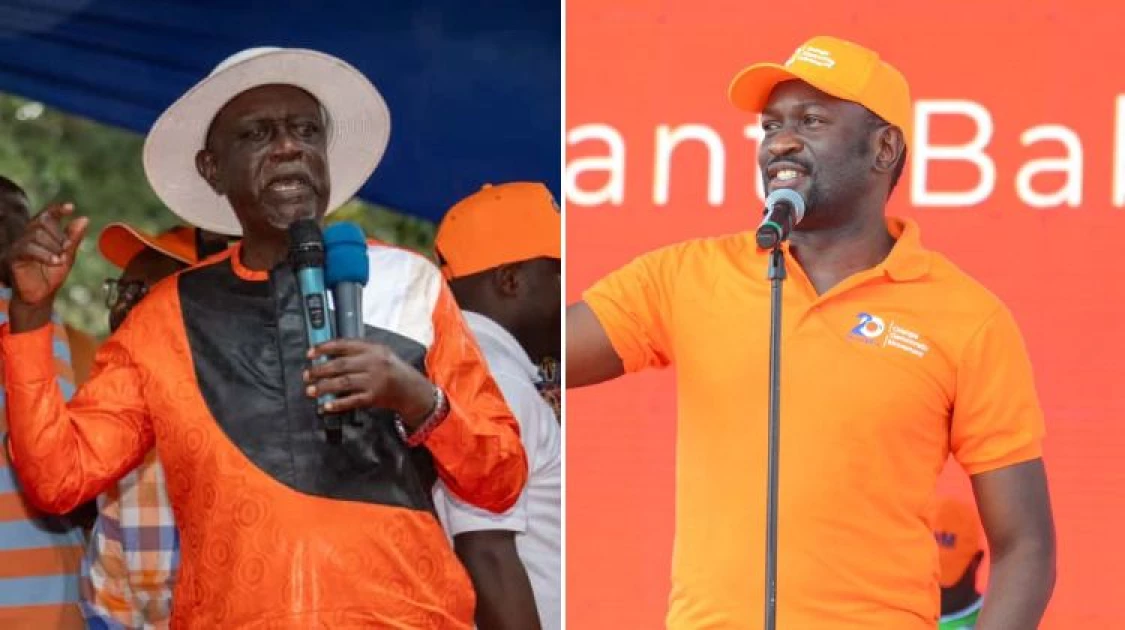
The Suba North MP says Oburu Oginga regrets how the senator was pushed out, warning that ODM’s handling of dissent has weakened its support in Western Kenya
ODM could be paying a political price for the way it handled its fallout with Nairobi Senator Edwin Sifuna, Suba North MP Millie Odhiambo has warned, saying the party turned an internal disagreement into a crisis that is now hurting its support base.
Odhiambo, who is also the National Assembly Minority Whip, says the Orange Democratic Movement should have found a way to accommodate Sifuna’s criticism of the government instead of allowing the dispute to escalate.
Speaking in a podcast interview, she admitted that the party had mishandled the situation and allowed Sifuna to emerge as a political casualty in the eyes of some supporters.
“We are the ones who pushed him out, made him a victim, and the public accepted it. He's gone with a third, or whatever fraction, of the party faithful who back him,” she said.
Her remarks offer a rare public acknowledgement from within ODM that the dispute may have cost the party more than a senior office-holder.
They also come as Sifuna builds a separate political platform and takes his 2027 presidential ambitions to Kenyans living abroad.
Odhiambo says ODM is feeling the loss
The Suba North MP singled out Western Kenya, traditionally an important support base for ODM, as one of the regions where the party could feel the consequences of the fallout.
She described the party as badly weakened in the region and argued that its leadership had failed to manage disagreements that could previously have been contained through internal discussions.
“ODM in Western Kenya is gravely wounded, as it is in many other parts of the country,” she said.
Odhiambo added that the party had often managed to recover support in areas where its popularity fluctuated. This time, she suggested, the handling of the Sifuna dispute had made that task more difficult.
Her assessment is a political warning, rather than evidence of a measured loss in ODM support. The scale of any shift will become clearer through party activity, voter surveys and electoral results.
What Oburu reportedly told her
Odhiambo also claimed that ODM leader and Siaya Senator Oburu Oginga had expressed regret over how the party handled Sifuna’s departure.
According to her account, Oburu did not necessarily agree with Sifuna’s political position but was uncomfortable with the decision to push him away.
“He said he doesn't agree with Sifuna politically, but he seems to regret that we sent Sifuna away,” she said.
She added that she had questioned why the party was forcing out a young leader who had brought energy and visibility to the movement.
The claim about Oburu’s private views comes from Odhiambo. There has been no independent confirmation of the conversation or a separate public statement from Oburu confirming that he regrets the decision.
The distinction matters because Oburu has presided over the party during a difficult period of internal disagreement over its relationship with President William Ruto’s broad-based government.
Sifuna's removal followed a prolonged party dispute
Sifuna's fallout with ODM was not a single disagreement. It developed into a prolonged contest over the party's political direction, internal discipline and his position as secretary-general.
In February 2026, ODM's National Executive Committee, chaired by Oburu, removed Sifuna from the secretary-general position, citing concerns about indiscipline and conduct within the party's senior leadership.
Sifuna challenged the process. The Political Parties Disputes Tribunal initially raised concerns about his right to a fair hearing, but after a subsequent internal disciplinary process, ODM removed him again in June.
In September, the Tribunal upheld the later removal, finding that the party's committee had authority to handle the disciplinary process and that Sifuna had been given an opportunity to respond.
The Office of the Registrar of Political Parties had also updated its records to reflect the change in ODM's leadership.
The dispute therefore ended his tenure as secretary-general, although that is not the same as a formal expulsion from the party.
Odhiambo's latest comments focus less on the legal outcome and more on the political choices that led to the breakdown.
She argued that Sifuna should have been allowed to challenge ODM's participation in the broad-based government from within the party.
“Nobody gave him that chance. Now we have to deal with that,” she said.
Questions over ODM's internal democracy
Odhiambo's criticism goes beyond Sifuna's removal. She says the party has become less tolerant of opposing views since the death of its longtime leader, Raila Odinga.
She described the party's internal democracy as being at a low point and warned that members who express disagreement increasingly face pressure to leave.
“The tragedy is that our internal democracy has hit rock bottom post-Baba,” she said.
She also warned that ODM risked weakening itself if it continued treating dissent as a reason for separation rather than debate.
The comments expose a difficult question for a party that built much of its identity around political mobilisation and opposition to government excesses: how does it maintain a common position while allowing members to disagree over its participation in government?
ODM's broad-based arrangement with President Ruto has been a source of tension, particularly among leaders and supporters who want the party to maintain a more confrontational opposition role.
The Sifuna dispute has become one of the clearest public expressions of that divide.
Sifuna takes his political ambitions to the diaspora
While ODM deals with the fallout, Sifuna is building a political platform outside the party.
He is leading the Linda Mwananchi Movement, which adopted the name and structures of The Equitable Party during a National Delegates Conference on November 13. The changes included amendments to the party's constitution, colours, symbol and internal election rules.
The Nairobi senator has declared his intention to challenge President William Ruto in the 2027 General Election.
He is also using a tour of the United States to reach Kenyan communities abroad, build political networks and raise support for his campaign.
Documents filed with the US Department of Justice and reported by the Daily Nation indicate that fundraising for his presidential bid forms part of the tour's agenda.
The delegation arrived in the US on November 20 and is scheduled to conclude its engagements on December 7. The programme includes town halls, political meetings and diaspora events across several states.
At a meeting in the US, a supporter pledged to mobilise KSh100 million for Sifuna's presidential campaign, according to the Daily Nation. That was a pledge, not confirmation that the money had already been raised.
The tour gives Sifuna an opportunity to build support beyond his Nairobi political base, although a successful diaspora mobilisation drive will not by itself establish the nationwide structures and voter support needed for a competitive presidential campaign.
A test of ODM's future after Raila
Odhiambo's remarks come at a sensitive moment for ODM. The party is navigating questions about its identity and political direction following Raila Odinga's death, while leaders position themselves ahead of the 2027 election.
Her warning suggests that the consequences of the Sifuna dispute may extend beyond the loss of a secretary-general. The party could also be confronting a wider challenge over how it keeps its supporters and leaders united when they disagree on the direction of its politics.
Whether Sifuna can turn his growing profile into a durable political force remains to be seen. Equally, ODM's ability to retain its traditional support will depend on more than public statements of regret.
For now, the clearest message from Odhiambo is that the party may have made it harder for itself by treating a political disagreement as a problem to be removed rather than one to be resolved.
You may also like
Category: Politics · Related Topic: 2027 Elections
Related Video: Murkomen Says Kenya Is Safe: “Stop Creating a Crisis” | Political Goons & Security Under Scrutiny
About the Author
Maureen Onyango is a journalist passionate about storytelling, life coaching and spiritual lessons. She studied at the Kenya Institute of Management and enjoys telling stories that inform, inspire and empower communities.
 Facebook
 Twitter / X
 WhatsApp
 LinkedIn
 Telegram
 Reddit