
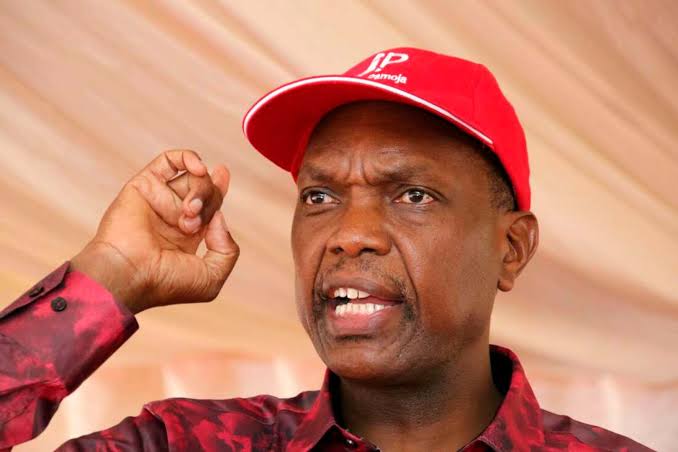
Profile: Jeremiah Kioni’s journey from Parliament to the heart of Jubilee politics
Jeremiah Ng’ayu Kioni has spent much of his political life working behind the scenes and inside the structures of Kenya’s major political parties. But as Jubilee prepares for the 2027 General Election, the former Ndaragwa MP has found himself at the centre of a leadership contest that could determine his political future.
Kioni is among the party officials who helped shape Jubilee during its years in government under former President Uhuru Kenyatta. He rose through its ranks to become Secretary-General before being appointed Deputy Party Leader in charge of Operations in January 2026.
His latest political challenge has been navigating the changing leadership of a party that is attempting to rebuild its influence after leaving government.
Early life and education
Kioni was born in 1965, according to his profile on Mzalendo, a Kenyan parliamentary monitoring platform.
He studied at the University of Nairobi, where he obtained a Bachelor of Arts degree in Land Economics between 1984 and 1987.
He later pursued a Master of Arts degree in Housing Administration, completing it in 1990. Between 2002 and 2006, he studied law at the University of Nairobi’s School of Law, earning a Bachelor of Laws degree.
His academic background gave him experience in land administration, property matters and the legal field before he became a prominent political figure.
From public service to elective politics
Kioni’s professional career included work in the Ministry of Finance and the Ministry of Lands. He also ventured into private practice and business.
His political career took shape in the 2007 General Election, when he won the Ndaragwa parliamentary seat on a Party of National Unity (PNU) ticket.
He served in the 10th Parliament from 2007 to 2013, becoming involved in several parliamentary committees.
These included the Defence and Foreign Affairs Committee, the Standing Orders Committee and the Powers and Privileges Committee. He also chaired the Parliamentary Select Committee on Unlawful Gangs between 2008 and 2010.
In 2013, Kioni received an opportunity to move onto the national presidential stage when Musalia Mudavadi selected him as his running mate under the United Democratic Forum Party.
The ticket did not win the election, but the nomination placed Kioni among the politicians who had contested for the country’s second-highest office.
He returned to elective politics in 2017, winning the Ndaragwa seat again, this time on a Jubilee Party ticket.
His rise within Jubilee
Kioni became one of Jubilee’s influential organisational figures during the party’s years in government.
He served as Secretary-General, a position that placed him at the centre of party administration, communication and political organisation.
The role also made him a key figure in defending the party’s decisions and responding to political developments involving the Uhuru Kenyatta administration.
However, his parliamentary career suffered a setback in the August 2022 General Election.
Running to retain the Ndaragwa seat on a Jubilee ticket, Kioni lost to United Democratic Alliance candidate George Gachagua. He conceded defeat and thanked residents for giving him the opportunity to represent them.
His exit from Parliament did not end his involvement in politics. He remained active within Jubilee and continued serving as Secretary-General.
The Jubilee leadership struggle
Kioni’s position within Jubilee changed in January 2026, when the party appointed him Deputy Party Leader in charge of Operations.
The changes followed a wider restructuring that also saw former Interior Cabinet Secretary Fred Matiang’i serve as deputy party leader and the party’s presidential candidate for the 2027 election.
Moitalel Ole Kenta was appointed Secretary-General, taking over the position previously held by Kioni.
The new arrangement gave Kioni responsibility for party operations, mobilisation, negotiations and legal affairs. But it also placed him in a leadership structure in which Matiang’i was emerging as one of the party’s most prominent figures.
The relationship between the two became a subject of public political discussion as Jubilee prepared for its next electoral contest.
In September 2026, Kioni openly offered himself for the position of Jubilee Party Leader as Uhuru moved towards relinquishing formal control of the party.
He argued that the transition should follow the party’s internal democratic procedures, with delegates having the final say.
That position placed him in a potentially difficult contest as Matiang’i consolidated his position within the party.
Growing differences with Matiang’i
By November 2026, Kioni was publicly expressing dissatisfaction with his place in Jubilee’s political activities.
In an interview reported by The Star on November 16, he said he was considering another political platform because he felt his ambitions could no longer be achieved within Jubilee.
He also questioned the party’s popularity in the Mt Kenya region and said he had not been assigned specific responsibilities despite holding the position of deputy party leader.
Kioni suggested that he had expected to work alongside Matiang’i, with the former Interior Cabinet Secretary concentrating on his presidential ambitions while he focused on strengthening Jubilee.
He also indicated that he was not involved in some of the political meetings organised around Matiang’i.
Despite the reported differences, Kioni played down suggestions of an open confrontation. He used the biblical story of Abraham and Lot going separate ways to describe the possibility of the two pursuing different political paths.
His remarks raised questions about whether he would remain in Jubilee as the party moved closer to the 2027 election.
Reports of a subsequent resignation have also emerged, but the party’s receipt of a formal resignation and the completion of the required membership process should be confirmed before describing his departure as final.
What happens next?
Kioni’s political future is closely tied to the direction Jubilee takes as it attempts to rebuild its support ahead of the 2027 General Election.
His experience in party organisation, parliamentary politics and leadership negotiations gives him a long history within the political establishment. However, losing the Ndaragwa seat in 2022 means he no longer has an elected parliamentary position to complement his party role.
His next move could therefore shape not only his own political prospects but also the strength of Jubilee’s internal organisation, particularly in the Mt Kenya region.
For Matiang’i, the challenge is to unite party officials and supporters behind his presidential ambitions. For Kioni, the question is whether he can continue pursuing his political goals within Jubilee or whether he will seek a different political vehicle.
What is clear is that Kioni remains an experienced figure in Jubilee’s political story. Whether he will help shape the party’s next chapter from within or outside its ranks is a question that the coming months may answer.
You may also like
Category: Politics · Related Topic: Kenya Politics
Related Video: What Dangote’s proposed Lamu oil refinery could mean for East Africa
Related Explainer: Inside Kenya’s crude supply puzzle as Dangote prepares to break ground in Lamu
About the Author
Maureen Onyango is a journalist passionate about storytelling, life coaching and spiritual lessons. She studied at the Kenya Institute of Management and enjoys telling stories that inform, inspire and empower communities.
 Facebook
 Twitter / X
 WhatsApp
 LinkedIn
 Telegram
 Reddit