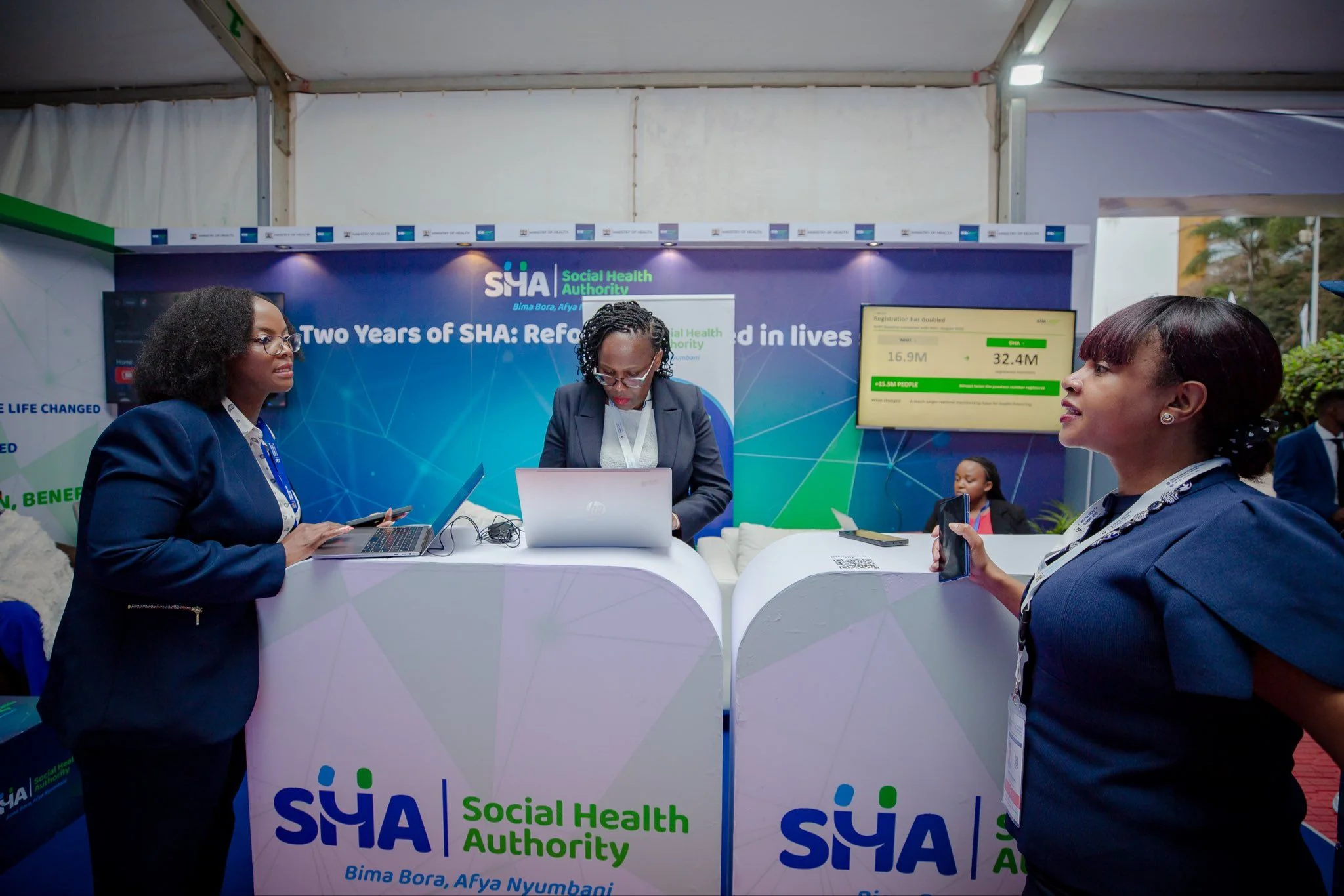
The court found that the government failed to consult the public on the controversial deduction, but stopped short of ordering hospitals to recover money already taken
The government has 120 days to address constitutional defects in the controversial 2 per cent fee deducted from healthcare providers’ Social Health Authority (SHA) claims, following a High Court ruling that found the charge had been introduced without adequate public participation.
In a judgment delivered virtually on Tuesday, November 24, 2026, Vihiga High Court Judge Reuben Nyakundi declared the Health Information Management Service (HIMS) fee unconstitutional in its current form.
However, the ruling does not bring the deduction to an immediate end. The judge suspended the effect of the declaration for 120 days, giving the authorities time to undertake the required consultations and establish a lawful basis for the charge.
The fee is set at 2 per cent of approved SHA claims, subject to a maximum deduction of KSh5,000 per claim. It is collected to support the digital platform used by healthcare facilities to submit claims and receive payments.
Justice Nyakundi said the government had failed to demonstrate that the public was consulted on the specific rate, the maximum charge or the formula used to arrive at the deduction.
“The fee was never put to the public as a fee, with its amount and its formula, before it was made,” the judge ruled.
The decision puts the government under pressure to explain how the charge was calculated and why healthcare providers should continue paying it.
Why the court rejected the fee
The case was filed by Nakuru-based surgeon Dr Benjamin Magare-Gikenyi, Eliud Karanja Matindi and Busia Senator Okiya Omtatah Okoiti.
The petitioners challenged the legality of the deduction, arguing that it amounted to an additional financial burden on healthcare providers and had been introduced without proper public participation.
They also raised concerns about the involvement of private company Finsprint Limited in the claims payment process and questioned whether money meant for healthcare was being channelled away from its intended purpose.
The government defended the fee, arguing that it was authorised under the Digital Health Act, 2023, and the Digital Health (Data Exchange Component) Regulations, 2025.
Health Cabinet Secretary Aden Duale had previously maintained that the charge was a service fee payable to the Digital Health Agency (DHA), a public institution responsible for supporting the country's digital health infrastructure.
The court recognised that the Digital Health Act provides a legal basis for the agency to charge for services. However, it found that this did not remove the government's obligation to consult the public on the specific amount and calculation method.
Although consultations had taken place on the wider regulations, the evidence did not show that stakeholders had been adequately informed about the proposed 2 per cent charge and the KSh5,000 ceiling.
The judge found that this fell short of the constitutional principles of public participation and openness in public finance.
He also raised questions about the need for Senate concurrence because healthcare is a devolved function involving both national and county governments.
Hospitals will not automatically get refunds
The ruling is unlikely to provide immediate financial relief to hospitals that have already paid the fee.
The petitioners had asked the court to order a refund of all money deducted, arguing that the collections were unlawful.
But Justice Nyakundi declined to grant the request. He said the deductions had been made under a published legal instrument that was presumed valid at the time, and that the court had not been given sufficient records to establish how much each affected provider had paid.
He also considered the potential disruption of reversing payments made across hundreds of thousands of claims.
The judge said an immediate invalidation could interrupt funding for a digital system that processes approximately 26,000 claims each day, with possible consequences for healthcare facilities and patients.
The court therefore opted for a prospective remedy rather than ordering a blanket refund.
This means the judgment does not automatically entitle hospitals to recover previous deductions.
What happens during the 120 days?
The government now has an opportunity to correct the shortcomings identified by the court.
The relevant authorities are expected to conduct meaningful public participation on the proposed fee, including its rate, cap and calculation formula.
Any revised charge must also be supported by a Regulatory Impact Statement setting out the reasons for the amount being proposed.
The judge warned that if the authorities fail to establish a lawful fee provision within the 120-day period, the existing entry in the regulations will lapse.
State agencies involved in the arrangement must also submit monthly progress reports to the Deputy Registrar of the court, under the guidance of the Attorney-General.
The court further noted that the Auditor-General has a constitutional mandate to examine public accounts, including money collected through the HIMS fee.
Court rejects claims of private diversion and privacy breach
The case also raised questions about Finsprint Limited, which is involved in the payment-routing process for the digital health system.
The petitioners questioned the company's role and alleged that public healthcare funds were being channelled to a private entity.
However, the court did not find sufficient evidence to support the allegation that Finsprint had received or diverted the disputed money.
Evidence presented in court indicated that the company handled encrypted payment instructions rather than approving SHA claims or holding the money owed to healthcare providers.
The judge also found no proven breach of patients' privacy rights in the arrangement.
These findings are important because the court's decision was based on the failure to follow the required public participation process, rather than proof that the money had been stolen or that patient information had been unlawfully exposed.
A fresh test for SHA and digital health funding
The judgment presents a challenge for the government as it continues to build a national digital health system under the Social Health Authority.
The HIMS platform supports the submission and processing of claims, pre-authorisation and reimbursement to contracted healthcare facilities.
The Digital Health Agency has argued that the fee helps meet the costs of operating, maintaining and securing the system.
The court has not ruled out the possibility of charging for those services. Instead, it has made clear that the government must demonstrate how the specific fee was arrived at and give affected stakeholders a meaningful opportunity to scrutinise it.
For hospitals, the next 120 days will be important. The government must now decide whether to retain the charge through a properly conducted process, revise the rate or abandon the existing arrangement.
For the wider public, the case raises a bigger question about how new costs are introduced into a health financing system that depends on public trust.
The immediate task for the government is not just to defend the need for a digital health platform. It must also show that the way it pays for that platform meets the constitutional standards expected of public institutions.
You may also like
Category: Health · Related Topic: Social Health Authority (SHA)
Related Video: Human Ladder Reaches Dangerous Heights as Climbers Keep Going
Related Explainer: Ebola contact tracing: Why the 21-day window matters in Kenya’s response
About the Author
Maureen Onyango is a journalist passionate about storytelling, life coaching and spiritual lessons. She studied at the Kenya Institute of Management and enjoys telling stories that inform, inspire and empower communities.
 Facebook
 Twitter / X
 WhatsApp
 LinkedIn
 Telegram
 Reddit