
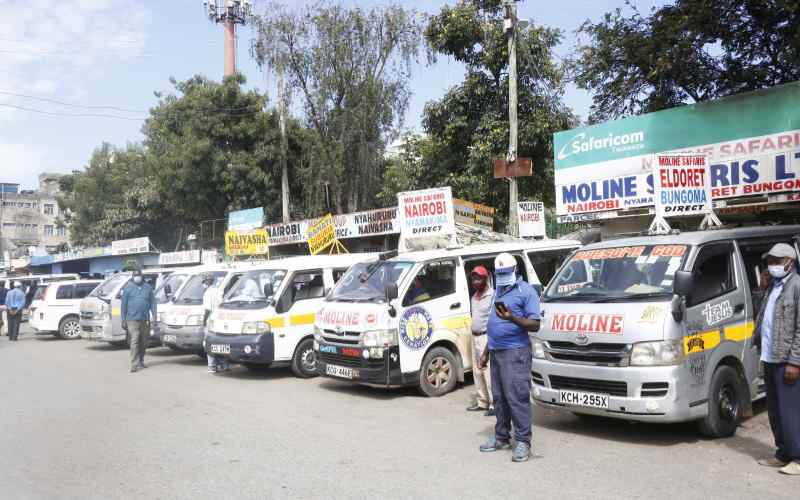
NAIROBI, Kenya — Commuters could soon pay more for matatu trips after operators announced plans to raise fares in response to Kenya's latest fuel price increases, putting fresh pressure on households already struggling with the cost of living.
Albert Karakacha, the head of the matatu operators' association, said operators would adjust fares to cope with rising fuel expenses following the latest review by the Energy and Petroleum Regulatory Authority (EPRA).
The announcement comes as diesel prices rise by Sh9.90 per litre and petrol by Sh12.93 in Nairobi. The new rates took effect on 15 October and will remain in force until 14 November 2026.
Under the revised price schedule, a litre of diesel costs a maximum of Sh227.76 in Nairobi, while super petrol retails at Sh226.96.
For matatu operators, the diesel increase presents an immediate challenge. Fuel is one of the major day-to-day expenses involved in running public transport vehicles. When costs rise, operators face a difficult choice between absorbing the extra expense and passing some of it on to passengers.
Karakacha said operators would increase fares to cushion their businesses against the higher costs. He also appealed to President William Ruto to honour his earlier pledge to keep diesel prices low.
However, a nationwide fare schedule setting out the new charges for individual routes was not provided in the announcement. Commuters should therefore confirm fares with their operators rather than assume that every route has already increased its charges by the same amount.
Why diesel prices matter to matatu passengers
The latest increase could affect more than the amount passengers pay at the stage.
Matatus are a major part of Kenya's public transport network, connecting residential estates to workplaces, schools, markets and major transport hubs. Even a modest fare adjustment can add up for people who make several trips each day.
For example, a commuter who makes two paid journeys daily, five days a week, would spend an additional Sh100 a week if each journey became Sh10 more expensive. Over four weeks, that would amount to roughly Sh400.
The calculation is illustrative, not an announced fare increase. Actual costs will depend on the routes travelled and any changes operators make.
Higher transport expenses can also affect businesses that rely on vehicles to move food, farm produce and other goods. If transporters pass on their additional costs, some of the pressure could reach consumers through higher prices. The extent of that effect will depend on fuel consumption, competition and other business costs.
EPRA points to higher petroleum import costs
EPRA attributed the latest fuel price adjustments to increases in the cost of imported refined petroleum products.
In its October review, the regulator reported that the average landed cost of imported super petrol rose from US$874.26 per cubic metre in August to US$977.55 in September.
Diesel increased from US$957.05 to US$1,065.38 per cubic metre over the same period. Kerosene rose from US$1,003.87 to US$1,098.31.
Kenya imports its petroleum products from international markets, leaving local prices exposed to changes in global supply costs and other import-related expenses.
Reuters reported on 15 October that rising import costs amid conflict in the Middle East had contributed to the latest increases. This provides important context for the decision, although it does not remove questions about the wider impact on Kenyan households and businesses.
The price review also increased kerosene by Sh28.49 per litre, taking the Nairobi maximum retail price to Sh219.87.
The unusually steep kerosene increase has attracted criticism from the Motorists Association of Kenya (MAK), which is demanding greater transparency in how EPRA calculates pump prices.
Motorists Association questions fuel pricing
In a statement issued on 15 October, MAK challenged the relationship between the reported increases in imported fuel costs and the changes in retail prices.
The association said landed costs rose by 11.81 per cent for petrol, 11.32 per cent for diesel and 9.41 per cent for kerosene. It compared these figures with pump price increases of 6.04 per cent, 4.54 per cent and 14.89 per cent, respectively.
MAK acknowledged that taxes, levies, distribution costs and other adjustments also influence the final price. It nevertheless wants EPRA to publish a detailed breakdown of the calculations behind the latest review.
The association has also called for an independent audit of the government's government-to-government petroleum import arrangement to establish whether it is delivering savings compared with alternative procurement methods.
These demands have not established that EPRA's calculations are wrong. A full assessment would require the regulator's underlying pricing data and a review of the costs included in the final prices.
For matatu passengers, however, the debate raises a practical concern: whether the latest increases will translate into higher daily travel expenses, and how quickly commuters will feel the effect.
MAK has warned that it could mobilise motorists, transport operators, traders and other stakeholders for peaceful demonstrations if its concerns remain unanswered.
What commuters should expect next
The immediate question is how individual operators will respond to the higher diesel price.
Fare changes can differ between routes because operating distances, traffic conditions, passenger demand and vehicle costs vary. Operators may also make different decisions depending on how much of the increase they can absorb.
Passengers should look out for fare notices from their usual operators and ask about any proposed change before travelling. Where fares rise, the amount and effective date should be communicated clearly to avoid confusion at stages and during journeys.
The government faces a balancing act. Operators need to cover their operating expenses, while commuters need affordable and predictable transport to reach work, school and other essential services.
The latest fuel review has intensified that tension. Whether the proposed fare increases become widespread will depend on the decisions operators make in the coming days and whether fuel costs remain elevated.
For millions of commuters, even a small increase per trip can become a significant monthly expense. The challenge now is to establish how much fares will rise, which routes will be affected and whether any relief from higher operating costs is possible.
You may also like
Category: Business
Related Video: What Dangote’s proposed Lamu oil refinery could mean for East Africa
Related Explainer: Kenya G-to-G Oil Deal Explained: How It Works, Who Supplies the Fuel and Why It Is Controversial
About the Author
Maureen Onyango is a journalist passionate about storytelling, life coaching and spiritual lessons. She studied at the Kenya Institute of Management and enjoys telling stories that inform, inspire and empower communities.
 Facebook
 Twitter / X
 WhatsApp
 LinkedIn
 Telegram
 Reddit