
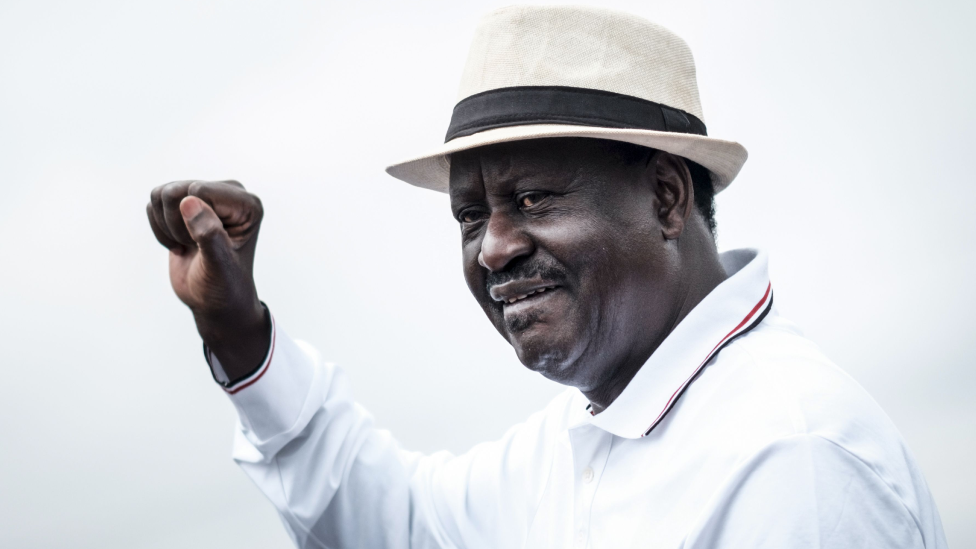
A year after his death, Raila Odinga remains central to the 2027 political contest. But the fight over his legacy is exposing deep divisions within the party and among the leaders who once stood beside him.
Raila Odinga is no longer in the race for State House, but his name remains a powerful force in Kenya’s politics.
As the country marks one year since his death on October 15, 2025, politicians are still invoking his legacy to defend alliances, rally supporters and shape their plans for the 2027 General Election.
Yet the question facing Kenya is no longer simply who can claim to carry Raila’s political torch. It is whether the movement he built can survive without the leader who held its competing interests together.
The clearest test is unfolding inside the Orange Democratic Movement (ODM), the party Raila led for years and built into one of Kenya’s most influential political organisations.
ODM has survived his death and installed his elder brother, Oburu Oginga, as party leader. But it is facing disagreements over its relationship with President William Ruto’s administration, while some prominent figures from Raila’s political circle have moved towards alternative political formations.
The battle over what Raila stood for
Raila’s political legacy has never fitted neatly into one description.
To his supporters, he was a champion of political reform, democratic rights and a fairer distribution of national resources. His long struggle for political change, support for constitutional reform and role in the push for devolution helped shape Kenya’s modern political landscape.
To his critics, his political career was also marked by hard bargaining, shifting alliances and repeated attempts to reach power through negotiated arrangements.
Both sides now have a reason to revisit that history.
Leaders working with Ruto can point to Raila’s final political arrangement with the President as evidence that cooperation with government was part of his strategy. Those opposing the arrangement argue that ODM risks abandoning the opposition tradition with which Raila built his national following.
The disagreement is not merely about how to remember a former leader. It concerns the political direction of a party that must decide what it wants to be without him.
Raila’s death has left that question open, and the approach of the 2027 election has made it more urgent.
ODM has a leader, but unity remains a test
Oburu was formally installed as ODM party leader in March 2026, giving the party a recognised successor at the top. Homa Bay Governor Gladys Wanga has also remained a prominent figure in its national leadership.
But a change in leadership has not settled the dispute over the party’s political direction.
The decision by ODM’s leadership to continue its broad-based arrangement with Ruto has drawn criticism from figures who believe the party should maintain a more confrontational position towards the government.
Nairobi Senator Edwin Sifuna, Siaya Governor James Orengo and other politicians associated with the dissenting camp have become prominent voices in the debate. Sifuna has since unveiled The Equitable Party as a political vehicle, while the Linda Mwananchi movement has emerged as a rallying point for some of those challenging ODM’s current direction.
The split matters because Raila’s influence extended beyond his official position. He was a political organiser, negotiator and rallying figure whose personal relationships connected elected leaders, party officials and grassroots supporters.
Without him, those relationships no longer have a single figure capable of resolving every dispute.
ODM officials have defended the party’s strength and its decision to work with Ruto. But the departure of familiar faces and the emergence of competing political vehicles show that Raila’s former allies do not share one view of how his legacy should guide the party.
Why Raila still matters to Ruto’s 2027 plans
Raila’s influence also reaches beyond ODM’s internal struggles.
Before his death, he had entered into a broad-based political arrangement with Ruto following the upheaval surrounding the 2024 Gen Z-led protests. Some ODM figures subsequently joined the government, changing the relationship between a party long associated with opposition politics and the administration it had often challenged.
ODM’s current leadership has chosen to maintain that cooperation. Its position gives Ruto a potential route to support from parts of Raila’s traditional political base.
But an agreement between political leaders does not automatically translate into votes.
Raila’s following was built over decades through campaigns, party networks, personal loyalties and his ability to mobilise supporters across different parts of the country. His absence means the President and ODM leaders must persuade voters to accept the current arrangement on its own merits, rather than assume that Raila’s influence can simply be transferred.
At the same time, politicians challenging the arrangement are trying to convince supporters that defending Raila’s political ideals requires a different course.
The result is a contest in which both sides can invoke the same man to justify opposing strategies.
The real test is beyond the rallies
Raila’s anniversary has brought renewed attention to his place in Kenya’s history. But the longer-term measure of his legacy will be what happens to the political institutions and causes associated with him.
For ODM, that means proving that it can maintain functioning grassroots structures, manage internal disagreements and compete for elected positions without depending on one individual to settle every major question.
The party’s leadership has spoken of rebuilding its branches and strengthening its organisation ahead of the next election. That work will be important, but organisational structures alone may not resolve disagreements over ideology, alliances and leadership.
There is also a wider question for Kenya’s politics. If leaders continue to invoke Raila’s name, will that translate into renewed attention to constitutional reform, devolution and accountability, or will his legacy become mainly a campaign tool?
Those are different outcomes, and voters will ultimately judge them by the actions of the politicians claiming to represent him.
A legacy no single camp can own
Raila’s death has not ended his influence. In some respects, it has made the meaning of that influence more contested.
His name still carries political weight, but no successor can automatically inherit the relationships, public trust or authority he accumulated over decades. Nor does being associated with him guarantee that voters will support a particular party or alliance.
For ODM, the challenge is to turn a legacy built around a dominant leader into a political organisation capable of surviving disagreement and change. For Ruto and the opposition figures positioning themselves ahead of 2027, the challenge is to convince voters that their respective paths reflect the interests Raila’s supporters care about.
One year after his death, Raila remains part of Kenya’s political conversation. The harder question is whether those invoking his name can build something durable from the legacy they claim to defend.
You may also like
Category: News · Related Topic: William Ruto
Related Video: What Dangote’s proposed Lamu oil refinery could mean for East Africa
About the Author
Maureen Onyango is a journalist passionate about storytelling, life coaching and spiritual lessons. She studied at the Kenya Institute of Management and enjoys telling stories that inform, inspire and empower communities.
 Facebook
 Twitter / X
 WhatsApp
 LinkedIn
 Telegram
 Reddit