
“Hey ChatGPT, help me craft my LinkedIn bio.”
“Give me an excuse for submitting my assignment late.”
At this point, I’m just waiting for someone to ask AI to explain why they are still single. Actually, they probably already have.
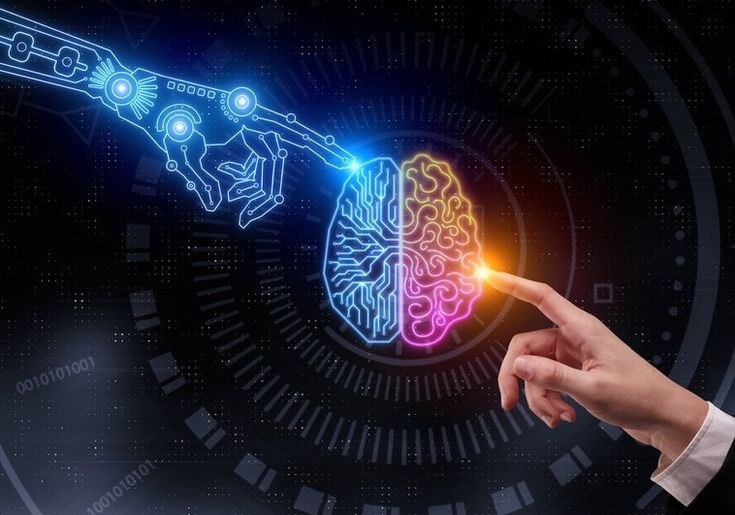
This is not a battle between IQ and AI. It is a reminder that no matter how powerful AI becomes, it cannot do what IQ does: think critically. It is also a realisation that using AI properly still requires you to think. You have to decide what is useful, what is inaccurate, what sounds human and what sounds like it was written by a chatbot that has never boarded a bus or argued with a sibling over who forgot to buy bread.
AI Can Think With Us, But It Should Never Think For Us
- Artificial intelligence challenges art but cannot replace human creativity
- Kenya moves to regulate AI: What new rules could mean for ChatGPT users, businesses and creators
- Gendered Disinformation & Technology-Facilitated Gender Based Violence (TFGBV) Are Turning Digital Spaces Into Battlegrounds For Women
- Trump Dismisses AI Fears as China Race Intensifies
According to Digital Health in the Arab World, a study led by researchers at Bournemouth University involving adults in 35 countries found that 61% of respondents globally said they would use AI for counselling, while 45% said they would trust it to act as their doctor. More than three-quarters of respondents said they would talk to AI as a friend.
Clearly, “Just ask ChatGPT” — or any other chatbot — has become our generation’s answer to almost everything.
You need help understanding an assignment? Ask ChatGPT. Writing a proposal? Ask ChatGPT. Updating your CV or making it more appealing? Ask ChatGPT.
Even casual conversations are no longer safe.
You plan a hangout with a friend and, on the actual day, they simply text: “Are you there yet?” Instead of giving a simple response, you run to AI to craft the perfect reply.
Imagine waiting five minutes only to receive: “Greetings. I trust you are doing well. Kindly note that I have successfully arrived at our agreed location and await your convenience.”
You are just outside the mall, not addressing the African Union.
Convenience Can Become Dependency
We should take a pause because this is becoming normal. Somewhere between convenience and dependency, we have become so used to getting instant answers that we have forgotten that AI does not remove the need to think. In fact, it increases it.
Every answer AI gives should increase our curiosity.
Is this accurate? Does it make sense? Could there be another perspective?
The truth is that AI is really good at sounding confident even when it is wrong. Its responses can be so smooth and convincing that it is easy to mistake confidence for correctness.
We read something that sounds intelligent and immediately assume it is intelligent.
The biggest danger might not be that AI will think for us, but that we will stop thinking because AI sounds convincing enough.
Fast Does Not Always Mean Wise
We are probably becoming addicted to speed because, in the world we live in, everything seems to have to happen immediately.
But when did fast become the same thing as wise?
We tend to forget that some of the best ideas do not arrive in seconds. They sometimes come after frustration, failure, deleting an entire paragraph and starting again.
That is creativity at work, not wasted time.
AI can shorten the journey, but it cannot replace the journey itself.
Curiosity, on the other hand, always begs the question: Why?
Walking down memory lane, you would ask “why” as a child, even when the adult in the room wished you would just take a nap.
Many of us grew up and replaced that curiosity with convenience.
The habit of running to AI may seem small, but it risks robbing us of our creative autonomy. AI can generate words, but it cannot generate our lived experiences.
It has never worried about school fees. It has never celebrated landing its first job. It has never squeezed into a packed bus during rush hour, stayed up all night preparing for an exam or chased a deadline at work.
Those experiences shape perspective, and perspective is something only humans can bring.
We Should Embrace AI — But Stay Human
This is not a call to reject AI. Far from it.
We should embrace it. Students should learn how to use it, entrepreneurs should build with it and journalists should understand it, among many other professions.
But let us not become so impressed by AI that we neglect our ability to think.
Five years from now, almost everyone will have access to powerful AI tools. What will set people apart will not be who has ChatGPT.
It will be who still knows how to question, imagine, verify and think independently.
Because the future may belong to those who know how to use AI.
But it will always need people who know when not to believe it.
Subscribe to our newsletter
Get the latest updates and stories from LiveNow Africa, delivered to your inbox.
Choose your news updates
Select the stories you care about and how often you want them delivered.You may also like
Category: Opinion
Related Video: Dolly Parton’s Family Announces Her Passing in Emotional Tribute
 Facebook
 Twitter / X
 WhatsApp
 LinkedIn
 Telegram
 Reddit