
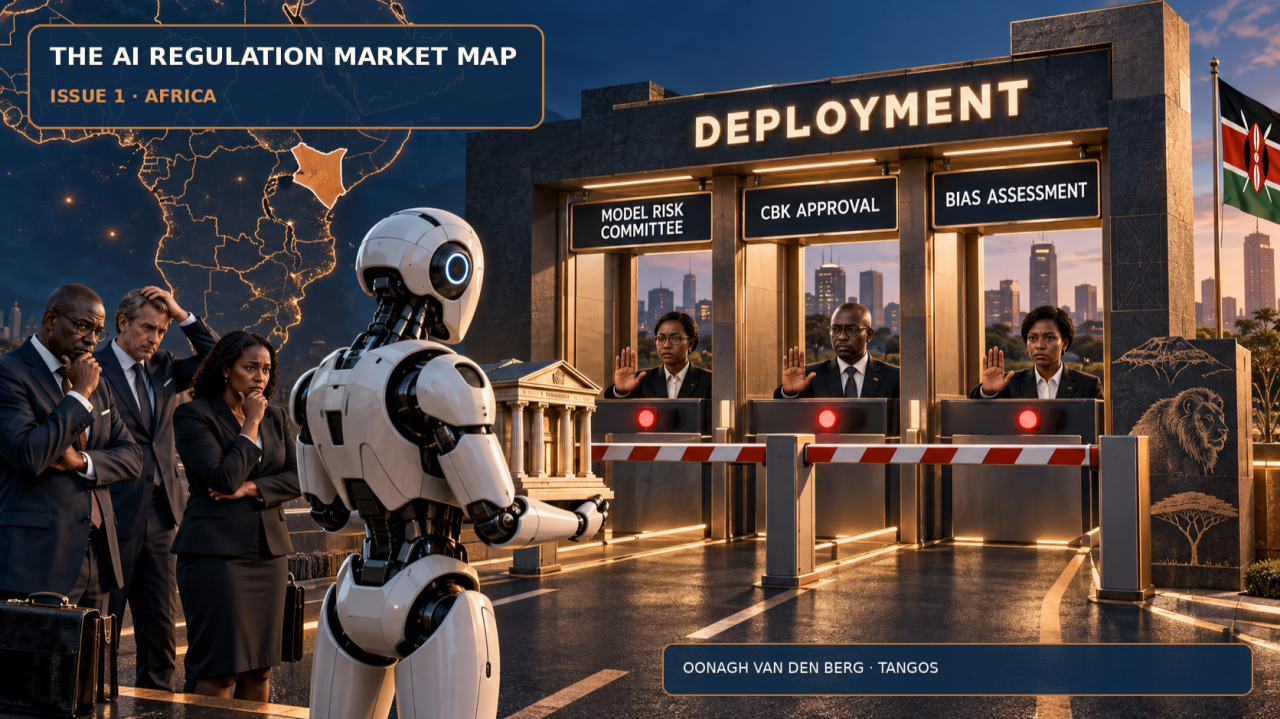
Kenya is moving closer to putting specific rules around artificial intelligence as the technology rapidly becomes part of everyday work, education, business and government.
Parliament is examining how AI should be governed while the country implements its National Artificial Intelligence Strategy 2025 to 2030.
The debate is no longer simply about whether Kenya should embrace AI. That is already happening.
The harder question is what rules should apply when AI makes mistakes, processes personal information, generates false content, affects employment or is used to make decisions about people.

Kenya's AI strategy identifies opportunities in areas including public services, agriculture, healthcare, education and business.
But widespread adoption has also brought questions about privacy, copyright, misinformation, discrimination and accountability.
Kenya already has laws that cover parts of this landscape, particularly the Data Protection Act. But AI can create situations that were not contemplated when many existing laws were written.
Generative AI systems such as ChatGPT can, for example, produce convincing text, images, audio and video within seconds.
That is useful for businesses, students, software developers, journalists and creators.
It also makes it easier to produce convincing false information, impersonate people or process large amounts of information in ways users may not understand.
A Kenyan Artificial Intelligence Bill published in 2026 proposes a more specific framework covering AI governance, data protection, public welfare and assessment of risks associated with AI systems.
The policy challenge is to regulate genuine harms without making it unnecessarily difficult for Kenyan businesses and innovators to develop useful technology.
For ordinary users, regulation could eventually determine some basic questions.
When must people be told they are interacting with AI? Who is responsible when an automated system causes harm? Can someone's personal data be used to train an AI model? What rules should apply to AI-generated political content, deepfakes or automated decisions involving jobs, loans and public services?
These are no longer theoretical questions.
Kenya has positioned itself as one of Africa's leading digital economies. Mobile money showed what can happen when technology reaches consumers faster than traditional systems.
AI could be another major shift.
This time, lawmakers are trying to decide how much of the rulebook should be written before the technology runs further ahead.
You may also like
Category: Technology
Related Explainer: Kenya’s short rains: What the 2026 forecast means for you
 Facebook
 Twitter / X
 WhatsApp
 LinkedIn
 Telegram
 Reddit