NAIROBI, Kenya — A cow in Kenya could soon have something its owner has never had before: a digital identity that follows it from the farm to the market.
The Government is rolling out the Animal Identification and Traceability System (ANITRAC), a national programme designed to give livestock a unique identity and create a digital trail showing where an animal came from, who owns it and where it has moved.
Agriculture and Livestock Development Cabinet Secretary Mutahi Kagwe has been leading the rollout, which was officially launched in Nyeri on July 8 before being taken to livestock-keeping areas including Tana River.
The programme is being presented as more than a crackdown on cattle theft.
The Government says it could change how Kenya manages livestock diseases, verifies ownership, supports farmers seeking finance and, crucially, sells meat and livestock to high-value international markets.
Kagwe has urged livestock keepers to embrace the system, arguing that traceability is becoming essential if Kenyan producers are to compete for premium markets.
“Every registered animal will receive a unique digital identity to enable traceability from the farm to the market,” Kagwe said during a livestock sensitisation and tagging exercise in Tana River in July.

It is already being rolled out
There is an important distinction in the Government's plans.
ANITRAC is not merely a proposal. The digital system is already being rolled out.
At the same time, the broader Animal Identification and Traceability Bill, 2026, which is intended to provide a comprehensive legal framework for the system, has been undergoing the legislative process and stakeholder engagement.
The Ministry of Agriculture and Livestock Development published the draft Bill for public participation earlier this year.
The Government subsequently moved ahead with the operational rollout of the ANITRAC system, including electronic tagging exercises.
That means Kenya is effectively developing both the digital infrastructure and the legal framework needed to support nationwide animal traceability.
What will the digital ID contain?
The system is designed to link an individual animal to information held in a central database.
Depending on the information captured, the record can include details such as the animal's identity, ownership, health and vaccination history and movements through the livestock value chain.
Kenya's existing ANITRAC regulations provide for identification devices, electronic recording of identification codes and a central database for animal traceability.
The Ministry's livestock traceability strategy also envisages identification across different livestock production systems and ecological zones, with information linked to animals, owners and production premises.
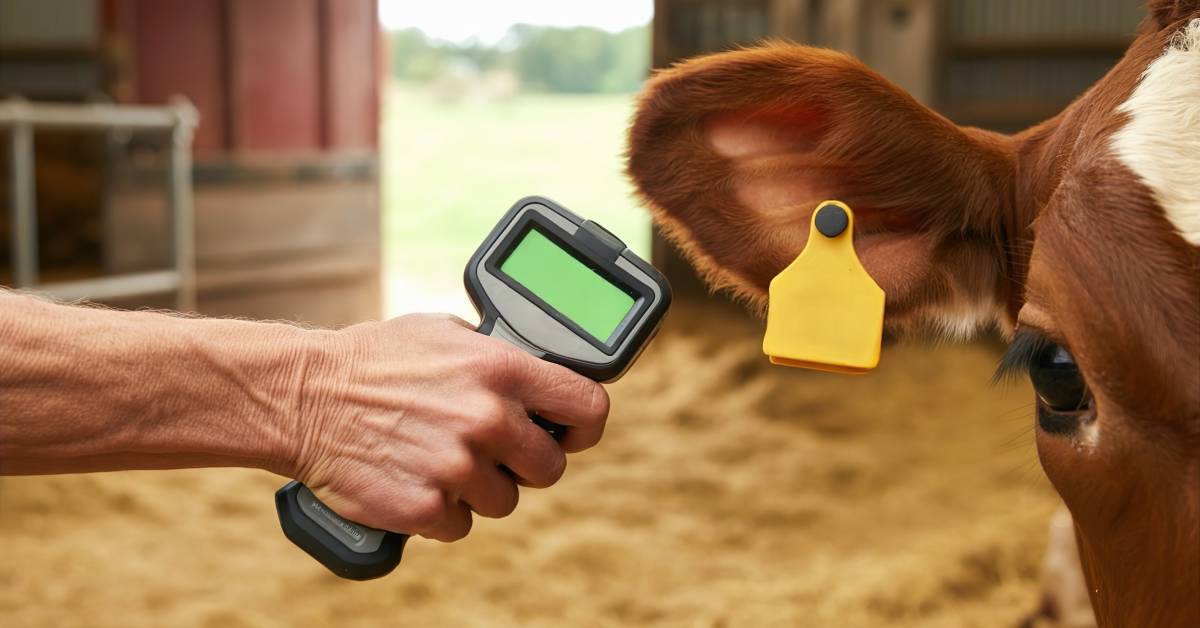
The current rollout uses electronic RFID ear tags, alongside visual identification.
The Ministry has described the system as a way of tracking animals from birth through production and eventually to slaughter.
In simple terms, an animal's identity becomes part of a digital record that can be checked by authorised people within the livestock chain.
Could this make it harder to sell stolen cattle?
That is one of the most immediate reasons the system is attracting attention.
Livestock theft and cattle rustling have long been a major problem in parts of northern and eastern Kenya and other livestock-producing areas.
For a pastoralist family, losing cattle is not simply losing property.
Animals can represent years of accumulated wealth, food, school fees, household income and a family's ability to survive drought.
The Government's own veterinary policy identifies livestock theft as both an economic and animal-health problem because uncontrolled movement of stolen animals can also contribute to the spread of disease. It specifically recommends modern identification and traceability measures as part of efforts to combat the problem.
ANITRAC could make stolen livestock more difficult to pass through legitimate markets if the animal's identity does not match the seller or its recorded movement history.
A buyer, trader, veterinarian or other authorised user could potentially check the animal's record before it enters the formal value chain.
That creates a different kind of barrier for thieves.
Instead of relying only on a physical brand or the word of a seller, authorities could have a digital trail against which ownership claims can be checked.
But the technology will not eliminate livestock theft by itself.
Its effectiveness will depend on how widely animals are registered, how accurately records are maintained and whether traders and markets consistently verify animal identities.
The bigger prize may be the export market
While livestock security is an important part of the programme, the Government is also looking far beyond Kenya's cattle-rustling hotspots.
Kagwe has repeatedly linked ANITRAC to Kenya's ambition to sell more livestock and meat in premium international markets.
International buyers increasingly want assurances about where animals came from and how they were raised and treated before slaughter.
The Government says traceability will help Kenyan producers meet those expectations and comply with sanitary and animal-health requirements.
Kagwe has argued that consumers in high-value markets want to know more than whether meat is simply safe to eat.
They want evidence about the animal's origin, veterinary treatment, vaccinations, medicines and the facilities involved in processing the meat.
That information could become particularly valuable if Kenya wants to move away from selling livestock and meat mainly on volume and compete more strongly on quality and traceability.
A digital record could also help farmers access finance
There is another potential benefit that could matter greatly to small-scale livestock keepers.
The proposed ANITRAC Bill seeks to support access to credit and insurance by using animals as collateral.
The idea is relatively straightforward.
If an animal can be uniquely identified and its ownership independently verified, a financial institution or insurer has a clearer basis for assessing the asset.
That could eventually make livestock more useful as a documented form of wealth.
The proposed legislation specifically lists improved access to credit and animal insurance among its objectives.
That could be particularly significant in pastoral communities where livestock may represent the largest household asset but where formal financial records are often limited.
Disease tracking could become faster
The other major benefit is public health.
When animals move without reliable records, tracing the source of a disease outbreak can become extremely difficult.
A digital system can provide veterinary authorities with information about where an infected animal came from and where it travelled.
That could help officials identify other animals that may have been exposed and respond more quickly.
The proposed ANITRAC legislation specifically aims to strengthen surveillance, control and eradication of transboundary animal diseases and zoonoses.
This is particularly important for Kenya because livestock movement does not stop at county boundaries.
Animals can move across counties and, in pastoral areas, across national borders.
A traceability system therefore has implications for both livestock production and regional disease control.
But there are questions farmers will want answered
The Government's ambition is considerable.
The harder question is whether the system can work equally well in a remote pastoral settlement as it does in a commercial ranch.
Kenya's livestock sector is enormous and diverse.
Some farmers keep a handful of animals. Others manage large herds that move seasonally in search of pasture and water.
For ANITRAC to work, registration must reach these communities and records must remain accurate even when animals move over long distances.
There will also be questions about cost, access to tagging services, connectivity, data protection and what happens when an animal's ownership changes.
The proposed legislation assigns responsibilities to both national and county governments, including implementing traceability measures and integrating county systems with the national ANITRAC platform.
That coordination will be crucial.
A digital identity is only as useful as the information attached to it.
If an animal is tagged but ownership changes are not recorded, or movements are not updated, the system could quickly lose value.
What happens if a farmer loses the tag?
This is another practical issue that will matter on the ground.
Livestock tags can be lost or damaged.
Animals can also change ownership through sales, inheritance or other transactions.
The existing ANITRAC regulations provide for identification devices and a central database, with authorised access and mechanisms for updating records.
The Government will therefore need clear procedures that allow farmers and veterinary officials to correct records without creating opportunities for fraud.
For pastoralists who may live far from government offices, the process needs to be simple enough to work in the field.
The programme is bigger than cattle
Although cattle rustling has given the initiative much of its political appeal, ANITRAC is not limited to cows.
Kenya's animal identification and traceability framework covers livestock and is intended to be implemented across different species and production systems.
The Government's strategy envisages animal identification across the country's 47 counties and across livestock species in phases.
So the long-term picture is not simply a country where cows have digital IDs.
It is a livestock economy in which animals, owners, movements, health records and transactions are increasingly connected through one traceability system.
Kenya is not starting from zero
Animal identification is not entirely new in Kenya.
The law already recognises methods such as branding, coded ear tags and electronic transponders for identifying cattle.
What ANITRAC changes is the scale and digital integration.
Instead of an identification mark standing largely on its own, the Government wants to connect it to a central information system that can provide a fuller history of the animal.
That is the real shift.
The ear tag is only the physical entry point.
The database behind it is where the bigger change happens.
The test will be implementation
Kenya now has a working digital platform, a national rollout and a proposed law intended to give the system a stronger legal foundation.
The Government has already begun tagging animals in different parts of the country.
But the success of ANITRAC will ultimately be judged by what happens outside launch events.
Can a pastoralist in a remote area register an animal without travelling long distances?
Can a farmer easily transfer ownership when an animal is sold?
Can police and veterinary officers use the records to recover stolen livestock?
Can the system help contain a disease outbreak?
And can Kenyan farmers actually earn better prices because they can prove where their animals came from?
Those are the questions that will determine whether Kenya's digital livestock project becomes a useful tool for farmers or simply another government database.
For now, the Government is betting that putting a digital identity on every animal can help turn livestock from an easily moved physical asset into a traceable, verifiable and potentially more valuable one.
You may also like
Category: News
Related Explainer: Explainer: Why Kenya is moving hospitals to HMIS and what it means for SHA patients
About the Author
Maureen Onyango is a journalist passionate about storytelling, life coaching and spiritual lessons. She studied at the Kenya Institute of Management and enjoys telling stories that inform, inspire and empower communities.
 Facebook
 Twitter / X
 WhatsApp
 LinkedIn
 Telegram
 Reddit