
President wants new dairy breeds introduced, but experts’ evidence points to feed, water and farming conditions as key to whether the plan can ease shortages.
President William Ruto wants Kenya to expand beyond conventional dairy cattle by bringing in improved camel breeds and dairy buffaloes, as drought-related pressure on milk production raises concerns about supplies and prices.
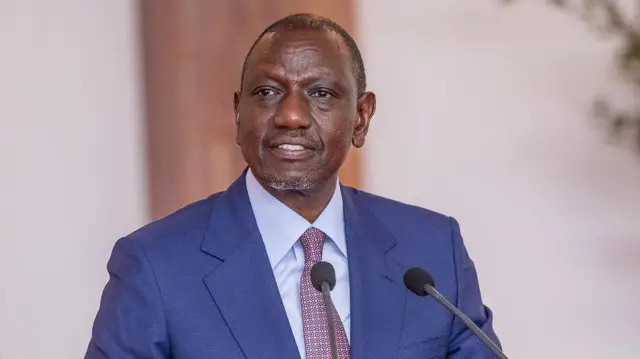
Speaking at the Agriculture and Food Systems Transformation Summit at Jamhuri Park in Nairobi on Friday, 9 October, Ruto said he had directed Livestock Development Principal Secretary Jonathan Mueke to explore sourcing the animals.
“I had directed the Agriculture PS to help us bring in a better breed of camel and bring another buffalo breed,” the President said, arguing that buffaloes could provide another source of milk, as they do in India.
He also pointed to the price of camel milk in Nairobi, saying it was selling for about KSh190 per litre, close to KSh200.
“We need to diversify our milk sources,” he said.
The proposal comes as Kenya’s dairy sector grapples with a more immediate problem: prolonged dry conditions are reducing pasture and putting pressure on the cost and availability of animal feed.
Milk deliveries have already fallen
Figures from the Kenya National Bureau of Statistics show that formal milk intake by processors fell from 84.4 million litres in June to 81.3 million litres in July 2026 — a drop of about 3.7 per cent. The government has linked the decline to drought and limited fodder supplies. Preliminary indications in September pointed to a further fall in August deliveries.
The shortage has also been felt by consumers. In September, reports from Nairobi and other areas described limited stocks in some shops and price increases of between KSh3 and KSh5 for a 500ml packet at some outlets. The Kenya Dairy Board characterised the supply disruption as seasonal and said availability was expected to improve when conditions for pasture and fodder recovered.
The latest proposal therefore raises a practical question: could importing new breeds provide a lasting boost to supply, or will the impact remain limited while farmers struggle to feed their existing herds?
Camels offer potential, but feed still matters
Camels are already an important source of milk in Kenya’s arid and semi-arid regions, particularly in the north. They are well suited to dry environments and can produce milk under conditions in which cattle may struggle.
The Food and Agriculture Organization (FAO) notes that camel milk production varies considerably with breed, nutrition, water availability and management. It identifies camels as a potentially valuable source of food and income in dryland communities.
However, bringing in animals with greater milk-producing potential does not automatically translate into more milk on shop shelves. Their productivity will depend on the availability of adequate feed and water, veterinary services, breeding management and reliable routes to market.
That is especially important when drought is already limiting the resources livestock need to produce milk.
Why buffaloes — and what would it take?
Buffaloes are widely used for commercial milk production in India and other Asian countries. According to the FAO, river buffaloes are an established dairy animal, and specialised breeds have been developed to improve milk yields.
But buffaloes are not a single uniform category. Their milk output depends on the breed and the conditions in which they are raised. The FAO also identifies breeding, feeding and management as important factors in dairy buffalo production.
Kenya would therefore need to determine which breeds suit local conditions, how the animals would be managed and whether farmers and processors could support a new dairy supply chain. Animal importation would also need to comply with veterinary and biosecurity requirements.
The President’s remarks signal an intention to explore the option. They do not, on their own, establish how many animals will be imported, when they will arrive, how much the programme will cost or when any additional milk would reach consumers.
Farmers need relief now
Even if the proposed imports proceed, the benefits are unlikely to provide an immediate solution to the current shortage. Sourcing animals, assessing their suitability, transporting them and establishing productive herds would take time.
In the meantime, restoring milk production depends heavily on addressing the pressures facing existing dairy farmers. The government has acknowledged that inadequate rainfall has reduced fodder availability and increased feed costs.
The camel and buffalo proposal could eventually widen Kenya’s dairy options. But its success will depend on whether the government can turn the announcement into a workable plan — while also helping farmers maintain milk production through difficult seasons.
For consumers facing higher prices and inconsistent supplies, the key measure will not be the number of new animals brought into the country. It will be whether more milk reaches the market consistently and at a price households can afford.
You may also like
Category: News · Related Topic: William Ruto
Related Video: What Dangote’s proposed Lamu oil refinery could mean for East Africa
Related Explainer: Inside Kenya’s crude supply puzzle as Dangote prepares to break ground in Lamu
About the Author
Maureen Onyango is a journalist passionate about storytelling, life coaching and spiritual lessons. She studied at the Kenya Institute of Management and enjoys telling stories that inform, inspire and empower communities.
 Facebook
 Twitter / X
 WhatsApp
 LinkedIn
 Telegram
 Reddit