
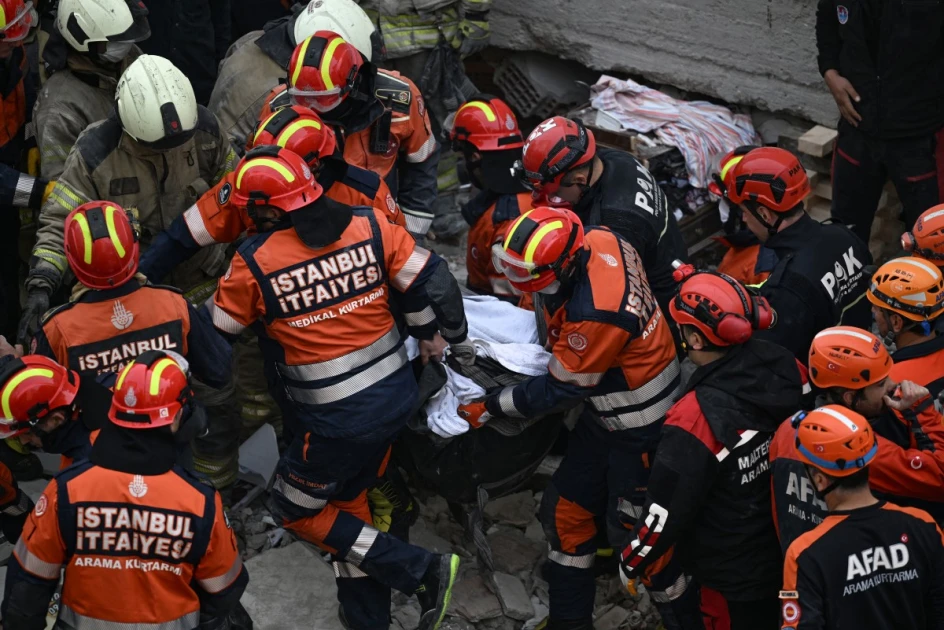
Five people, including three children, have died after the lower floors of a seven-storey residential building collapsed in Istanbul, leaving the upper section tilted above a mass of rubble.
Turkish authorities confirmed on Friday, 9 October, that search and rescue operations had ended after teams recovered the final victim at 6.15am local time. Nine people were rescued alive from the wreckage.
The collapse happened shortly before dawn on Thursday in the Cevizli neighbourhood of Maltepe, on Istanbul’s Asian side. The first three floors gave way, leaving the remaining floors precariously positioned above the debris.
The disaster has raised fresh questions about building safety in Istanbul, a city exposed to earthquake risk and home to many older structures.
Extra floors under scrutiny
The building was constructed in 1987. Istanbul Deputy Mayor Nuri Aslan said its original lower levels had been built according to the standards and planning rules in place at the time, but additional floors were added later.
“The building was built in 1987,” Aslan told reporters, explaining that the basement, ground floor and two floors above them were part of the original structure, while further floors were added subsequently.
The circumstances surrounding those additions are now an important part of the scrutiny facing the building. However, officials have not established that the extra floors caused the collapse.
An investigation is under way to determine what led to the structure giving way.
Local media also reported that the manager of a ground-floor business had noticed cracks in the building from April. That account has not, by itself, established whether the cracks were connected to the collapse or whether authorities had been formally alerted.
Euronews reported on Friday that the building’s architect and site manager had been detained as part of the investigation. Their detention does not establish responsibility for the disaster.
Five lives lost, nine rescued
The victims included two girls aged five and 10, a 12-year-old boy and two adults.
Rescue teams worked through the rubble for hours as they searched for people believed to be trapped inside. The operation was complicated by concerns that the remaining part of the building could also collapse.
Authorities said 14 people were recovered from the wreckage. Five died, while nine survived.
Fifty-five people living near the damaged structure were evacuated as a precaution while officials assessed the danger to surrounding buildings.
The recovery operation ended after rescuers located the final victim early on Friday. Work then shifted towards clearing the debris and investigating the collapse.
Building safety remains a concern
The collapse has renewed attention on the condition of older buildings in Istanbul, where earthquake preparedness and structural safety remain major public concerns.
Türkiye has been working to replace or strengthen buildings considered vulnerable to earthquakes. But the scale of the challenge is significant, particularly in a city with a large and ageing housing stock.
The Maltepe incident also highlights why changes made to buildings after their original construction need proper oversight. Additional floors can alter a structure’s load, but determining whether that happened here requires a technical investigation rather than assumptions based on the building’s appearance.
Reports that cracks had appeared months earlier will also need to be examined to establish whether warning signs were missed and whether any action was taken.
For families who lost loved ones, the immediate tragedy is profound. For residents living in nearby buildings, the collapse has brought a more urgent question into focus: are other structures safe, and are concerns about their condition being addressed before another disaster occurs?
Authorities have yet to announce a final finding on the cause of the collapse.
Category: International
Related Video: Beyond Aid: How Japan Is Shaping Kenya’s SME Future | JICA Training Experience
Related Explainer: Explainer: Why Kenya is moving hospitals to HMIS and what it means for SHA patients
About the Author
Maureen Onyango is a journalist passionate about storytelling, life coaching and spiritual lessons. She studied at the Kenya Institute of Management and enjoys telling stories that inform, inspire and empower communities.
 Facebook
 Twitter / X
 WhatsApp
 LinkedIn
 Telegram
 Reddit