
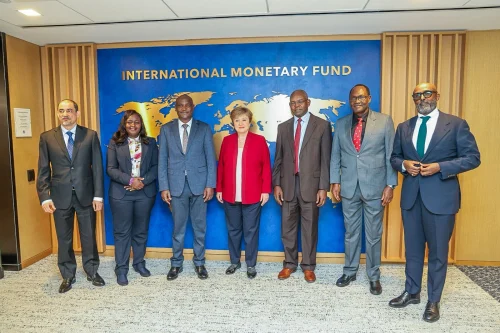
With billions of shillings falling due before June 2027, Kenya faces difficult choices over taxes, borrowing and spending on public services.
Kenya is approaching a major debt repayment test that could sharpen an already difficult debate over taxes, government spending and the conditions attached to international financial support.
The National Treasury says KSh1.7 trillion in public debt is due for repayment before June 2027. The amount represents 12.7 per cent of Kenya’s KSh13.2 trillion debt stock, according to figures reported by Business Daily from the latest Annual Public Debt Management Report.
The immediate challenge is how to meet those obligations without putting even more pressure on households and businesses or squeezing funding for essential services.
That question is taking on added significance as finance officials gather in Bangkok, Thailand, for the International Monetary Fund (IMF) and World Bank Group annual meetings, running from 12 to 18 October 2026. Debt sustainability and the cost of financing development are among the wider issues facing participating countries.
For Kenya, the debate also revives questions about the role of IMF lending conditions in shaping economic policy — and who bears the cost when governments try to meet them.
Why KSh1.7 trillion matters
The amount falling due includes about KSh1.06 trillion in principal repayments, according to the figures reported by Business Daily. That is money borrowed previously which the government must repay, refinance or otherwise cover through its financing plans.
Refinancing means taking out new debt to replace maturing loans. It can help a government avoid having to find the entire amount from current revenue at once. But it is not a way of making the debt disappear.
If new borrowing comes with higher interest rates, the Treasury could face a larger bill over time. The terms available will depend on market conditions, investor confidence, the currency involved and the type of financing secured.
The pressure is significant because debt repayments compete with other demands on public finances. Money spent servicing loans is money that cannot simultaneously be spent on hospitals, schools, roads or other priorities.
Kenya’s fiscal outlook also remains challenging. Reuters reported on 9 October that the Treasury expects the budget deficit to rise to 5.9 per cent of gross domestic product in the 2027/28 financial year, from 5.5 per cent in 2026/27. A deficit means the government expects its spending to exceed its revenue and must finance the gap.
What happened to Kenya’s IMF programme?
Kenya’s previous IMF-supported lending arrangements ran into difficulty in 2025.
On 17 March that year, the IMF confirmed that its ninth review under the Extended Fund Facility and Extended Credit Facility arrangements would not proceed. The Fund also said Kenya had formally requested a new programme.
The distinction matters. The stalled review did not mean that all contact between Kenya and the IMF ended.
In September 2025, the Fund said preliminary discussions on Kenya’s request for a new programme were under way. In March 2026, Treasury Cabinet Secretary John Mbadi said a subsequent IMF visit was not expected to produce an immediate lending agreement. Central Bank Governor Kamau Thugge later said in August that discussions on a new programme would continue during an IMF visit.
As of the latest information available for this report, the government’s search for a new arrangement remains an important part of the financing picture. The precise terms of any future deal, including the conditions attached to possible funding, should not be treated as settled until an agreement is announced.
Why IMF conditions remain controversial
IMF-supported programmes often include commitments on government revenue, spending, monetary policy and economic reforms. The Fund argues that such measures can help countries restore financial stability, address debt vulnerabilities and improve their ability to withstand future shocks.
But the effects can be painful when governments raise taxes, reduce expenditure or limit subsidies while households are already struggling with the cost of living.
Debt justice campaigners argue that countries can end up prioritising loan repayments and fiscal targets over social needs. Iolanda Fresnillo of the European Network on Debt and Development (Eurodad) has warned that debt payments and IMF conditions can push governments towards spending cuts.
Her criticism reflects a wider dispute over how the burden of economic adjustment should be shared. It does not, on its own, establish that every spending cut or tax increase in Kenya is the result of an IMF instruction.
Kenya’s experience has shown how politically sensitive revenue measures can become. The government’s proposed tax increases in 2024 triggered widespread protests, particularly among young people, and President William Ruto subsequently withdrew the Finance Bill 2024.
That history leaves policymakers with a difficult balancing act: raising enough revenue to meet public obligations while maintaining public trust and protecting services on which citizens rely.
Is a new IMF deal inevitable?
No. Kenya can pursue different combinations of domestic revenue, expenditure management, concessional financing and borrowing from local or international markets. Each option, however, carries costs and constraints.
A new IMF programme could provide financing and potentially support confidence among other lenders. But any deal would need to be assessed on its actual terms, including how much money it provides, what policy commitments it requires and how those commitments affect households and public services.
The IMF’s own assessments of Kenya have highlighted the challenge of reducing debt vulnerabilities while protecting priority social and development spending. In its 2024 review, the Fund also pointed to the importance of stronger governance and transparency in restoring public confidence in the use of public resources.
That makes the debate bigger than whether Kenya should borrow from the IMF. It is also about whether public money is being used effectively, whether tax burdens are distributed fairly and whether the economy can generate enough growth and revenue to reduce repeated dependence on borrowing.
The test for the Treasury
The KSh1.7 trillion repayment schedule puts debt management at the centre of the government’s immediate financial decisions. How much it can refinance, the rates it can secure and the revenue it collects will all influence the pressure on future budgets.
The Bangkok meetings offer an opportunity for Kenya and other indebted countries to engage international financial institutions over the availability and cost of financing. But the meetings themselves do not guarantee debt relief or a new lending agreement for Kenya.
For taxpayers, the most important question is what the government does next at home: whether it can meet its obligations while avoiding a fresh cycle of unpopular tax measures, abrupt spending cuts and growing pressure on public services.
The challenge is not simply to repay the debt coming due. It is to manage those repayments in a way that leaves Kenya better placed to finance its future.
You may also like
Category: News · Related Topic: William Ruto
Related Video: Dolly Parton’s Family Announces Her Passing in Emotional Tribute
Related Explainer: Explainer: What happened to milk in Kenya?
About the Author
Maureen Onyango is a journalist passionate about storytelling, life coaching and spiritual lessons. She studied at the Kenya Institute of Management and enjoys telling stories that inform, inspire and empower communities.
 Facebook
 Twitter / X
 WhatsApp
 LinkedIn
 Telegram
 Reddit