
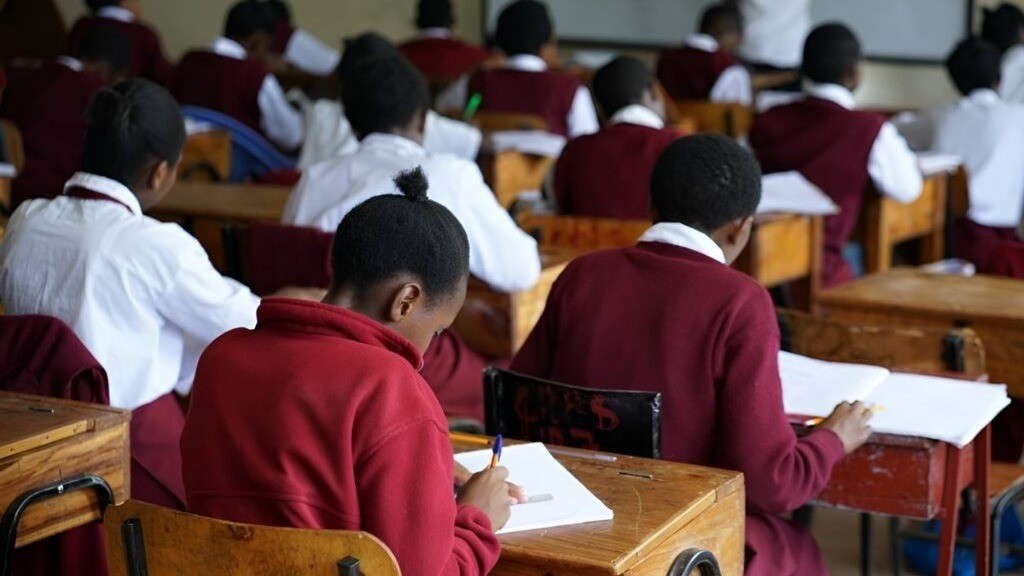
The 2026 Kenya Certificate of Secondary Education (KCSE) examinations will go ahead as scheduled despite forecasts of heavier-than-normal rainfall during the October-December season, the Ministry of Education has said.
The ministry says it is preparing for a different kind of examination challenge this year: getting candidates, examination officials and confidential materials to centres that could be cut off by floods.
An Education Ministry official told the 13th National Climate Outlook Forum in Nairobi on Wednesday, August 26, that the national examination cannot simply be shifted because of bad weather.
“The national examinations are zero-sum. They cannot be postponed and cannot be delayed. Everybody must do the paper at the same time across the country,” the official said.
The clarification comes as the Kenya Meteorological Service Authority forecasts enhanced rainfall during the October-November-December (OND) 2026 season.
The weather outlook is particularly significant because the main KCSE written examinations begin in October, putting part of the examination calendar directly inside the forecast rainy period.
The Kenya National Examinations Council (KNEC) timetable shows the 2026 KCSE rehearsal is scheduled for October 16, with examination papers beginning from October 19. The timetable runs into November.
Roads, not the exam timetable, are the immediate concern
Rather than changing examination dates, the Ministry of Education says it is concentrating on the logistics of reaching schools.
Some examination centres are located in areas where heavy rainfall can quickly make roads impassable.
The ministry says it has therefore mapped vulnerable areas and identified alternative centres that can be used if access to the designated schools becomes impossible.
“We map out the country in advance, and then we decide which centre should be moved to which location to mitigate against areas that we are very sure we will not be able to reach in case of any emergencies,” the official said.
The approach is intended to ensure that candidates do not lose examination time simply because their usual centre becomes inaccessible.
The ministry also plans to move examination materials by air where roads cannot be used.
This year, officials say drones could also be deployed as part of the contingency plan.
“We also do airlifting. If we cannot go by road, we go by air. This year we are going to deploy drones. Those are some of the innovations we are putting in place,” the official said.
Why the weather forecast matters
The Kenya Meteorological Service Authority's latest OND outlook says above-average rainfall is expected across large parts of Kenya.
The forecast covers many counties, including Nairobi, Kiambu, Nakuru, Nyeri, Meru, Embu, Machakos, Makueni, Kitui, Garissa, Wajir, Mandera, Kisumu, Siaya and parts of the Coast.
The meteorological authority says rainfall is expected to be fairly to well distributed over much of the country, although Turkana and Samburu could experience poorer distribution.
It also warns that the season could feature prolonged wet spells and isolated storms.
The forecast says the short rains are expected to begin from September in some western counties, while several central and eastern counties are expected to receive their onset between the second and fourth weeks of October.
That timing overlaps directly with the KCSE examination period.
The meteorological service has also forecast generally warmer-than-average temperatures during the season, particularly in parts of the Coast and eastern Kenya.
Schools told to prepare for food disruptions
The examination challenge is not limited to getting students into classrooms.
The Ministry of Education is also concerned about food supplies in boarding schools.
Heavy rainfall can disrupt roads and supply chains, potentially making it harder for schools to receive food during the examination period.
The ministry has therefore advised boarding schools to stock essential supplies before the rains intensify.
“When food supply is affected, the school becomes distressed, especially during exams, so we advise them to stock,” the official said.
For candidates sitting national examinations, maintaining normal routines can be important. Disruptions to meals, accommodation or transport could add pressure during an already demanding period.
The KCSE timetable remains in force
The official KNEC timetable confirms that the examination period begins with a rehearsal on October 16, followed by papers from October 19.
This means candidates, parents and schools should continue preparing around the published timetable unless KNEC formally announces a change.
The KNEC website continues to list the 2026 KCSE timetable among its official examination documents.
There is therefore currently no indication of a nationwide postponement because of the forecast rains.
The bigger test will be coordination
The ministry's position places the emphasis on preparedness rather than postponement.
That will require close coordination between education officials, KNEC, county authorities, security agencies, transport providers and meteorological officials as October approaches.
Weather forecasts can also change.
The meteorological service has stressed that seasonal outlooks should be used alongside shorter-range forecasts and regular updates because rainfall can vary significantly within a season. Its latest outlook specifically advises stakeholders to follow subsequent daily, five-day, seven-day, monthly and special forecasts.
For schools, that means preparation cannot stop with a contingency plan drawn up in August.
A road that is open today may not be passable after several hours of intense rainfall.
Candidates should keep preparing
For the more than 2026 KCSE candidates preparing to sit their final secondary school examination, the immediate message is straightforward: the timetable remains on course.
The Government's strategy is to move the logistics around the weather rather than move the examination itself.
That could mean relocating centres, using alternative routes, transporting materials by air and, where necessary, deploying drones.
The real test will come when the rains arrive.
If the contingency plans work, candidates may barely notice the disruption.
If roads are cut off, schools flooded or supplies interrupted, the success of the examination exercise will depend on how quickly authorities can respond.
For now, however, the message from the Education Ministry is clear: El Niño will not put the 2026 KCSE timetable on hold.

You may also like
Category: News
Related Video: Beyond Aid: How Japan Is Shaping Kenya’s SME Future | JICA Training Experience
Related Explainer: Explainer: Why Kenya is moving hospitals to HMIS and what it means for SHA patients
About the Author
Maureen Onyango is a journalist passionate about storytelling, life coaching and spiritual lessons. She studied at the Kenya Institute of Management and enjoys telling stories that inform, inspire and empower communities.
 Facebook
 Twitter / X
 WhatsApp
 LinkedIn
 Telegram
 Reddit