
NAIROBI, Kenya — Sixteen years after Kenyans gave themselves a new constitutional order, the most important question on Katiba Day 2026 is no longer what the Constitution promised.
It is whether those promises are being felt in ordinary people's lives.
Kenya is marking August 27, 2026, as Katiba Day, the second annual observance since President William Ruto formally designated the date in 2025.
The national event is being held at the Kenyatta International Convention Centre (KICC) in Nairobi, with President Ruto and senior State officials attending. During this year's celebrations, Ruto said the Constitution's success should ultimately be measured by what citizens experience in areas such as healthcare, education, housing, agriculture and social protection.
That framing is significant.
It moves Katiba Day beyond speeches about a historic document and towards a harder conversation about implementation, accountability and the rights Kenyans can actually claim.
Why August 27 matters
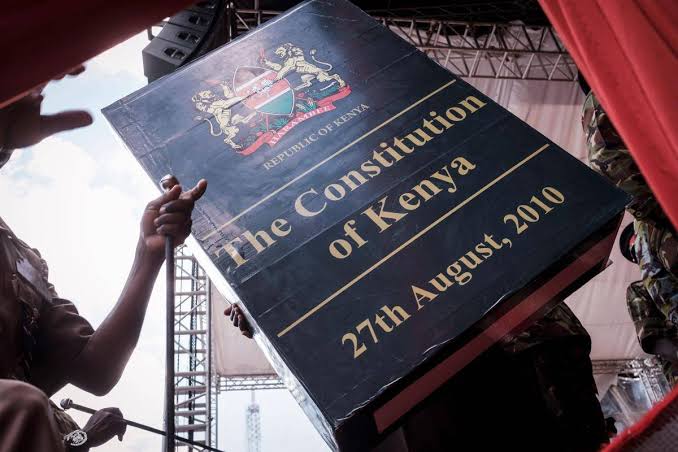
The Constitution of Kenya, 2010, came into force on August 27, 2010, following its approval in a national referendum held on August 4.
About 67 per cent of voters backed the proposed Constitution. It was then promulgated at Uhuru Park in Nairobi, replacing the previous constitutional order.
It was the product of decades of debate over governance, human rights, executive power and the distribution of resources.
The reform process gained further urgency following Kenya's 2007-08 post-election crisis, when political violence exposed deep divisions and weaknesses in the country's governance system.
The 2010 Constitution attempted to respond to some of those problems by placing greater emphasis on checks and balances, citizen participation, rights and devolved government.
For many Kenyans, August 27 therefore represents more than the anniversary of a legal document.
It marks a moment when the country attempted to redefine the relationship between the State and its citizens.
The Constitution changed how Kenya is governed
One of its most visible changes was devolution.
Kenya was divided into 47 counties, each with elected governors and county assemblies. The Constitution says national and county governments are distinct but interdependent and should work together through consultation and cooperation.
The intention was clear: move government closer to citizens and give communities a greater say in how public resources and services are managed.
The Constitution also established a wide-ranging Bill of Rights.
It protects fundamental freedoms and includes social and economic rights, including rights relating to health, housing, food, water, social security and education.
Article 19 describes the Bill of Rights as an integral part of Kenya's democratic state and says its purpose includes protecting human dignity and promoting social justice.
That has given citizens a powerful legal language with which to challenge government decisions and demand accountability.
It also changed the balance of power
The 2010 Constitution strengthened institutions intended to check the exercise of State power.
The Judiciary was given stronger constitutional protection. Independent commissions and offices were established. Parliament received additional oversight responsibilities.
The Constitution also entrenched national values including the rule of law, democracy, public participation, human dignity, equality, equity, social justice, inclusiveness, integrity, transparency and accountability.
These are not simply ideals written into the preamble.
Article 10 makes the national values and principles binding on State organs, State officers, public officers and all persons when applying or interpreting the Constitution, making laws or implementing public policy.
That provision has become central to Kenya's constitutional debates.
The police were also placed under a new constitutional framework
The Constitution fundamentally changed the structure and philosophy of policing.
It established the National Police Service and created the office of the Inspector-General, with the stated aim of placing policing under a more accountable and citizen-centred framework.
The Kenya Police Service itself acknowledges that the constitutional reforms were intended to shift policing away from the old concept of a state "force" towards a public service accountable to Kenyans.
Sixteen years later, police accountability remains one of the areas where constitutional promises continue to generate intense public debate.
That illustrates a broader reality about the 2010 Constitution.
Some reforms were structural and could be implemented through new institutions.
Others depend on how those institutions behave.
Katiba Day is not a public holiday
There is one detail that can easily cause confusion.
Katiba Day is not a public holiday.
The presidential proclamation creating it specifically designated August 27 as a working day.
Instead, government institutions at both national and county levels, the three arms of government, schools and Kenya's diplomatic missions abroad are expected to organise activities promoting constitutional awareness and civic engagement.
The first official Katiba Day was held on August 27, 2025, marking the 15th anniversary of the Constitution.
Before the Government formally designated the day, civil society organisations, lawyers, youth groups and other citizens had already been marking Constitution Day through public discussions and civic education.
The presidential proclamation effectively gave those activities a formal national platform.
What has devolution delivered?
There is no simple answer.
County governments have changed the way many services are planned and delivered. They have also created elected positions and institutions that give citizens more direct political representation.
But devolution has also produced difficult questions about county spending, public participation, corruption, service delivery and the management of public resources.
The Constitution itself anticipated that devolution would require cooperation between the two levels of government rather than competition.
That relationship remains one of the country's most important constitutional tests.
The Bill of Rights has changed the courtroom
Perhaps nowhere is the Constitution's impact more visible than in the courts.
The Bill of Rights gives individuals the ability to bring proceedings when they believe their rights have been denied, violated or threatened. Courts can grant remedies including declarations, injunctions, conservatory orders and compensation.
This has changed the balance between citizens and public authorities.
A Kenyan does not necessarily have to accept an unlawful government decision simply because it comes from an official office.
The Constitution provides a route to challenge it.
That is one of the most significant shifts brought by the 2010 constitutional order.
But implementation remains the unfinished story
The Constitution itself contains a mechanism for measuring progress.
Article 261 provides deadlines for Parliament to enact legislation needed to give effect to various constitutional provisions.
Some reforms have taken years. Others remain subjects of political and legal debate.
The gap between what the Constitution says and what citizens experience remains one of the central issues surrounding its implementation.
That gap can be seen in debates over corruption, police accountability, access to healthcare, land, public participation, gender representation, equitable development and the independence of institutions.
It is also why Katiba Day can be uncomfortable.
A Constitution can guarantee a right.
But guaranteeing a right on paper does not automatically deliver it in a hospital, classroom, police station or government office.
Ruto: Katiba Day should be a day of accountability
Speaking at this year's celebrations at KICC, President Ruto called for a focus on how constitutional promises translate into people's daily lives.
He said Katiba Day should be more than an anniversary and described it as a moment for the country to take stock of its progress.
Ruto also highlighted healthcare, affordable housing, education, agriculture and social protection as areas where his administration says it is working to give practical effect to constitutional rights.
That argument will inevitably invite scrutiny.
The Constitution does not measure success by the number of government programmes announced.
Its test is whether citizens can actually enjoy the rights and freedoms it guarantees.
A Constitution belongs to citizens, not politicians
Perhaps the most important feature of the 2010 Constitution is found at the very beginning.
Article 1 states that all sovereign power belongs to the people of Kenya. Citizens can exercise that power directly or through democratically elected representatives.
That principle changes the meaning of Katiba Day.
It means the Constitution is not simply something to be celebrated by presidents, judges, MPs, governors or lawyers.
It belongs to the Kenyan citizen.
And that citizen has responsibilities too.
The presidential proclamation establishing Katiba Day calls on Kenyans to obey, preserve, protect and implement the Constitution.
Sixteen years after its promulgation, the country's constitutional journey is therefore far from finished.
The institutions created in 2010 continue to evolve. Courts continue to interpret the document. Citizens continue to challenge government decisions. Parliament continues to make laws intended to give effect to its provisions.
And every election, public protest, court case, budget decision and government service provides another test of whether Kenya is living up to the constitutional promise it made in 2010.
That may be the real meaning of Katiba Day: not simply remembering where Kenya came from, but asking whether the country is becoming what its Constitution promised it would be.
You may also like
Category: News
Related Video: Dolly Parton’s Family Announces Her Passing in Emotional Tribute
Related Explainer: Ebola contact tracing: Why the 21-day window matters in Kenya’s response
About the Author
Maureen Onyango is a journalist passionate about storytelling, life coaching and spiritual lessons. She studied at the Kenya Institute of Management and enjoys telling stories that inform, inspire and empower communities.
 Facebook
 Twitter / X
 WhatsApp
 LinkedIn
 Telegram
 Reddit