
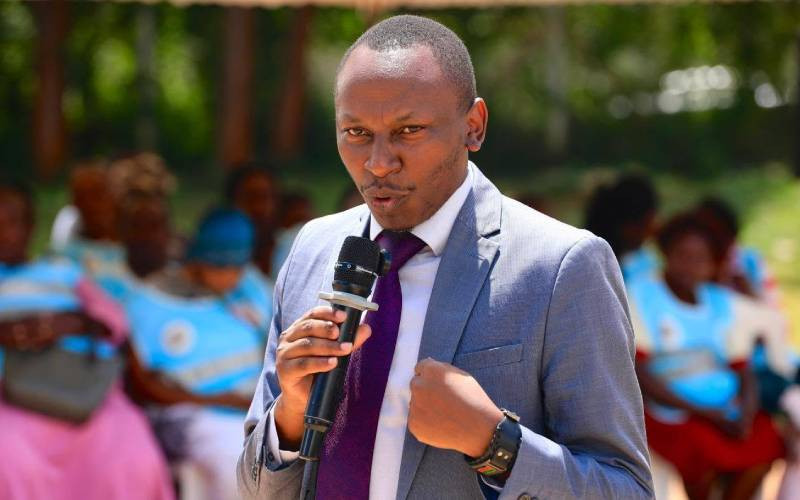
In an interview with Spice FM, Deputy Governor Stephen Munania said that while health is a shared function under devolution, the national government negotiates collective bargaining agreements (CBAs) with health workers without allocating the necessary funds to the counties that must implement them.
He described this as "the national government commits itself, then throws the ball to the counties without the funds".
Munania highlighted that Murang'a allocates roughly Sh3.4 billion to healthcare, of which about Sh2.4 billion is spent on salaries for nurses, doctors, clinical officers, pharmacists and other staff.
This places the county's wage bill at around 54 percent of its total budget, well above the 35 percent ceiling that counties are expected to aim for, leaving little room for additional health spending.
The deputy governor said many CBAs affecting nurses have been pending since 2017, and without appropriated transfers counties cannot meet the obligations despite being responsible for paying health workers. The funding gap has contributed to the ongoing nurses' strike, disrupting services in public hospitals and forcing patients to bear the impact.
To mitigate the crisis, Murang'a has introduced a locum policy to hire temporary staff and invested in telemedicine, noting that attendance at a Level Five hospital rose from about 800 to nearly 2,000 patients daily.
Munania cautioned that such measures are only temporary, stressing that a sustainable solution requires the national and county governments to coordinate funding with the health agreements they negotiate.
You may also like
Category: News
Related Video: What Dangote’s proposed Lamu oil refinery could mean for East Africa
Related Explainer: Ebola contact tracing: Why the 21-day window matters in Kenya’s response
 Facebook
 Twitter / X
 WhatsApp
 LinkedIn
 Telegram
 Reddit