
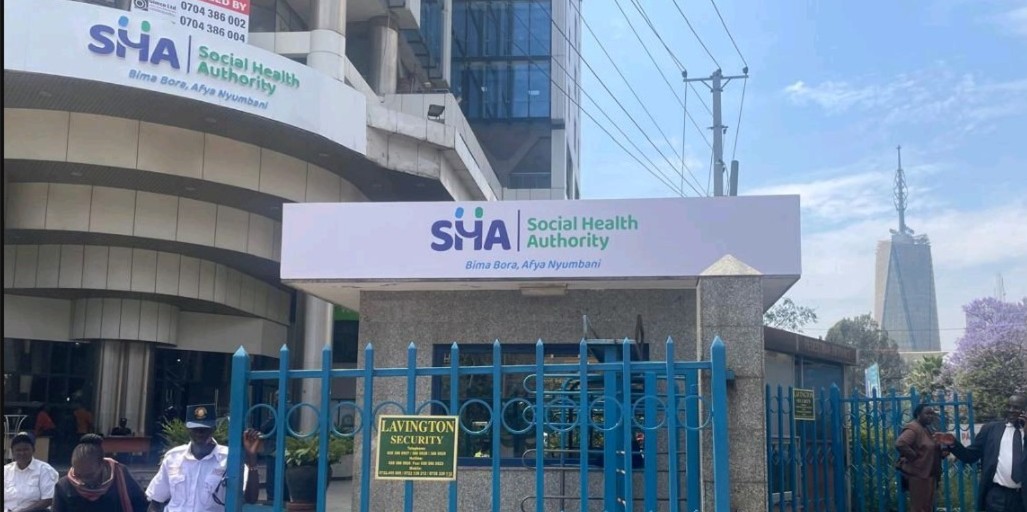
Millions of Kenyans who rely on the Social Health Authority to pay for treatment could face an important change from October 1 as hospitals and other healthcare providers move onto a new contracting cycle.
SHA is preparing fresh contracts covering almost three years, from October 1, 2026 to June 30, 2029, and healthcare facilities must meet regulatory and contracting requirements to participate.
For patients, this raises a practical question: If your hospital accepts SHA today, is it guaranteed to continue accepting it after October 1?
Not necessarily.

The new contracting exercise does not mean hospitals across Kenya will suddenly stop treating SHA members. But it does mean that continued participation depends on facilities satisfying requirements and entering the relevant contractual arrangements with the authority.
That makes the next few weeks important not only for hospitals, but also for patients who regularly receive treatment at particular facilities.
What exactly is changing on October 1?
SHA has invited hospitals, healthcare providers, professional associations and other stakeholders to review and comment on proposed contracts for its 2026-2029 healthcare provider contracting cycle.
The new arrangements will cover four major financing schemes:
Primary Health Care Fund (PHCF), which finances primary healthcare services;
Social Health Insurance Fund (SHIF), the main insurance fund through which members access covered healthcare;
Emergency, Chronic and Critical Illness Fund (ECCIF), designed to finance qualifying emergency, chronic and critical care;
and the Public Officers Medical Scheme Fund (POMSF).
This matters because a hospital's relationship with SHA is not simply based on displaying a SHA sign or having previously worked with NHIF.
Healthcare providers operate within contractual arrangements that establish what services they can provide, the conditions they must meet and how claims and payments are handled.
Could your hospital actually stop accepting SHA?
Potentially, yes, although patients should not assume that this will happen to their facility.
SHA says the new contracting process is intended for healthcare providers and facilities that satisfy inspection, licensing and certification requirements.
A facility that does not satisfy the necessary requirements, does not complete the contracting process, or is not contracted for a particular service could therefore affect where SHA members can obtain funded treatment.
But an important distinction is necessary.
The announcement of new contracts does not itself mean a hospital has been removed from SHA.
Patients should therefore be cautious about social-media claims or messages suggesting that particular hospitals will no longer accept SHA unless that information has been confirmed by the hospital or SHA.
The real test will be which facilities are successfully contracted for the new cycle.
Why does SHA need contracts with hospitals?
SHA collects and manages healthcare financing, but in most cases it does not own the hospitals where members receive treatment.
Instead, it purchases healthcare services from public, faith-based and private providers.
That requires agreements governing the relationship between the fund and the healthcare facility.
The contracts can establish matters such as services covered, provider responsibilities, compliance requirements, claims procedures and accountability.
SHA says the new process is intended to “deepen collaboration with healthcare providers, enhance transparency and accountability” while keeping healthcare providers central to delivering accessible and quality healthcare.
The challenge is making that contractual system work without disrupting patients.
Why should patients care about which fund their treatment falls under?
Because SHA is not one giant pot of money paying for every medical service in exactly the same way.
A Kenyan visiting a primary healthcare facility may be receiving services financed through the Primary Health Care Fund.
Another undergoing hospital treatment could be receiving benefits through SHIF.
A patient requiring qualifying chronic, emergency or critical care may interact with ECCIF.
That means the useful question for a patient is not simply:
“Does this hospital accept SHA?”
It may also be:
“Is this hospital contracted by SHA to provide the particular service I need?”
That distinction becomes especially important for expensive specialised treatment.
A facility may be part of the SHA network without necessarily providing every procedure or specialist service funded under the system.
What should patients do before October?
There is no reason for patients to abandon their current hospitals simply because a new contracting cycle is beginning.
But people receiving regular treatment should pay attention.
This is particularly important for patients undergoing dialysis, cancer treatment, specialist procedures or long-term management of chronic conditions, where abruptly changing facilities can be disruptive.
Before an appointment scheduled after October 1, patients may want to confirm directly with their healthcare provider that it will continue participating in SHA and that the specific service they need will remain available under the relevant arrangement.
Patients should also rely on official SHA information when checking contracted facilities rather than assuming that a facility's previous participation guarantees its future status.
Hospitals have questions too
The transition is not simply an administrative exercise for healthcare providers.
SHA is holding virtual sensitisation sessions across all 47 counties to explain the new e-contracting process, contractual requirements and provider obligations.
Level Five and Six hospitals were scheduled for sessions on September 9, followed by Level Four facilities.
Level Three and Level Two facilities have sessions scheduled for September 10.
That staggered approach reflects how different Kenya's health facilities are.
A small dispensary providing primary healthcare cannot be contracted on exactly the same operational basis as a national referral hospital carrying out complex surgery and specialised treatment.
There is a deadline tonight
The contracting process is currently still at the consultation stage.
SHA has asked healthcare providers, facilities, their associations and other interested parties to submit comments on the proposed contracts.
The deadline is 11:59pm on Thursday, September 10, 2026.
That makes the current period significant because the contracts governing the relationship between SHA and healthcare providers until June 2029 have not simply appeared as final documents without consultation.
Providers have an opportunity to raise concerns before the arrangements are finalised.
For patients, however, the bigger issue will be what happens after that process ends.
What happens if your hospital is not contracted?
This is where SHA will need to communicate particularly clearly.
Patients need sufficient notice if a facility they routinely use is not available under the new arrangements, particularly where treatment is already underway.
They will also need an easy way to identify an alternative contracted provider.
A national insurance system can technically have thousands of contracted facilities while still creating serious difficulties for a patient if the specialist service they require is unavailable nearby.
The true measure of the new contracts, therefore, will not simply be how many facilities sign them.
It will be whether Kenyans can obtain the healthcare promised under SHA without being turned away, unexpectedly asked to pay cash or forced to travel unreasonable distances to find an eligible provider.
October 1 will be the real test
SHA's transition has already generated intense debate over contributions, hospital payments, benefits and the experience of patients seeking treatment.
The next contracting cycle creates another test.
For SHA, stricter contracting could help ensure that public healthcare money goes only to properly licensed, inspected and accountable providers.
For hospitals, the contracts determine the rules under which they will provide services and seek reimbursement.
But for a patient standing at a hospital reception desk, the issue is much simpler.
They want to know whether their SHA membership will pay for the treatment they need.
That is why, before October 1, SHA will need to make one thing exceptionally easy for every Kenyan to establish:
Is my hospital contracted, and is the treatment I need actually covered there?
You may also like
Category: Health · Related Topic: Social Health Authority (SHA)
Related Video: Murkomen Says Kenya Is Safe: “Stop Creating a Crisis” | Political Goons & Security Under Scrutiny
Related Explainer: Kenya’s short rains: What the 2026 forecast means for you
 Facebook
 Twitter / X
 WhatsApp
 LinkedIn
 Telegram
 Reddit