
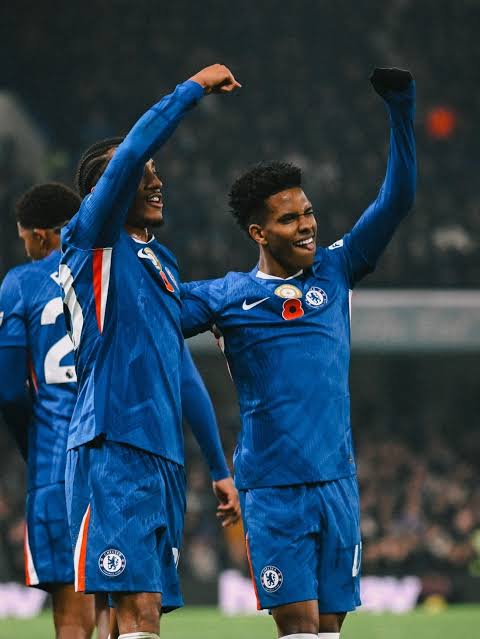
Carlo Ancelotti has opened a new chapter for Brazil with eight international newcomers, a new-look goalkeeping department and a renewed role for Chelsea forwards João Pedro and Estêvão.
Brazil's next generation is being given a chance to shape the national team's future after Carlo Ancelotti named an experimental but star-studded 26-man squad for September and October friendlies.
Chelsea forwards João Pedro and Estêvão headline the returnees, but the bigger story is the scale of the changes in Ancelotti's first squad since Brazil's disappointing 2026 World Cup campaign.
Eight players have been included in a Brazil senior squad for the first time, while all three goalkeepers selected — Hugo Souza, Pedro Morisco and Otávio - represent a change from the goalkeeping group used around the World Cup.
The selection is therefore less about replacing a handful of players and more about establishing the foundations of the next Brazil team.
João Pedro gets another chance after World Cup omission
João Pedro's recall is one of the clearest examples of Ancelotti's change in direction.
The Chelsea forward was left out of Brazil's World Cup squad as the coach opted to make room for Neymar. Brazil subsequently exited the tournament in the last 16 against Norway.
His return gives João Pedro an immediate opportunity to re-establish himself in the national-team picture.
Estêvão's case is different. The Chelsea youngster had been part of Brazil's plans before an injury ruled him out of the World Cup.
His inclusion signals that Ancelotti still sees the former Palmeiras attacker as part of the country's long-term attacking options.
They will join a forward line that includes Vinícius Júnior, Raphinha, Endrick, Pedro, Samuel Lino and Rayan.
Eight newcomers underline the scale of the reset
The most significant feature of the squad is the number of players yet to make their senior Brazil debuts.
Mauro Júnior, Jair Cunha, Vitor Reis, Samuel Lino, Gabriel Bontempo, Breno Bidon, Pedro Morisco and Otávio are among the eight newcomers selected by Ancelotti.
Ten of the 26 players called up currently play in Brazil, reflecting the coach's decision to look beyond the established European-based core.
Ancelotti's selection process included watching matches from the Brazilian Championship, Copa do Brasil, Copa Libertadores and Copa Sudamericana, alongside European competitions.
That represents an important shift for players competing domestically: strong club form can now translate into a pathway to the senior national team.
The goalkeeper position is suddenly wide open
Perhaps the clearest indication of the rebuilding process comes between the posts.
Brazil's three selections are Hugo Souza of Corinthians, Pedro Morisco of Coritiba and Otávio of Cruzeiro.
None was part of the established goalkeeping trio listed in previous Brazil squads, making the position one of the areas where Ancelotti has chosen to experiment most aggressively.
The coach has not, however, abandoned experienced players altogether.
Marquinhos and Gabriel Magalhães remain in defence, while Bruno Guimarães, Vinícius Júnior and Raphinha provide continuity in midfield and attack.
That balance appears deliberate: Ancelotti is introducing players who could form the next generation without immediately discarding the experienced core.
Ancelotti identifies midfield as Brazil's problem area
The rebuild is not simply about giving young players opportunities.
Ancelotti has already identified a specific area that requires attention: midfield.
Speaking after announcing the squad, the Italian coach said Brazil have strong options in defence and attack but acknowledged a shortage of midfield options that could influence the team's future playing model.
That makes the inclusion of players such as Breno Bidon, Andrey Santos, Gabriel Bontempo and the returning Bruno Guimarães and Douglas Luiz particularly significant.
The coming friendlies will give Ancelotti an opportunity to test combinations rather than simply assess individual talent.
What the new Brazil cycle looks like
The timing matters.
Brazil's next major objective is no longer the 2026 World Cup. The current cycle is about developing the squad that will compete for the 2028 Copa América and, ultimately, the 2030 World Cup.
Ancelotti has indicated that age and future readiness will be central to his decisions, giving younger players an opportunity to establish themselves early rather than waiting until the next major tournament is approaching.
That makes these matches more consequential than the word "friendly" might suggest.
For João Pedro and Estêvão, they are opportunities to reclaim or strengthen their positions.
For the eight newcomers, they are auditions for places that could remain open throughout the next four years.
For established names such as Vinícius Júnior, Raphinha and Marquinhos, they are chances to become the senior figures around whom the new team is built.
Brazil's unusual route into the new era
The first test comes against Australia, with Brazil playing the Socceroos twice.
The first meeting is scheduled for September 25 at Queensland Country Bank Stadium in Townsville, followed by a second match at Suncorp Stadium in Brisbane on September 29.
Brazil will then travel to Kolkata for a historic meeting with India on October 3 — the first senior international match between the two countries.
The matches offer Ancelotti three opportunities to experiment with his new group before Brazil's next fixtures in November, when they are scheduled to face Japan and Singapore in Singapore.
The bigger question: who will survive the rebuild?
The immediate attention will naturally fall on João Pedro, Estêvão, Vinícius Júnior and Endrick.
But the more important question for Brazil is which of the less familiar names can turn a first call-up into a permanent place.
Ancelotti has already made one thing clear: the door is open.
The next step is performance.
Brazil's post-World Cup friendlies will therefore serve as the first testing ground for a squad that must combine the country's traditional expectation of immediate success with the longer-term need to build a team capable of competing for another World Cup title.
For a nation accustomed to judging its teams by trophies, the early stages of this rebuild may instead be measured by a different question: who emerges as the next generation of Brazil's first-choice players?
Brazil squad
Goalkeepers: Hugo Souza, Pedro Morisco, Otávio
Defenders: Arthur Dias, Douglas Santos, Gabriel Magalhães, Jair Cunha, Marquinhos, Matheuzinho, Mauro Júnior, Vitor Reis, Wesley
Midfielders: Andrey Santos, Breno Bidon, Bruno Guimarães, Danilo Santos, Douglas Luiz, Gabriel Bontempo
Forwards: Endrick, Estêvão, João Pedro, Pedro, Raphinha, Rayan, Samuel Lino, Vinícius Júnior.
Brazil's upcoming fixtures
-
September 25: Australia vs Brazil — Townsville
-
September 29: Australia vs Brazil — Brisbane
-
October 3: India vs Brazil — Kolkata
-
November 14: Japan vs Brazil — Singapore
-
November 17: Singapore vs Brazil — Singapore.
You may also like
Category: Sports · Related Topic: Social Health Authority (SHA)
Related Video: Dolly Parton’s Family Announces Her Passing in Emotional Tribute
Related Explainer: Ebola contact tracing: Why the 21-day window matters in Kenya’s response
About the Author
Eugene Stephen Were, popularly known as Steve O’clock, is a Kenyan journalist, digital media specialist and multimedia storyteller. He holds a Bachelor of Arts in Journalism and Digital Media from Murang’a University of Technology, with expertise in news reporting, environmental journalism, digital content, photography, videography and film production. Contact & Social Media: Phone: +24795699374 | Facebook: https://www.facebook.com/share/1BhhxUAYmk/ | Instagram: https://www.instagram.com/steve_oclock__mwenyewe | TikTok: https://www.tiktok.com/@oclockcityc.e.o?_r=1&_t=ZS-98czWCBnRxg
 Facebook
 Twitter / X
 WhatsApp
 LinkedIn
 Telegram
 Reddit