
A new $200 million financing programme promises to put climate adaptation money into the hands of hundreds of thousands of East African farmers.
For a Kenyan farmer, however, the important question is simpler: can I actually apply for it?
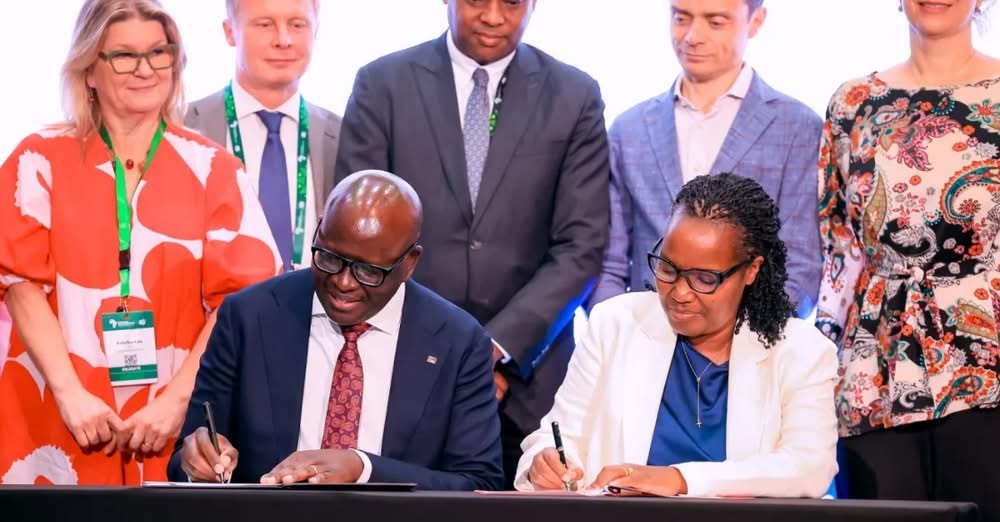
The International Fund for Agricultural Development and Equity Group launched the 12-year blended finance mechanism on September 4.
It is intended to reach about 260,000 smallholder producers and 500 rural businesses across Kenya, Uganda, Tanzania and Rwanda.

At current exchange rates, $200 million is roughly Sh25.8 billion.
The initiative is significant because small farmers are among the people most exposed to climate change but often have the least access to affordable finance needed to adapt.
A farmer may need irrigation equipment, water harvesting systems, drought-resistant seeds, better livestock breeds, solar-powered equipment or storage infrastructure.
All require money upfront.
Traditional lenders can view smallholder agriculture as risky because farmers' income fluctuates with weather, harvests and commodity prices.
Blended finance attempts to change that equation.
IFAD says concessional capital will be combined with financing from Equity Group's own balance sheet, allowing more money to flow towards farmers and rural enterprises than might be available through conventional commercial lending alone.
But the announcement should not be confused with Sh25.8 billion being distributed as free cash.
The programme includes lending capital.
That means farmers considering it will need to understand the terms attached to particular products, including eligibility, repayment periods, interest rates and whether collateral or other guarantees are required.
Those details will determine how useful the programme becomes to an ordinary farmer.
The timing is important for Kenya.
Drought conditions have contributed to falling milk production, while farmers continue facing expensive feed, unpredictable rainfall and increasingly volatile growing seasons.
Climate finance can help farmers invest before disaster occurs rather than depending solely on emergency relief afterwards.
There is also a business component.
The programme targets 500 rural enterprises, potentially supporting processors, aggregators and other businesses that connect farmers to markets.
That could matter as much as farm-level lending.
Kenya's current milk shortage, for example, has demonstrated that agricultural problems do not end at production. Chilling, storage, processing and transport determine whether food actually reaches consumers.
The new fund is therefore potentially important.
But its success should eventually be measured not by the $200 million headline.
The real tests are how many farmers actually receive financing, what they pay for it, whether their farms become more resilient and whether the investment raises their incomes.
For farmers interested in applying, those practical details are the next information gap that Equity and IFAD need to fill.
Category: Business
Related Video: Dolly Parton’s Family Announces Her Passing in Emotional Tribute
 Facebook
 Twitter / X
 WhatsApp
 LinkedIn
 Telegram
 Reddit