
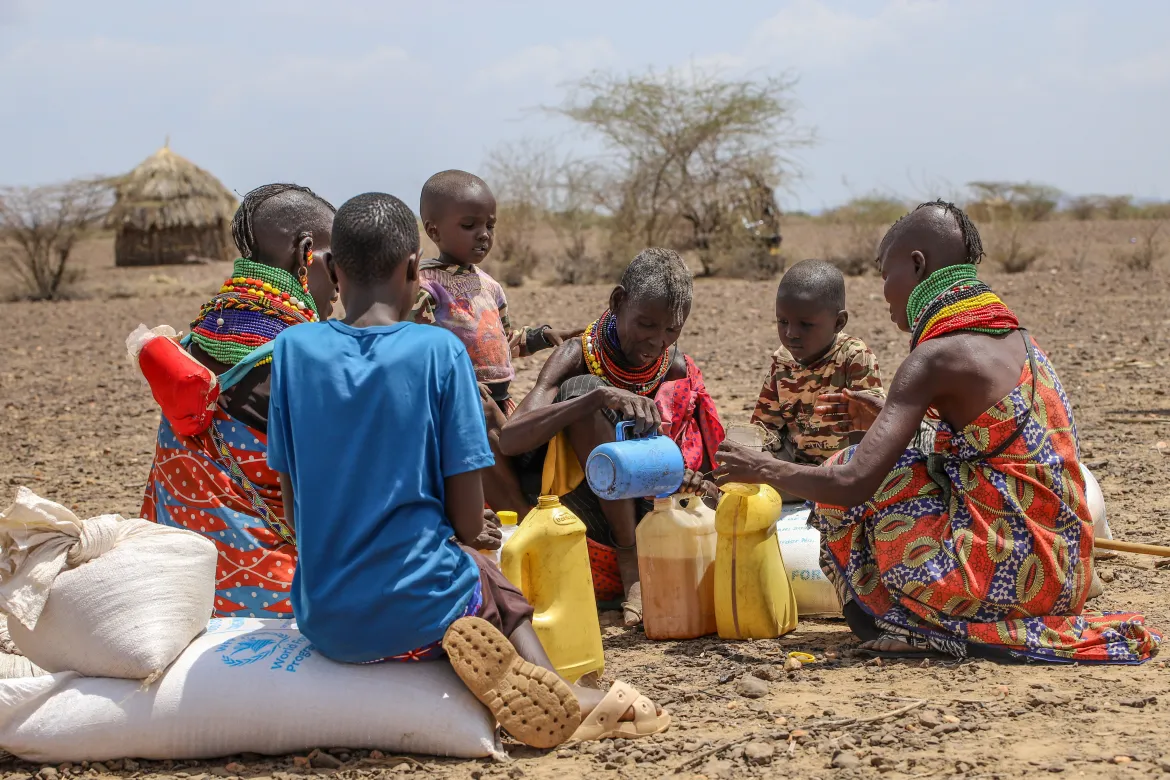
At first glance, Kenya’s weather headlines appear contradictory.
Some parts of the country are becoming increasingly dry. Milk production is falling as pasture disappears.
At the same time, authorities are preparing for potentially heavy rains and flooding.
Both can happen.

The National Drought Management Authority says conditions are deteriorating in nine arid and semi-arid counties.
Turkana, Garissa, Baringo and West Pokot have moved into the “pre-alert” drought phase, while conditions in Nyeri, Kitui, Makueni, Tana River and Isiolo are also worsening.
NDMA says its classifications reflect changes in environmental conditions, production, access to resources and utilisation indicators.
Malnutrition also remains a serious concern in arid and semi-arid regions.
So how can a country worrying about drought simultaneously prepare for flooding?
The answer lies in timing and geography.
Kenya has highly variable climate zones. A dry spell affecting pasture today does not prevent a wetter rainfall season several weeks later.
Nor does heavy rain fall evenly across the country.
More importantly, drought can actually increase some flood risks.
Long periods of dryness can leave soil hardened and vegetation depleted. When intense rainfall eventually arrives, water may run rapidly over the surface rather than being absorbed, increasing flash-flood potential.
Communities can therefore move surprisingly quickly from water scarcity to destructive flooding.
The current dairy shortage demonstrates the first side of that cycle.
Kenya Dairy Board says dry and cold conditions have contributed to declining formal milk deliveries.
The coming rains could help restore pasture, water and milk production.
But intense rainfall can also damage roads, isolate communities, destroy crops and contaminate water supplies.
For authorities, this creates a difficult planning problem.
Emergency systems need to prepare for both extremes rather than treating drought and floods as unrelated disasters.
Water storage, drainage, early-warning systems, livestock feed reserves and protection of river catchments become part of the same resilience strategy.
Kenya’s weather problem, in other words, is increasingly not simply too little rain or too much rain.
It is volatility.
And that can be harder to manage than either drought or flooding alone.
Category: News
Related Video: Dolly Parton’s Family Announces Her Passing in Emotional Tribute
Related Explainer: Explainer: Your car burns at a garage: Who pays for the damage?
 Facebook
 Twitter / X
 WhatsApp
 LinkedIn
 Telegram
 Reddit