
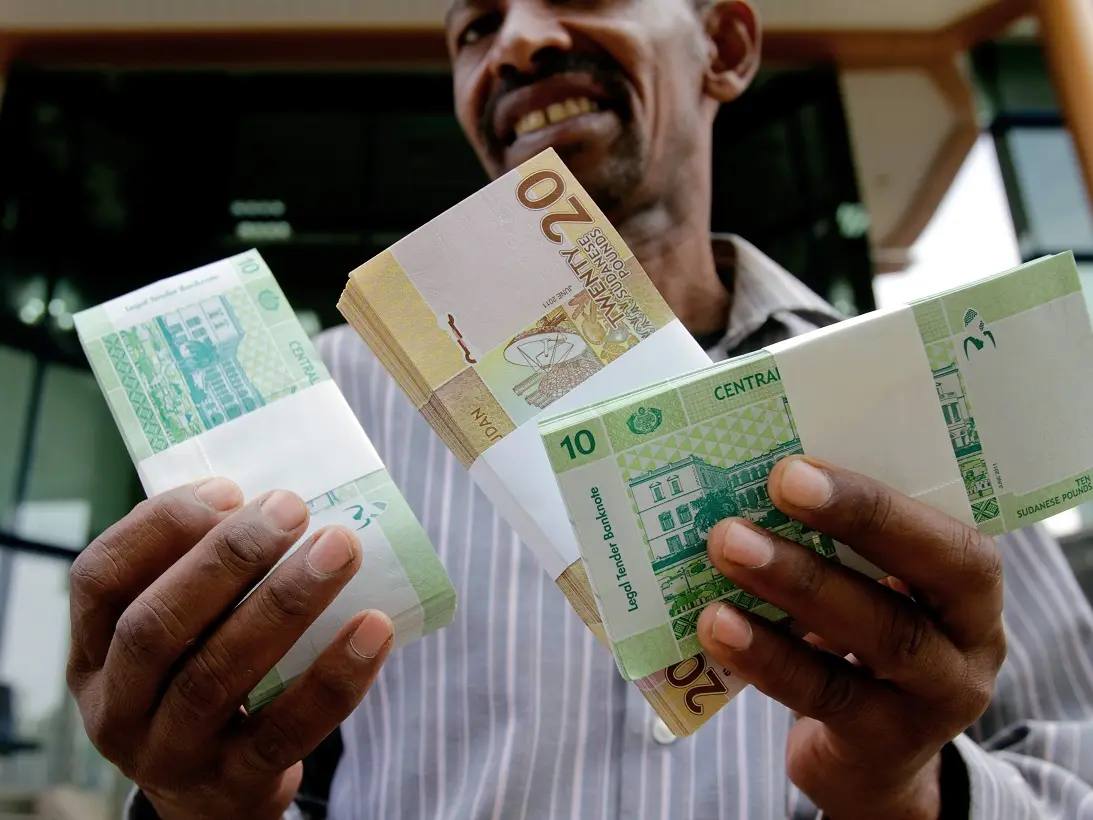
Sudan's war is destroying the value of money as well as lives, with the country's currency losing nearly half its value in army-controlled areas since May.
The Sudanese pound is now trading at about 7,500 to the US dollar on the black market, compared with around 4,100 in May.
Before war erupted in April 2023, the exchange rate was roughly 600 pounds to the dollar.
For ordinary Sudanese, those figures translate into something much simpler: salaries that buy less food every month.

Teachers, civil servants and other workers paid in Sudanese pounds have watched the purchasing power of their income collapse while prices of imported and locally produced goods rise.
Some traders are struggling to restock shelves.
Families are cutting consumption.
Workers are looking for additional sources of income simply to meet everyday expenses.
The currency crisis reflects the way the war between the Sudanese Armed Forces and the paramilitary Rapid Support Forces has divided the country's economy.
The RSF controls important areas associated with exports such as gold and gum arabic, limiting revenue available to authorities based in army-held territory.
Production in government-controlled areas has also been disrupted, while substantial resources are being consumed by the war.
Sudan therefore increasingly resembles two competing political and economic zones.
The army controls much of the north, east and central parts of the country, while the RSF controls substantial territory elsewhere.
That territorial fragmentation makes conventional economic management extremely difficult.
A central bank normally relies on exports, taxes, banking systems and confidence in government institutions to help manage a currency.
War weakens all four.
The collapse of the pound then creates another cycle.
Sudan needs foreign currency to import goods.
When dollars become scarce, their black-market price rises.
Importers need more Sudanese pounds to obtain the same amount of foreign currency, pushing up the local cost of imported products.
Consumers pay the difference.
The crisis is also unfolding as some displaced Sudanese return to areas where fighting has eased, adding demand for housing, food and services to economies that have lost much of their productive capacity.
Finance Minister Jibril Ibrahim has acknowledged the pressure facing civilians while pointing to the country's urgent need for foreign currency.
There is little prospect of a durable currency recovery without a broader political and economic stabilisation.
Sudan's war has now lasted more than three years and produced what the United Nations describes as the world's largest humanitarian crisis.
Diplomatic pressure is continuing.
The United States is reportedly withholding a visa for army leader Abdel Fattah al-Burhan ahead of the UN General Assembly amid disagreements over a proposed 90-day ceasefire.
Whether those diplomatic efforts change the battlefield remains uncertain.
For families buying food in Sudan, the economic emergency is already immediate.
A teacher who earns the same number of pounds as a few months ago is effectively becoming poorer every time the exchange rate falls.
That is how a war fought with guns eventually reaches the market stall.
You may also like
Category: International
Related Video: Dolly Parton’s Family Announces Her Passing in Emotional Tribute
Related Explainer: Kenya’s short rains: What the 2026 forecast means for you
 Facebook
 Twitter / X
 WhatsApp
 LinkedIn
 Telegram
 Reddit