
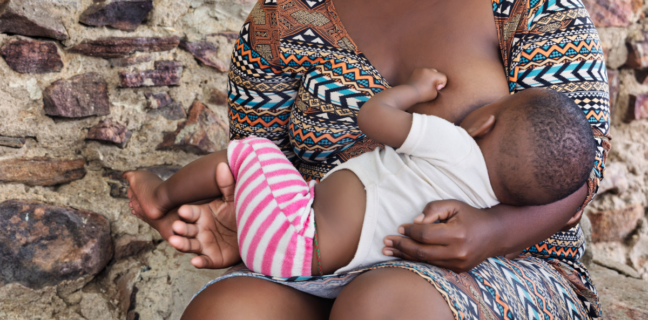
Some Kenyan mothers are willing to donate their breast milk to another baby but are reluctant to allow their own children to receive donated milk.
One of the biggest reasons is fear of HIV.
New research reported in Kenya has highlighted the contradiction, finding concerns about infection among mothers considering donor human milk.
The fear cannot simply be dismissed.

HIV can be transmitted through breast milk when a person living with the virus breastfeeds.
But professionally operated human milk banks do not simply take milk from one woman and give it directly to another baby.
That distinction is crucial.
Milk banks operate systems covering donor selection, health screening, collection, storage, processing, microbiological testing and traceability.
In July, the World Health Organization published global standards for donor human milk banking specifically aimed at improving safety, quality and ethical management.
WHO says donor human milk is an important option for vulnerable infants, including premature and low-birthweight babies, when their own mother's milk is unavailable or insufficient.
The standards cover the entire chain from recruiting and screening donors to treating, testing, storing and tracing milk.
Why does this matter?
For a premature baby, feeding is not simply a lifestyle choice.
Very small and medically vulnerable newborns have immature digestive and immune systems. Human milk can play an important role in their nutrition and protection.
A mother's own milk is generally preferred.
But circumstances can make that impossible.
A mother may be seriously ill, may initially produce insufficient milk or may be separated from her newborn because of medical treatment.
That is where donor human milk can become important.
The Kenyan findings suggest that building milk banks alone will not guarantee that families use them.
Trust matters.
Parents need to know who can donate, what screening occurs, how the milk is processed, whether equipment is sterile and whether a hospital can trace a particular batch from donor to recipient.
There is also an important difference between milk supplied through a regulated human milk bank and informal milk sharing.
Milk obtained privately from an acquaintance, stranger or online source may not have undergone the same donor screening, processing, storage and quality-control procedures.
Treating the two as equivalent can create confusion.
The study therefore exposes a communication problem as much as a medical one.
Simply telling a mother that donor milk is “safe” may not answer her actual concerns.
She may want to know whether the donor was tested for infections, whether the milk was pasteurised, how it was stored and what happens if contamination is detected.
Those are reasonable questions.
WHO's new global standards are designed precisely around those concerns, emphasising screening, treatment, microbiological safety and traceability.
The challenge for Kenyan hospitals is now to translate those technical safeguards into information parents can understand.
Because for a mother standing beside a premature baby, trust may be just as important as the technology inside the milk bank.
Category: Health
Related Video: Human Ladder Reaches Dangerous Heights as Climbers Keep Going
Related Explainer: Why the BCG Vaccine Leaves That Small Scar on Your Arm
 Facebook
 Twitter / X
 WhatsApp
 LinkedIn
 Telegram
 Reddit