
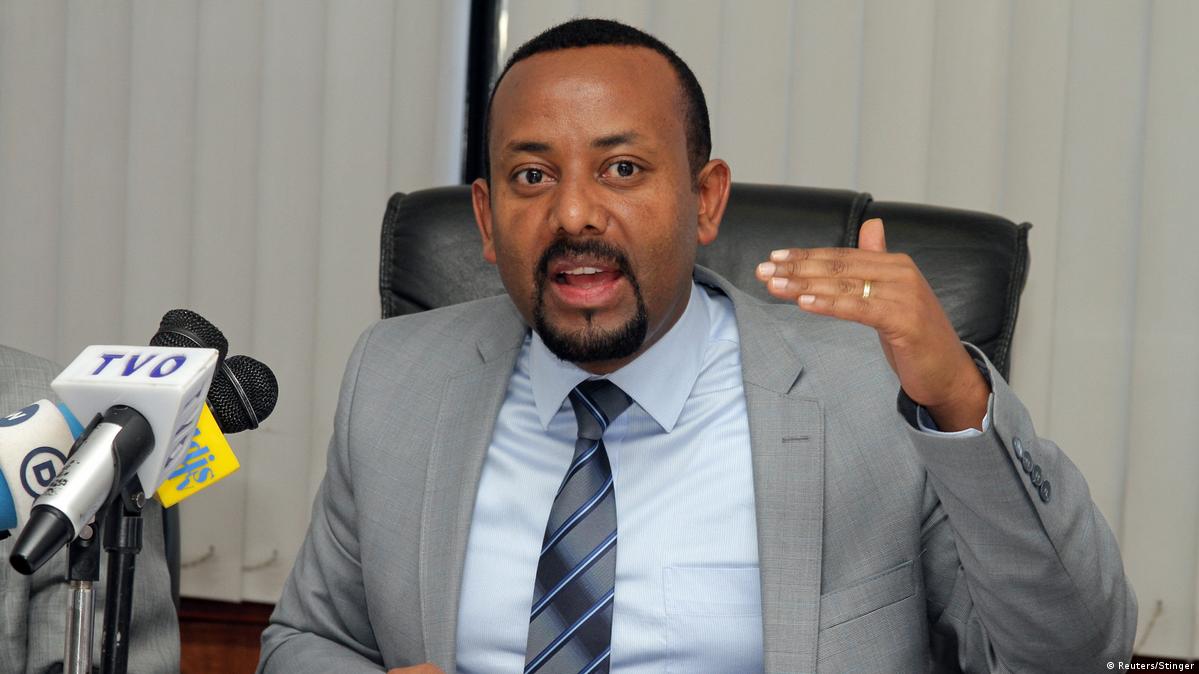
Seven Ethiopian armed groups, including factions drawn from communities that fought on opposite sides of the country's devastating civil war, have announced a new alliance opposed to Prime Minister Abiy Ahmed's government.
The coalition, called the Ethiopian Peoples' Forces Alliance for Survival, includes groups from Tigray, Amhara, Oromia, Afar and Benishangul-Gumuz.
Among its members are the Tigray People's Liberation Front and the Amhara Fano National Movement.
Their presence in the same alliance is particularly striking.

Tigrayan and Amhara forces were on opposing sides during the 2020-2022 war that killed large numbers of people, displaced millions and drew in Eritrean forces.
The new groups say they are united by opposition to what they describe as the federal government's centralisation of power and marginalisation of regions.
The Ethiopian government has accused the alliance of receiving support from neighbouring Eritrea. Eritrea has denied supporting it.
The announcement does not mean Ethiopia has automatically returned to nationwide civil war.
That distinction is important.
The seven groups remain separated by geography, political objectives and, in some cases, longstanding territorial disputes.
Reuters reports that analysts see those divisions as potential obstacles to the alliance becoming a unified military force.
But its formation comes against a worrying background.
Tensions have risen again in northern Ethiopia, including skirmishes and drone strikes involving Tigrayan forces.
The situation has raised fresh concerns over the durability of the peace agreement that ended the major fighting in Tigray in November 2022.
That deal, signed in Pretoria, ended a conflict between Ethiopia's federal government and Tigrayan forces.
But it did not resolve every underlying dispute.
Territory contested by Tigray and Amhara remains particularly sensitive.
The latest alliance is therefore unusual because it attempts to bring together actors whose grievances against Addis Ababa coexist with grievances against one another.
Its political durability remains uncertain.
The Ethiopian Media Authority has meanwhile moved against use of TPLF-controlled Tigrai TV as a source after the alliance's announcement was broadcast there.
Why should Kenya care?
Geography is the first reason.
Ethiopia is Kenya's northern neighbour and one of Africa's largest countries by population.
The two countries have substantial diplomatic, security, infrastructure and commercial ties.
Addis Ababa is also the headquarters of the African Union.
A major deterioration in Ethiopia's security could therefore have consequences far beyond its borders, including population displacement, cross-border security concerns and disruption to regional economic activity.
Kenya also has experience in Ethiopian diplomacy.
Former President Uhuru Kenyatta was involved in regional peace efforts surrounding the Tigray conflict.
The Horn of Africa is already dealing with multiple sources of instability.
Sudan remains engulfed in conflict, Somalia continues to confront Al-Shabaab, and tensions among governments in the region periodically complicate security cooperation.
A renewed large-scale conflict in Ethiopia would add another major source of instability.
But the most important thing to watch now is not the alliance's declaration itself.
It is whether seven organisations with different histories and interests can actually coordinate politically and militarily.
Former enemies have announced that they share a new opponent.
Whether that is enough to make them lasting allies is still an open question.
You may also like
Category: International
Related Video: Human Ladder Reaches Dangerous Heights as Climbers Keep Going
Related Explainer: Why the BCG Vaccine Leaves That Small Scar on Your Arm
 Facebook
 Twitter / X
 WhatsApp
 LinkedIn
 Telegram
 Reddit