
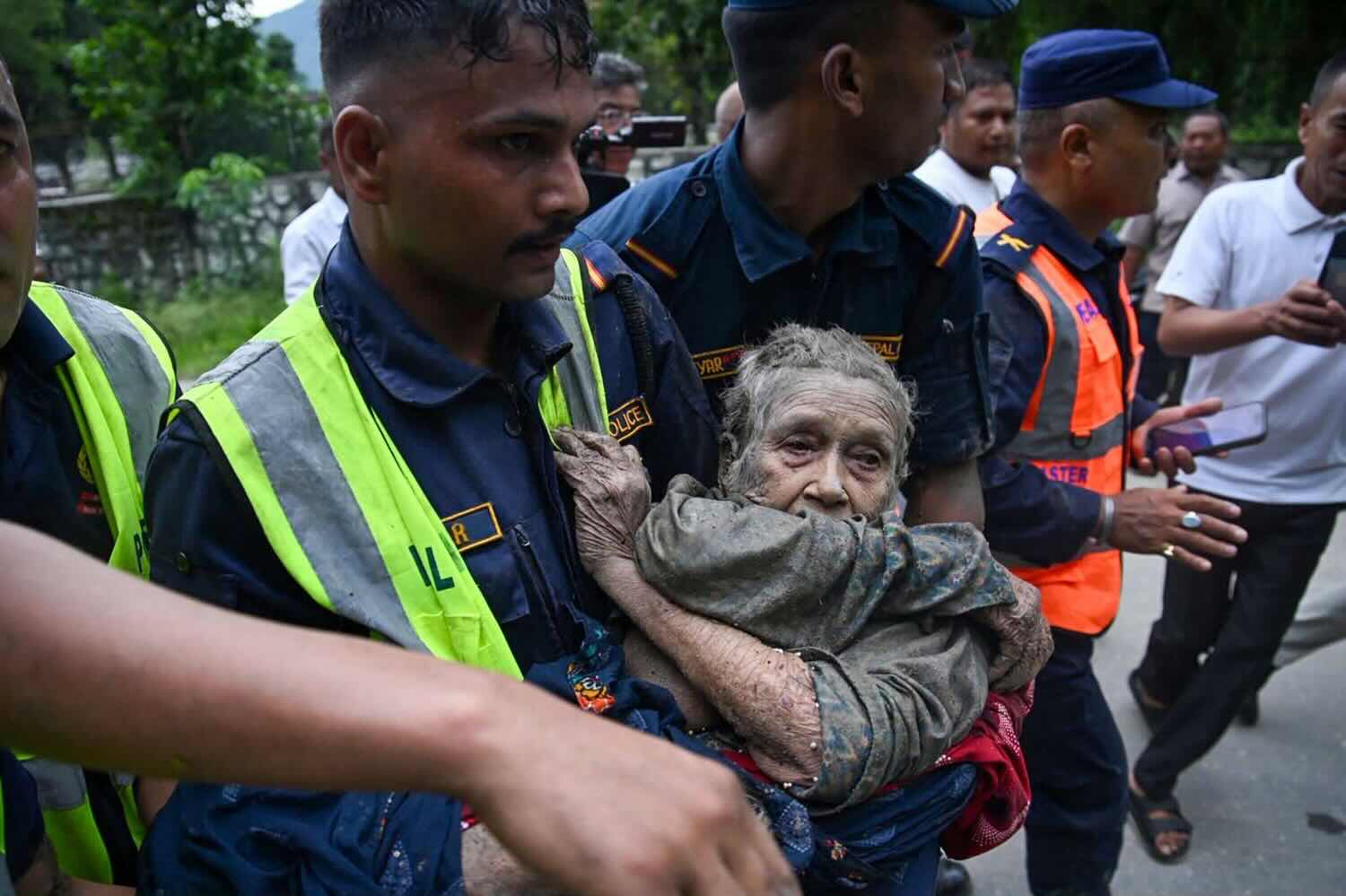
A devastating flood along the Nepal-China border has killed at least 165 people, with nearly 1,500 people now reported missing across Nepal and Tibet. Rescue teams are facing destroyed roads, damaged communications and the risk of further flooding.
Rescue teams in Nepal and China's Tibet region are racing to find survivors after a sudden torrent of mud, rock and water swept through Himalayan valleys, destroying homes, roads, bridges and power infrastructure.
At least 165 people have died, according to the latest Reuters report, while nearly 1,500 people are reported missing on both sides of the border. More than 800 of those missing are foreigners, including tourists and pilgrims.
The disaster struck on Wednesday near the Nepal-China border, with some of the worst destruction reported in Nepal's Rasuwa district and around China's Gyirong county.
The situation remains fluid, with authorities still trying to establish the full number of casualties.
A search against the clock
The scale of the destruction is making the search particularly difficult.
Entire sections of roads and bridges have been washed away, while communications and electricity have been disrupted in affected areas.
Nepalese authorities have deployed helicopters and thousands of personnel for search and rescue operations. The government has also restricted travel along several damaged or dangerous roads.
The World Health Organization says it has already sent emergency medical supplies, including medicines and multipurpose tents, to support health services in the affected communities.
Hundreds of foreign travellers are missing
The disaster has attracted international attention because the affected region is a major route for tourists, trekkers and pilgrims travelling towards Tibet and the sacred Mount Kailash area.
Nepal's tourism authorities say 579 tourists have been reported missing, including more than 400 foreigners. The missing include nationals from India, the United States, Australia, Britain, Canada, Malaysia, South Korea and other countries.
India is believed to have the largest number of missing foreign travellers.
The Australian government says 34 Australians are among those reported missing, while South Korea is searching for workers connected to a hydropower project in the affected region.
For families waiting thousands of kilometres away, the lack of reliable communication from the disaster zone has added to the uncertainty.
One survivor's desperate escape
Among the survivors is 68-year-old Keshav Prasad Baral, who described watching a wall of mud approach his home.
Speaking to Reuters from hospital, Baral said he tried to pull his wife towards safety when the mud entered their house.
She was swept away.
“When I saw it enter our home, I tried to grab my wife’s hand and take her to the terrace. But she was swept away by the mud.”
Baral survived for several hours before being rescued by helicopter.
Another survivor told Reuters that he escaped by clinging to a mango tree as the flood destroyed the building where he had been working.
Their accounts offer a glimpse of what happened in communities where the flood arrived with devastating speed.
What caused the disaster?
The flooding was initially associated with seismic activity, but analysis by the US Geological Survey identified a glacial collapse and debris flow rather than a conventional earthquake-triggered flood.
A huge mass of ice, rock and debris entered the river system, producing a sudden surge downstream. Reuters reported that the event occurred in a mountainous area where the flood swept through valleys and settlements with little time for people to react.
The precise sequence of events is still being investigated.
Importantly, this was not simply a case of heavy rainfall overwhelming a river.
That distinction is significant because the disaster was driven by a high-altitude mountain hazard.
The danger may not be over
Chinese authorities have warned of continuing geological risks upstream.
Reuters reports that a lake formed or enlarged behind debris in the upper river system is being monitored because a sudden release could create another flood. Villages in areas considered at risk have been evacuated.
Chinese President Xi Jinping has called for an all-out search for missing people and urged authorities to strengthen monitoring and early-warning systems to prevent secondary disasters.
That warning has added another layer of urgency to the rescue operation.
The world responds
International assistance is beginning to reach Nepal.
India has offered humanitarian support, while the United States has pledged $500,000 in emergency assistance. The United Nations and other humanitarian organisations are supporting relief efforts, including shelter, medical care and essential supplies.
Bangladesh has also offered assistance, while several countries are working through their diplomatic missions to establish the whereabouts of missing citizens.
For Nepal, however, the immediate priority remains finding survivors.
The mountain roads may be damaged, communications remain difficult and the threat of further flooding has not disappeared.
But behind the growing numbers are families still waiting for one piece of information:
Is my loved one alive?
And for rescue teams working through the wreckage, that question is driving the search.
You may also like
Category: International
Related Video: Human Ladder Reaches Dangerous Heights as Climbers Keep Going
Related Explainer: Kiharu Technical College September Intake 2026: Courses, Skills and New Opportunities
 Facebook
 Twitter / X
 WhatsApp
 LinkedIn
 Telegram
 Reddit