
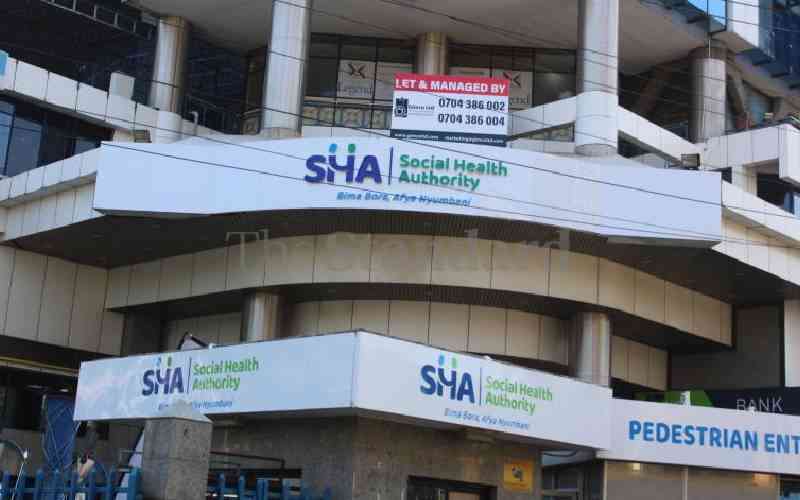
The Digital Health Agency (DHA) plans to link hospital claims to patient treatment records in a major change to how healthcare facilities seek payment from the Social Health Authority (SHA). The aim is to reduce paperwork, limit errors and make it harder to submit fraudulent claims.
DHA Chief Executive Officer Eng. Antony Lenaiyara outlined the approach during an engagement with the Parliamentary Health Committee, chaired by Dr James Nyikal.
Under the proposed process, information recorded while a patient receives care will be used to prepare the claim. Hospitals should no longer need to enter the same details separately into a claims system, reducing duplication and the risk of inconsistencies.
But the success of the change will depend on how well the system works in hospitals and whether it helps resolve the payment and documentation problems that have troubled some providers.
New system targets errors and delays
The announcement comes as Kenya continues to move healthcare facilities onto the SHA Health Management Information System (HMIS).
The Ministry of Health has set 30 October 2026 as the target for completing the migration from the existing SHA Provider Portal. In an update issued earlier this month, the ministry said thousands of public facilities had completed the transition, while work was continuing with private and faith-based providers.
The DHA expects linking clinical records with claims processing to make submissions more accurate. When information is taken directly from records created during treatment, there should be less need for staff to re-enter details, which can introduce mistakes.
The agency also expects the integration to improve checks before claims are approved. A clearer record of the treatment provided and the information used to support payment could help reviewers identify inconsistencies and trace questionable submissions.
However, the system is not, by itself, a guarantee that claims will be processed or paid faster. That will also depend on the quality of hospital records, the reliability of the technology and how quickly SHA reviews and settles valid claims.
Figures show why claims accuracy matters
The reform comes against a backdrop of significant claims processing activity under SHA.
By 30 June 2026, county health facilities had submitted claims worth KSh40.91 billion, according to figures reported by SHA. The authority had paid KSh27.91 billion. Claims worth KSh1.97 billion had been returned for correction or completion, while KSh646.2 million was awaiting mandatory supporting documents. A further KSh6.96 billion was under review, and KSh3.43 billion had been rejected for failing to meet contractual or regulatory requirements.
These figures underline why the accuracy and completeness of claims matter. Missing information and documentation can mean extra work for hospital administrators and delays before facilities receive reimbursement.
The new approach is intended to reduce some of those problems by connecting the clinical information recorded during treatment with the financial claim submitted afterwards. It remains to be seen how much it will reduce returned claims and processing times once implemented.
Fraud controls and accountability
The DHA says the integrated process should also strengthen fraud prevention by making claims easier to trace back to patient-care records and by improving clinical and administrative checks.
That is a significant objective for a public healthcare financing system. The Ministry of Health has previously announced action against facilities suspected of submitting fraudulent claims, highlighting the need to ensure public funds pay for services actually delivered. The new system could help reviewers compare what was recorded during treatment with what a facility requests payment for. But effective fraud prevention will still require proper oversight, reliable records and investigations where claims raise concerns.
The handling of sensitive medical information is another important consideration. Kenya’s digital health framework includes standards for exchanging clinical and financial data, while the DHA’s published electronic claims guide remains a draft document under development.
What it means for hospitals and patients
For healthcare workers, the intended benefit is less time spent preparing duplicate paperwork and more time relying on records already created during care. For facilities, more accurate claims could reduce avoidable rejections and the administrative burden of correcting submissions.
Patients may benefit indirectly if hospitals can manage their finances more predictably and sustain services. However, the DHA’s announcement does not establish that patients will immediately experience shorter queues, improved access to treatment or faster referrals.
The government has said the migration should not disrupt care and that correctly submitted claims through the existing portal will continue to be processed under the applicable requirements.
The next test is implementation. As the HMIS transition deadline approaches, hospitals will need working systems, staff support and clear procedures for resolving errors. SHA will also need to demonstrate that the new process translates into fewer incomplete claims, more timely decisions and stronger accountability.
For patients and providers, the measure of success will not simply be whether records are digital. It will be whether the system helps valid claims move through the process more reliably while protecting public funds.
You may also like
Category: Health · Related Topic: Social Health Authority (SHA)
Related Video: Beyond Aid: How Japan Is Shaping Kenya’s SME Future | JICA Training Experience
Related Explainer: Ebola contact tracing: Why the 21-day window matters in Kenya’s response
About the Author
Maureen Onyango is a journalist passionate about storytelling, life coaching and spiritual lessons. She studied at the Kenya Institute of Management and enjoys telling stories that inform, inspire and empower communities.
 Facebook
 Twitter / X
 WhatsApp
 LinkedIn
 Telegram
 Reddit