
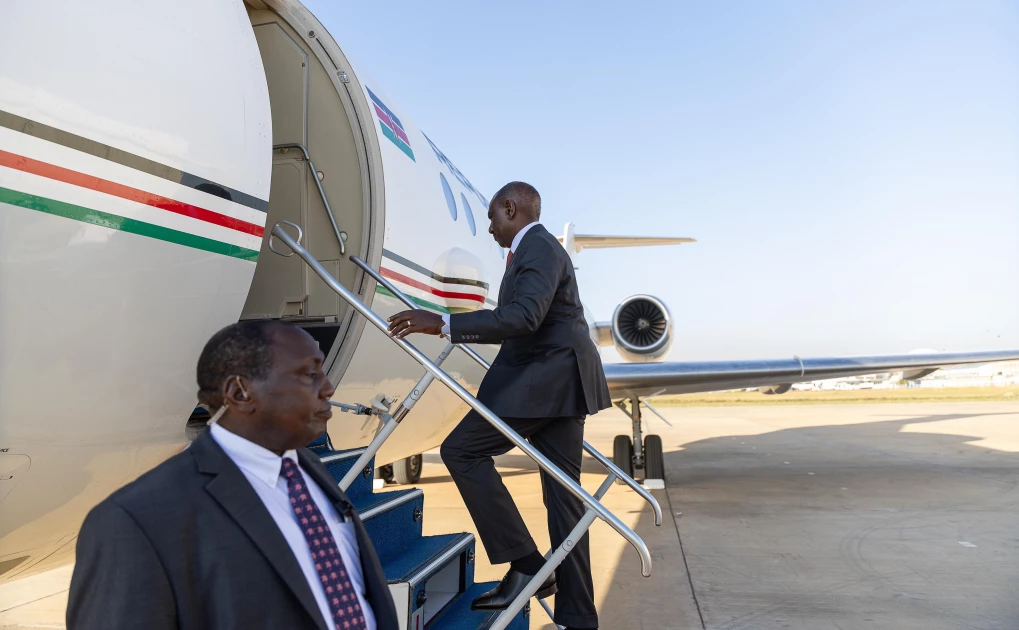
President William Ruto is in Moscow seeking new markets for Kenyan products and investment, but his visit also comes as families at home demand answers about Kenyans recruited to fight for Russia in the war against Ukraine.
Ruto left Kenya on Tuesday evening, 27 October, to attend the Third Russia–Africa Economic and Humanitarian Forum, which opens in Moscow on Wednesday. His agenda includes expanding access for Kenyan exports, attracting investment and securing partnerships in agriculture, manufacturing, energy and technology.
The visit presents Kenya with an opportunity to deepen commercial ties with Russia. It also places renewed focus on the government’s efforts to establish the fate of citizens who have died, gone missing or become caught up in the conflict.
State House spokesperson Hussein Mohamed said Ruto would pursue Kenya’s economic and strategic interests, with an emphasis on export markets and investment.
But the success of the trip will depend on what emerges from the meetings: firm commercial commitments, access for Kenyan goods and practical progress on outstanding consular concerns.
Kenya wants to narrow its trade gap with Russia
Kenya is looking to expand sales of tea, coffee, cut flowers, fresh produce and processed goods in the Russian market.
The government also hopes to attract investment in agro-processing, manufacturing, energy and infrastructure. Partnerships in artificial intelligence, digital innovation and technology transfer are on the agenda, with the stated aim of creating opportunities for businesses and young people.
The economic challenge is significant. Figures published by The Star, drawing on Kenya National Bureau of Statistics data, show that Kenya exported goods worth KSh6.73 billion to Russia in 2025, while imports from Russia reached KSh33.33 billion.
Although the gap narrowed considerably from the previous year, Kenya continued to buy far more from Russia than it sold there.
Russia has been an important supplier of cereals and fertilisers. World Bank trade data show that Russia accounted for about US$91.7 million of Kenya’s fertiliser imports in 2025, making it one of the country’s major sources of the agricultural input.
For Kenya, the opportunity is to grow exports beyond traditional commodities and attract investment that supports local production and employment. But opening a market does not automatically guarantee sales. Exporters also need workable payment arrangements, reliable shipping, competitive prices and sustained demand.
The summit will therefore be judged not only by the announcements made in Moscow, but also by whether Kenyan businesses can secure contracts and reach new customers.
Families want answers about Kenyans in the Ukraine war
The visit comes against the backdrop of a painful issue in Kenya–Russia relations: citizens who travelled to Russia after being offered work and later ended up in military service.
Families of missing and deceased Kenyans have been calling for government intervention, including help to establish what happened to their relatives, recover remains and bring survivors home.
In a statement to Parliament on 9 October, Prime Cabinet Secretary and Foreign Affairs Cabinet Secretary Musalia Mudavadi said the government had recorded 354 Kenyan nationals connected to the conflict. The figure covered people in different circumstances, including those on the front line, people whose whereabouts were unknown, those reported killed or missing, hospitalised individuals and people who had returned home.
Mudavadi said 62 Kenyans had been repatriated, while five were confirmed prisoners of war in Ukraine. He also told lawmakers that at least 84 Kenyans had been killed or remained missing in action.
Kenya has said it is pursuing diplomatic channels to locate missing citizens and assist those seeking to leave the conflict. The government has also reported that Russia agreed to place Kenya on a military recruitment stop list intended to prevent further enlistment of Kenyan nationals through its Defence Ministry.
Russia has previously maintained that Kenyans who joined its military signed contracts voluntarily, a position reported by Reuters following talks between the two countries in March. Kenya’s concerns have included deceptive recruitment through offers of civilian employment.
The two issues need to be handled carefully. The existence of diplomatic and trade ties does not resolve individual cases, and the status of each missing or detained Kenyan must be established through verified information and consular engagement.
The Moscow meetings could provide an opportunity to press for continued cooperation on the return of remains, access to affected citizens and the release or repatriation of those who can lawfully leave military service.
Mudavadi leads diplomatic engagement
Prime Cabinet Secretary and Foreign Affairs Cabinet Secretary Musalia Mudavadi travelled to Moscow ahead of Ruto and is expected to hold talks with Russian Foreign Minister Sergey Lavrov.
The discussions are expected to cover political relations, trade and investment. Kenya is also seeking cooperation on food security, affordable agricultural inputs and wider economic partnerships.
Ruto is expected to take part in the Africa–Russia Business Roundtable and meet other leaders, international organisations, financial institutions and major companies.
As the African Union’s champion for the African Continental Free Trade Area, he is also expected to promote wider access to markets for African products and argue for reforms that give the continent a stronger voice in global decision-making.
These are broad ambitions, and the forum brings together countries with different economic interests and priorities. For Kenya, the immediate task is to turn those discussions into opportunities that can be measured in exports, investment and jobs.
What Kenya needs from the visit
The trip offers Kenya a chance to pursue economic opportunities while addressing a difficult consular issue. The government wants more Russian investment, a wider market for Kenyan products and continued access to supplies such as fertilisers.
At the same time, families affected by military recruitment want credible information about missing relatives and tangible help for those caught in the conflict.
The two priorities are not mutually exclusive. But both require follow-through beyond diplomatic statements.
For businesses, the measure of success will be whether new buyers, investment commitments and commercial partnerships emerge. For affected families, it will be whether the government secures answers, access and practical assistance for their loved ones.
As the forum begins, the central question is whether Kenya can turn its engagement with Moscow into outcomes that are visible at home—not just in trade figures, but also in the lives of citizens waiting for answers.
You may also like
Category: News · Related Topic: William Ruto
Related Video: What Dangote’s proposed Lamu oil refinery could mean for East Africa
About the Author
Maureen Onyango is a journalist passionate about storytelling, life coaching and spiritual lessons. She studied at the Kenya Institute of Management and enjoys telling stories that inform, inspire and empower communities.
 Facebook
 Twitter / X
 WhatsApp
 LinkedIn
 Telegram
 Reddit