
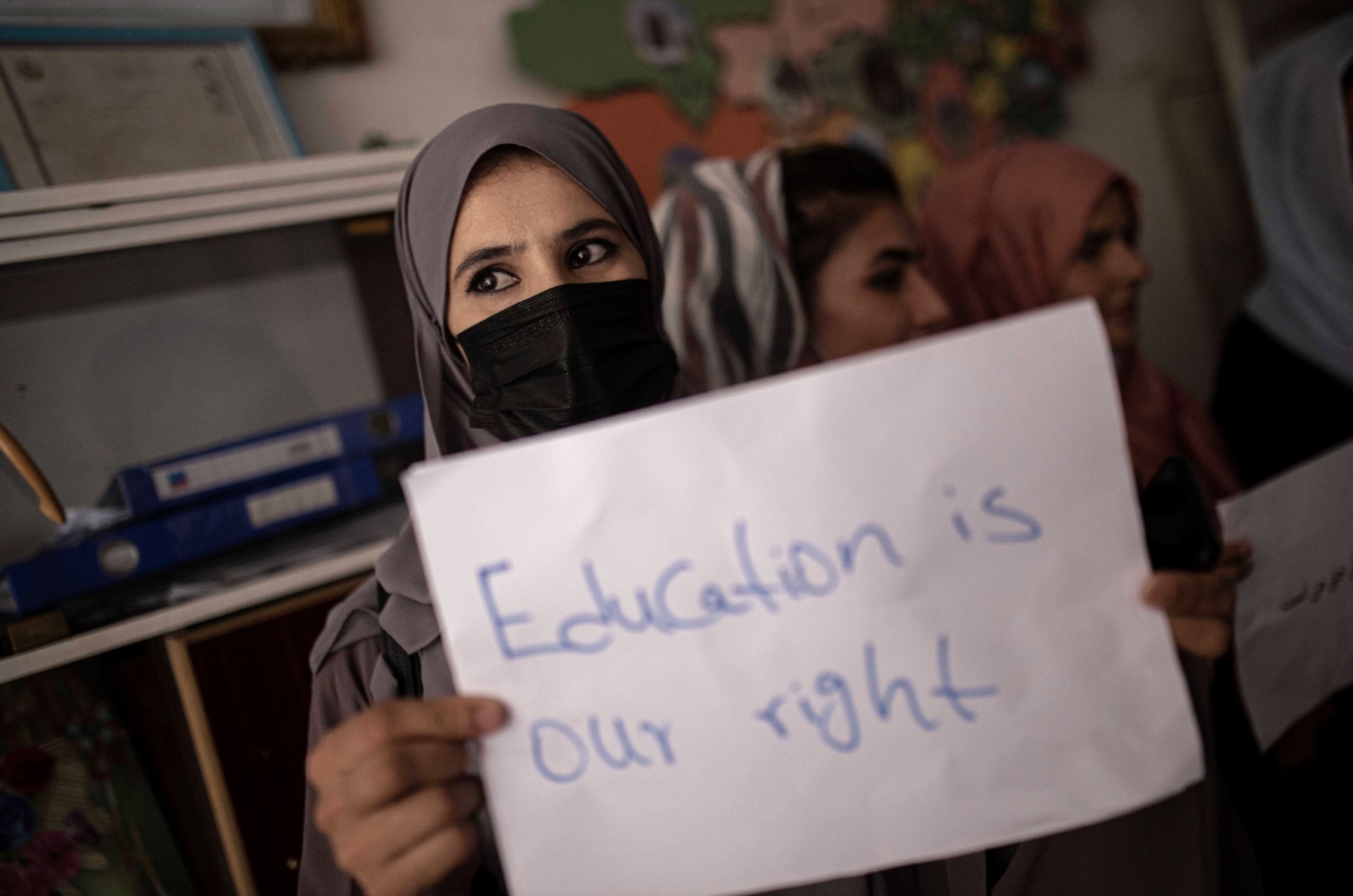
Five years after the Taliban returned to power in Afghanistan, 2.4 million girls are now excluded from secondary education, according to new figures from UNESCO.
The figure, released on August 11, 2026, represents an increase of about 200,000 from UNESCO's previous estimate of 2.2 million in 2025. UNESCO says Afghanistan remains the only country in the world where girls and women are formally prohibited from secondary and higher education.
The restrictions began after the Taliban seized control of Afghanistan on August 15, 2021. Girls have generally been allowed to attend primary school up to around Grade 6, but they are prevented from continuing into secondary school. In December 2022, women were also barred from universities and other higher-education institutions.
The latest figures come as Afghanistan marks five years under Taliban rule, bringing renewed international attention to the impact of the restrictions on women and girls.
UNESCO estimates that, if the current restrictions remain, the number of girls excluded from secondary education could approach four million by 2030. The agency has called for the immediate restoration of education for Afghan girls and women.
The consequences extend beyond education. UNICEF estimates that Afghanistan could lose up to 20,000 female teachers and 5,400 female healthcare workers by 2030 as restrictions prevent girls from acquiring qualifications and women from participating fully in professional life. The agency says the restrictions are already costing Afghanistan about US$84 million a year in lost economic output.
The shortage of female professionals is particularly significant in education and healthcare, where women play an important role in providing services to women and girls. UNICEF warns that the declining number of trained female professionals could have long-term consequences for children's learning, health outcomes and the country's human capital.
The education crisis is also occurring within a wider humanitarian crisis. UNICEF estimates that 21.9 million people, including 11.6 million children, will require humanitarian assistance in Afghanistan in 2026, while women and girls continue to face restrictions on education, employment and other aspects of public life.
For millions of Afghan girls, however, the restrictions have not ended their pursuit of education. Alternative learning programmes, community-based education and other initiatives continue to provide opportunities for girls and women excluded from formal schooling. In June 2026, UNESCO and Sweden's development agency announced a new two-year initiative aimed at expanding alternative learning and creating pathways from education to employment for Afghan learners.
But with the number of girls excluded from secondary education continuing to rise, UNESCO and UNICEF are warning that the cost of keeping Afghanistan's girls out of school will extend far beyond the current generation.
The central issue is no longer only how many girls are missing from classrooms, but what the continued loss of education means for Afghanistan's future workforce, healthcare system, economy and society.
You may also like
Category: Education
Related Video: Human Ladder Reaches Dangerous Heights as Climbers Keep Going
Related Explainer: EXPLAINER: How can one mother give birth to five babies? The science behind Kenya’s rare quintuplets
About the Author
Gladys Owano is a Kenyan creative and aspiring filmmaker pursuing Film Production and Animation from Multimedia University of Kenya. She is passionate about storytelling, cinematography, editing, animation and visual arts.
 Facebook
 Twitter / X
 WhatsApp
 LinkedIn
 Telegram
 Reddit