
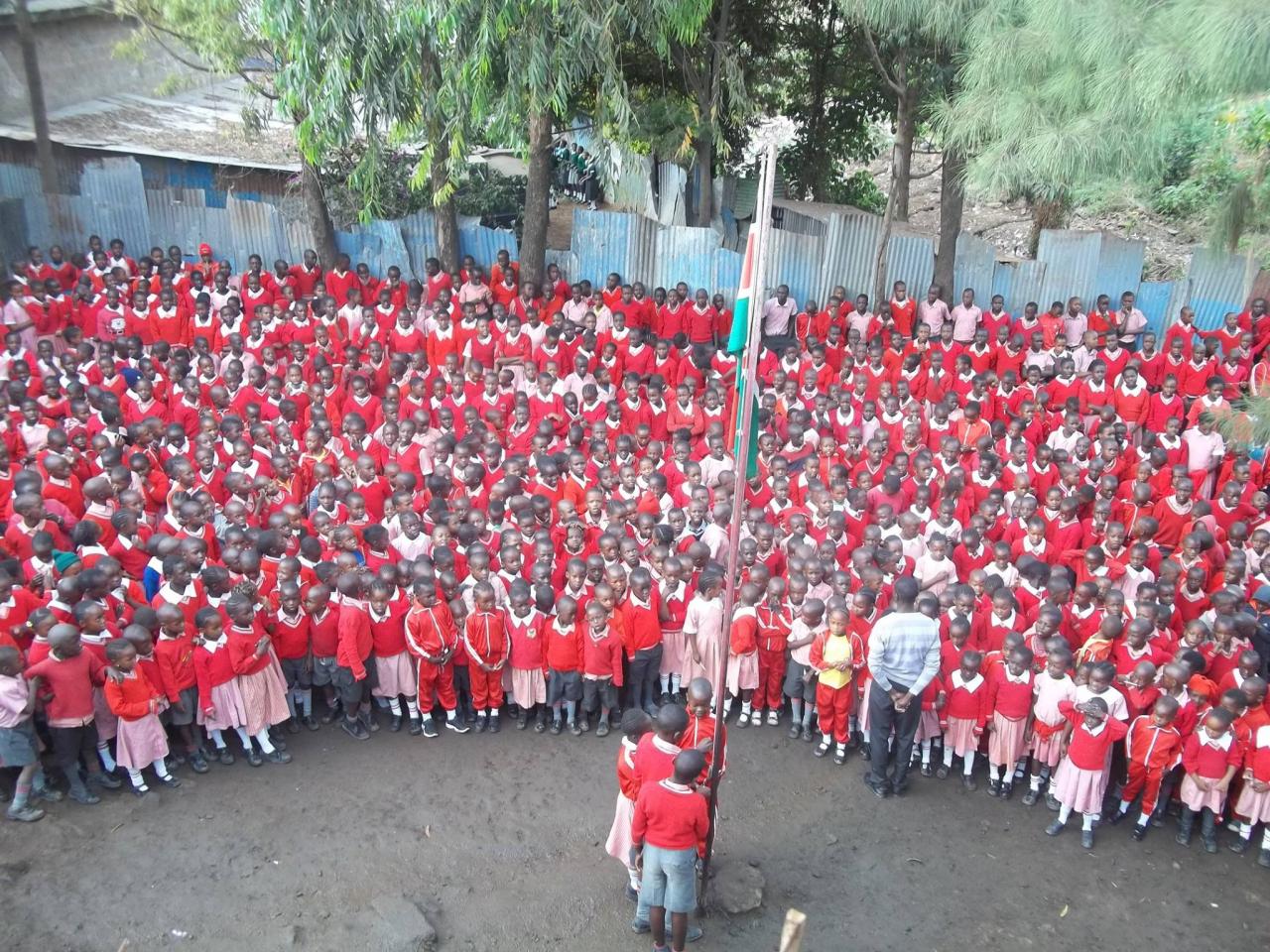
Former Principal Secretary Irungu Nyakera wants the government to take responsibility for providing school uniforms to learners in public schools, arguing that the cost should not stand between children and education.
Nyakera says he plans to push for legislation that would establish a nationwide free school uniform programme, with funding channelled through the National Government Constituencies Development Fund (NG-CDF).
He made the proposal as he launched a uniform support initiative in Makadara Constituency on Wednesday, November 11, targeting learners moving from Grade 6 to Grade 7 in public schools.
The pilot is intended to offer families relief at a key stage in their children’s education. Nyakera also wants to involve local tailors in making the uniforms, creating work for skilled people in the constituency while supporting school-going children.
“A school uniform should not be a barrier to a child's education,” Nyakera said.
He argued that the government already provides uniforms to members of security and disciplined services and should consider a similar arrangement for learners.
However, the Makadara initiative is a personal programme, not a national government scheme. Any nationwide rollout would require a clear funding plan, legislation and an agreed system for identifying beneficiaries and supplying uniforms.
The question of funding and delivery
Nyakera's proposal comes as parents continue to face pressure from the cost of school requirements, including uniforms, shoes, books and stationery.
The NG-CDF already supports education through bursaries and school infrastructure projects. Its operations are governed by the NG-CDF Act and involve constituency committees, the national board and public oversight.
But a nationwide uniform programme would need to establish whether the existing fund can support recurring purchases of clothing for learners, or whether Parliament would have to create a separate funding arrangement.
The scale of the proposal is also significant. A national scheme would have to account for different school designs, learners' changing sizes, replacement uniforms and the needs of children joining school at different times of the year.
It would also need safeguards to ensure that public money reaches learners who need assistance and that contracts are awarded fairly.
Uniform prices already under scrutiny
Nyakera's proposal enters a debate that has moved beyond the cost of clothing to concerns about how schools select uniform suppliers.
In February, the Public Procurement Regulatory Authority directed national and extra-county schools to disclose their uniform suppliers, prices, quantities and procurement records as part of an audit into uniform purchasing.
The move followed complaints that some parents were directed to buy uniforms from selected outlets at prices higher than those available in open markets.
In June, the National Assembly adopted a motion calling on basic education institutions to allow parents to buy uniforms from the open market, provided the items meet the schools' general designs and standards. The resolution also called for action against attempts to control or monopolise uniform supply.
The Education Ministry had earlier told Parliament that schools should not force parents to use particular dealers or stock uniforms for compulsory purchase. It also said learners should not be denied admission because they lack uniforms.
These measures point to another possible way of easing the burden on families: making uniforms more affordable and giving parents greater freedom to shop around.
Ruto's local manufacturing plan
The debate is unfolding alongside President William Ruto's push to expand local production of school footwear.
On November 4, Ruto called on Kenyan manufacturers to produce leather shoes for the country's estimated 14 million school-going children, presenting the market as an opportunity for the local leather industry and job creation.
The announcement did not, however, set out a detailed plan for how the shoes would be paid for or distributed to learners.
Nyakera's proposal takes the affordability debate further by calling for the government to meet the cost of uniforms themselves.
For now, the Makadara pilot will provide an early test of the practical side of the idea. The bigger question is whether Parliament and the government will support a national programme, and how it would be funded without placing additional pressure on existing education budgets.
You may also like
Category: Education
Related Video: Murkomen Says Kenya Is Safe: “Stop Creating a Crisis” | Political Goons & Security Under Scrutiny
About the Author
Maureen Onyango is a journalist passionate about storytelling, life coaching and spiritual lessons. She studied at the Kenya Institute of Management and enjoys telling stories that inform, inspire and empower communities.
 Facebook
 Twitter / X
 WhatsApp
 LinkedIn
 Telegram
 Reddit