
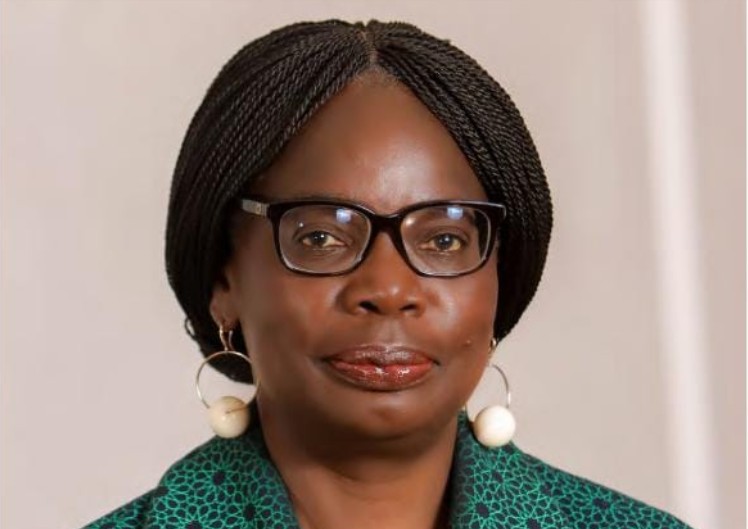
Kenyan legal scholar Professor Phoebe Okowa has secured a full nine-year term at the International Court of Justice (ICJ), winning decisive support at the United Nations after a contested election that exposed divisions over Africa’s representation on the world court.
Okowa received 183 votes in the UN General Assembly and 13 in the 15-member Security Council during voting in New York on Tuesday, November 3. She will serve from February 6, 2027, to February 5, 2036.
Her victory follows months of diplomatic campaigning by Kenya and a drawn-out contest involving candidates from several regions. It also secures Kenya’s place on the court for the next nine years, extending Okowa’s service beyond the shorter term she has held since 2025.
Diplomatic withdrawals cleared the way
The election initially involved nine candidates competing for five positions on the 15-member court. Four candidates were elected before the final seat was resolved.
Okowa’s path to victory was not straightforward. Earlier rounds exposed a split in support among African candidates, with Okowa competing against Sierra Leone’s Professor Charles Chernor Jalloh.
Jalloh had also attracted support in both UN bodies, creating a challenge for African diplomacy as the continent sought to retain representation on the court. Sierra Leone later withdrew his candidature and backed Okowa. Candidates from South Korea and Ecuador also withdrew before the final round.
In the final General Assembly ballot, Peru’s Luz del Carmen Ibáñez Carranza received two votes, while Okowa secured 183. The Kenyan candidate also obtained the necessary majority in the Security Council.
The result reflects the importance of support in both bodies. ICJ judges are elected through separate votes in the General Assembly and Security Council, and a candidate must secure the required majority in each.
Ruto and Foreign Affairs officials welcome the result
President William Ruto congratulated Okowa, describing her election as a source of national pride and recognition of Kenya’s legal expertise.
He said the appointment affirmed the country’s contribution to international affairs and wished her success in advancing international law and the peaceful resolution of disputes between states.
Foreign Affairs Principal Secretary Korir Sing’Oei also welcomed the result, saying it reflected international confidence in Okowa’s ability to serve the court at a critical time for global governance. He thanked UN member states for their support and acknowledged countries whose candidates withdrew during the contest.
Kenya had stepped up its diplomatic campaign in the weeks leading up to the election. The Foreign Affairs ministry had formally promoted Okowa’s candidature for the 2027–2036 term earlier this year.
From a temporary vacancy to a full term
Okowa is not joining the court for the first time. She was elected in November 2025 to fill the vacancy left by Somali judge Abdulqawi Ahmed Yusuf, who resigned before completing his term.
That appointment was due to end on February 5, 2027. Her latest election gives her a full nine-year mandate beginning the following day.
A professor of public international law at Queen Mary University of London, Okowa has built an academic and legal career focused on international law. She has also served on the UN International Law Commission and as a member of the Permanent Court of Arbitration.
Her election to a full term marks a significant milestone for Kenya’s presence in international legal institutions. It also brings expectations that she will contribute to the court’s work independently, in keeping with the responsibilities of an ICJ judge.
What the ICJ does — and why it matters
Based in The Hague, the International Court of Justice is the United Nations’ principal judicial organ. It settles legal disputes between states when it has jurisdiction and gives advisory opinions on legal questions referred to it by authorised UN bodies and agencies.
It is different from the International Criminal Court, which prosecutes individuals accused of crimes under its jurisdiction. The ICJ deals with legal disputes involving states, and its authority depends on the applicable rules of jurisdiction and the consent or other legal basis required for a case.
Its rulings can have major diplomatic and political consequences, but enforcement can be difficult when states resist decisions. The court’s influence therefore depends not only on its legal reasoning but also on the willingness of countries to comply with their international obligations.
For Kenya, Okowa’s election brings continued representation at a time when international law is being tested by disputes over territory, state responsibility and compliance with international rulings.
Her new term will begin in February 2027. The immediate diplomatic contest is over, but the responsibility of serving on the court — and the scrutiny that comes with it — will continue for the next nine years.
You may also like
Category: News
Related Video: What Dangote’s proposed Lamu oil refinery could mean for East Africa
Related Explainer: Kiharu Technical College September Intake 2026: Courses, Skills and New Opportunities
About the Author
Maureen Onyango is a journalist passionate about storytelling, life coaching and spiritual lessons. She studied at the Kenya Institute of Management and enjoys telling stories that inform, inspire and empower communities.
 Facebook
 Twitter / X
 WhatsApp
 LinkedIn
 Telegram
 Reddit